- 14 April 2026
- Liudmila Januškevičienė
A New Issue of Spectrum, the VU Magazine: How Do Films Shape a City’s Image?
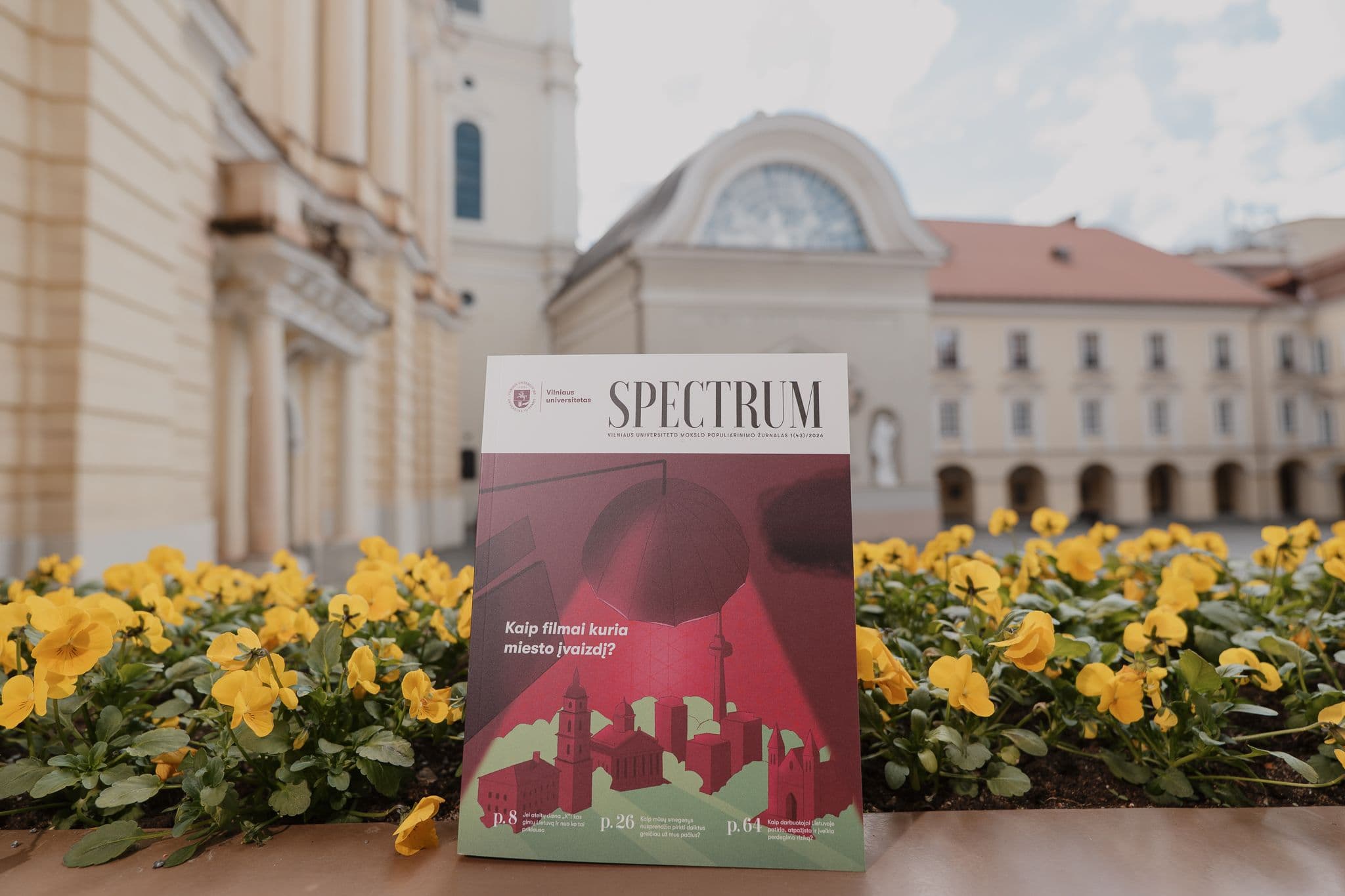
Vilnius University (VU) presents the 43rd issue of its popular science magazine Spectrum, inviting readers to explore people, society, and technology through the lens of different research fields. For the first time, this edition is also available in English.
The main theme of this issue explores how Vilnius is portrayed in cinema and raises the question of how closely the city shown on screen reflects reality. Although Vilnius has become an attractive filming location over the past decade, it often ‘plays’ other cities in films – from post-Soviet settings to distant geographical regions of the world. Only a small number of productions portray Vilnius as itself, and even then, several recurring ‘city scripts’ can be identified.
One of them presents Vilnius as a threatening, crime‑ridden city, where urban spaces serve as the backdrop for tension‑filled plots; another draws on the still-persistent stereotype of a post-Soviet city to create a particular atmosphere and visual mood. Yet there is also an opposing narrative in which Vilnius emerges as an aesthetically appealing, romantic place that inspires unexpected encounters. Together, these contrasting representations form what researchers refer to as ‘city scripts’ – narratives that gradually begin to shape how audiences around the world imagine the city. In this sense, cinema becomes not only a form of entertainment but also a powerful tool for constructing urban identity.
Elsewhere in the magazine, one article explores the mysterious phenomenon of déjà vu, revealing how our brains sometimes generate a false sense of familiarity, while another examines neuromarketing research showing that purchasing decisions are often made before we consciously realise it. Health-related topics raise questions about the effects of hormonal contraception on the body and the brain, and revisit common assumptions and myths surrounding so-called ‘good’ cholesterol.
In the social sciences, the magazine presents the latest research on sensitive and highly relevant mental health topics – from workplace bullying in healthcare institutions to burnout in work environments. It also discusses how parole contributes to the reintegration of individuals into society.
Studies on financial literacy featured in the magazine provide insight into how our financial habits are formed and how they can be changed, while an analysis of dual-income, childfree households sheds light on their attitudes towards sustainability and financial planning.
A historical theme takes readers back to Vilnius in the 18th and 19th centuries, highlighting the work of the Sisters of Charity and their role in the city’s social life. In the field of education, this edition addresses the challenges of teaching and learning mathematics in Lithuania and considers possible solutions. Meanwhile, in the section concerning the physical and technological sciences, readers are introduced to advanced laser systems that enable researchers to study ultrafast processes invisible to the naked eye, opening up new opportunities for both research and industry.
The latest issue of Spectrum invites readers to discover cutting-edge research and rethink everyday phenomena – from tensions in the workplace to how we make decisions and take care of our physical and mental health.
The cover of this issue and six themes were illustrated by the young artist Dominyka Guskaitė.