- 4 March 2026
Biotechnologist Dr Barasa: Cloning Technologies Are Driving Us Away from Our Humanity

Almost 30 years ago, the successful cloning of the first mammal – Dolly the sheep – became a turning point, marking the moment when cloning shifted from science fiction to a real technological possibility and sparked public debate about the prospect of human cloning.
According to Dr Marija Ger and Dr Povilas Barasa – researchers at the Life Sciences Center of Vilnius University (VU LSC) – although the theoretical foundations for cloning exist, today’s scientific discussions revolve less around creating copies of humans and more around the medical applications of cloning technologies – for instance, in tissue engineering or the search for new treatments.
No one has officially cloned a human
Cloning is generally defined as creating a copy of an organism by producing two or more genetically identical organisms from a single cell.
Dr Barasa explains that the first experiments were conducted on frogs, and that a major breakthrough in the field was achieved by Sir John Gurdon, who received the Nobel Prize in 2012 for developing the first animal cloning model. ‘The cloning process involves two types of cells: somatic cells and immature egg cells (oocytes). The nucleus from a somatic cell – for example, a skin cell – which contains all the genetic material of that organism, is transferred into an egg cell. Molecules in the cytoplasm of the egg cell then activate the genes within the nucleus, initiating the development of a new embryo with identical genetic information,’ explained the VU LSC biotechnologist.
Although the technology could, in theory, be applied to humans, the researchers stress that no one has officially cloned a human being. ‘There is not a single living person who has been medically confirmed to be a clone of another human being, although from time to time claims surface from non-governmental organisations or conspiracy theories suggesting secret cloning cases – that somewhere in the darkest corners people are being cloned. Officially, however, there is no evidence of this,’ noted the scientists.
In practice, the most common use of cloning today is in the pet sector, typically driven by owners who are deeply attached to their animals and unwilling to say goodbye to them even after death.
A human clone would not be identical
As Dr Ger points out, even if a human were cloned, the clone would not be completely identical. ‘A useful analogy is identical twins – they may look very similar physically, but they often have different personalities. A human clone would differ even more. For example, there would also be an age difference: if we cloned, say, a ten-year-old child, the clone would be younger, as we certainly do not yet know how to accelerate development.’
Moreover, the clone would also not be 100% genetically identical, since the embryo would develop in another woman’s egg cell and would therefore inherit mitochondrial DNA from a different mother – unless, hypothetically, a woman were cloning herself using her own egg cell.
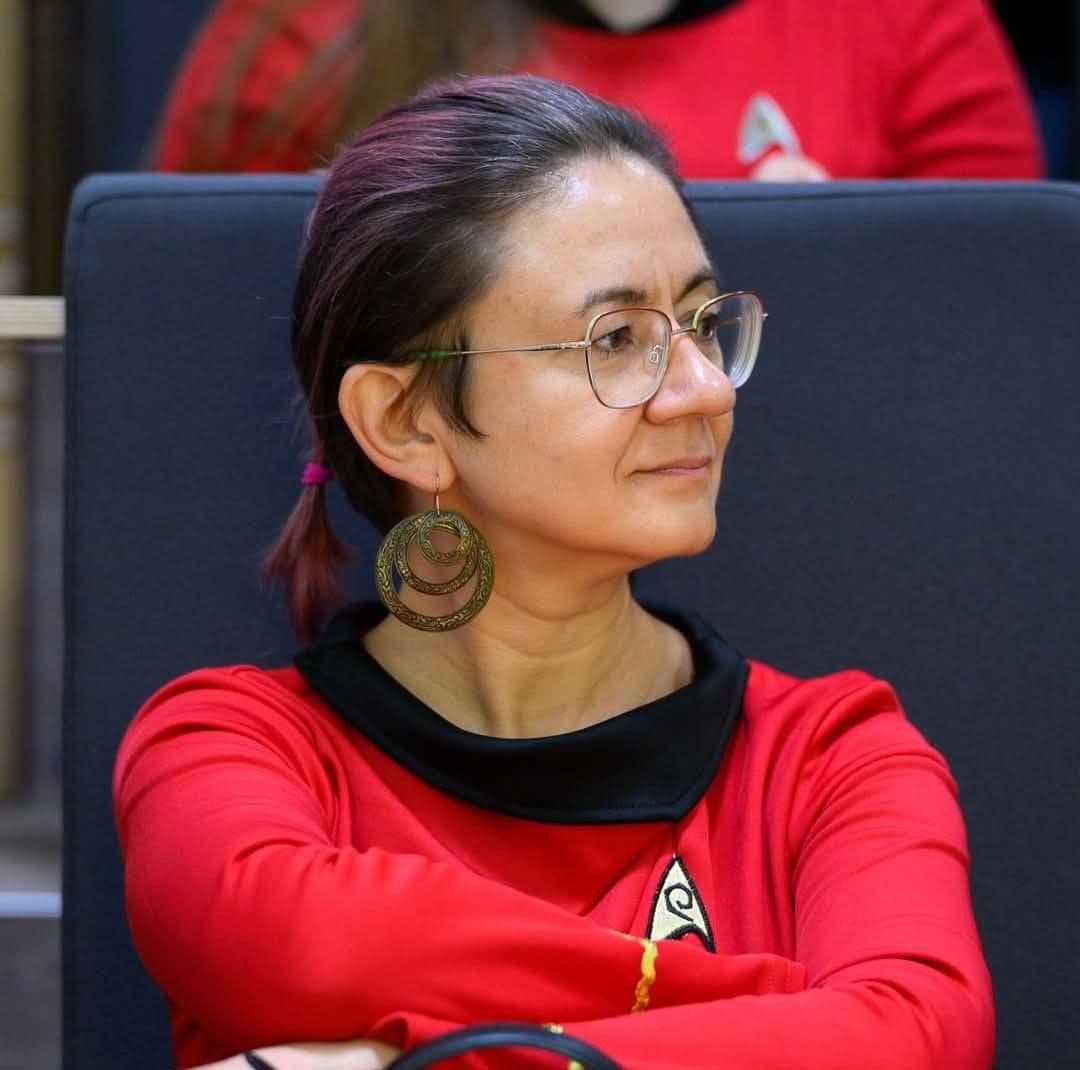
Dr Ger adds that there is also a significant technical barrier to human cloning – ageing DNA, which undergoes modifications over time. Research has shown that ageing is not only natural ‘wear and tear’ but also a genetically programmed process. The biological clock cannot be reset.
‘For instance, if we cloned a twenty-year-old person and grew an embryo from their cell, the clone would not begin life as a twenty-year-old, but they might develop age-related health issues earlier, or experience developmental defects. This is also illustrated by the case of Dolly the sheep – she lived only half as long as other sheep, because health problems typical of older sheep appeared earlier in her life: she developed arthritis prematurely and eventually died of cancer,’ Dr Ger explained.
A single healthy, viable cell is enough to clone a human
If someone were to attempt human cloning in a laboratory, Dr Barasa explains that two main components would be required: an adult human cell and an egg cell. The nucleus from the adult cell would be transferred into the egg cell to initiate embryonic development. ‘However, there is now another method as well – genetically reprogramming an adult cell so that it becomes embryonic. This technology was also awarded a Nobel Prize. In principle, a single healthy, viable cell from an adult individual is enough, along with a great deal of equipment, chemical reagents, and time.’
Thus, while the technological foundations for cloning theoretically exist, human cloning has not been realised in practice.
When asked what this would even be used for, the biotechnologist emphasises that scientists in the field are far more interested in its potential for tissue engineering and therapeutic applications rather than in creating human copies.
‘There is little medical or scientific sense in cloning people if we already have technologies and opportunities to develop new therapies without resorting to cloning. Today, science allows us to reprogramme adult human cells so that they acquire properties characteristic of embryonic cells. Such cells can be used to create tissues and even artificial organs – and there is no need to create a full human clone for that,’ said Dr Barasa.
Clones as repositories for spare organs
As Dr Barasa recalls, several decades ago, there was enormous – and often unfounded – optimism in this field. It seemed that cloning would soon solve numerous medical problems, and the topic attracted considerable public interest. One of the most prominent figures at the time was South Korean scientist Hwang Woo-suk, who in 2004–2005 announced the first stages of human cloning. It was later revealed that his data had been fabricated, and the story was recounted in the documentary King of Clones.
‘At the time, people believed cloning would ‘cure everything’ – that those who couldn’t walk would walk again, and that patients with heart failure would receive new hearts. However, these were completely unrealistic ambitions,’ the scientist remarked.
Conspiracy theories and films still suggest that the powerful might clone themselves and use those clones as ‘repositories for spare organs’.
‘If we were to disregard human rights and moral norms, those with money and power could clone themselves and take whatever they needed from their copies. Developing liver cirrhosis? Clone number two donates a liver. But we are human precisely because we have human rights and moral principles,’ noted the scientist.
According to the researchers, such stories about dictator clones belong more to the realm of myth and popular culture than to real biotechnology practice. Today’s genuine discussions focus not on secret human copies but on how to use existing biotechnologies responsibly and ethically to treat diseases and restore tissues or specific cells.
Japan approves therapies for ischemia and Parkinson’s disease
Dr Ger also stresses the importance of distinguishing between sensational claims and genuine scientific achievements. If induced pluripotent stem cells are considered part of the broader field of therapeutic cloning, then breakthroughs are already underway. The technology involves reprogramming adult cells into a state where they can transform into almost any type of tissue. She offers a recent example:
‘Japan’s Ministry of Health recently officially announced that it had granted commercial licences for two products, developed using induced pluripotent stem cells,’ said Dr Ger.
One of them targets cardiac ischemia, using ‘cellular patches’ designed to stimulate the growth of new blood vessels and prevent progression to a heart attack. The other is a therapy using dopamine-producing cells to treat Parkinson’s disease. These cells are implanted into the brain to compensate for degenerating neurons and alleviate symptoms.
The limits of cloning
The ethical and legal aspects of cloning vary by country. Dr Barasa points out that the European Union maintains stringent regulations, and Lithuania’s framework is among the most rigorous, with embryo research and cloning-related procedures clearly and comprehensively defined. Globally, however, the picture is uneven. Cultural norms shape what is considered acceptable, which is why some of the most controversial cloning cases in recent decades have emerged in South Korea and China, where primate cloning has also been a subject of debate.

‘With the classical cloning method, two major ethical issues arise: egg donation, which is a painful procedure, and the need for a surrogate mother, since we do not yet have technologies capable of growing a fully developed organism in a test tube,’ explained the VU LSC scientist. In other words, even with the theoretical technological foundation in place, cloning remains constrained by both infrastructural and ethical limits.
For these reasons, research on mammalian cloning in Lithuania is minimal. Instead, active work is being conducted with induced pluripotent stem cells – a technology that allows adult human cells to be reprogrammed into various tissues. In theory, skin cells could be used to grow, for instance, liver tissue for transplantation. In practice, however, this remains complex: successful tissue formation requires not only nutrients but also precise chemical and physical signals.
When asked whether they would join a human cloning project, both scientists responded with a firm no. Dr Barasa believes such technologies lead us somewhat further away from our humanity; according to Dr Ger, cloning ideas tend to shift between two extremes – elite fantasies of a ‘spare body’ and the industrial-scale ‘production’ of people for labour or military use. In reality, the practical usefulness of such cloning remains far closer to science fiction than to any plausible scientific path.