- 14 April 2026
- The “Open Readings” conference organisers’ information
“Open Readings” Invites to a Lecture by a Nobel Prize Laureate
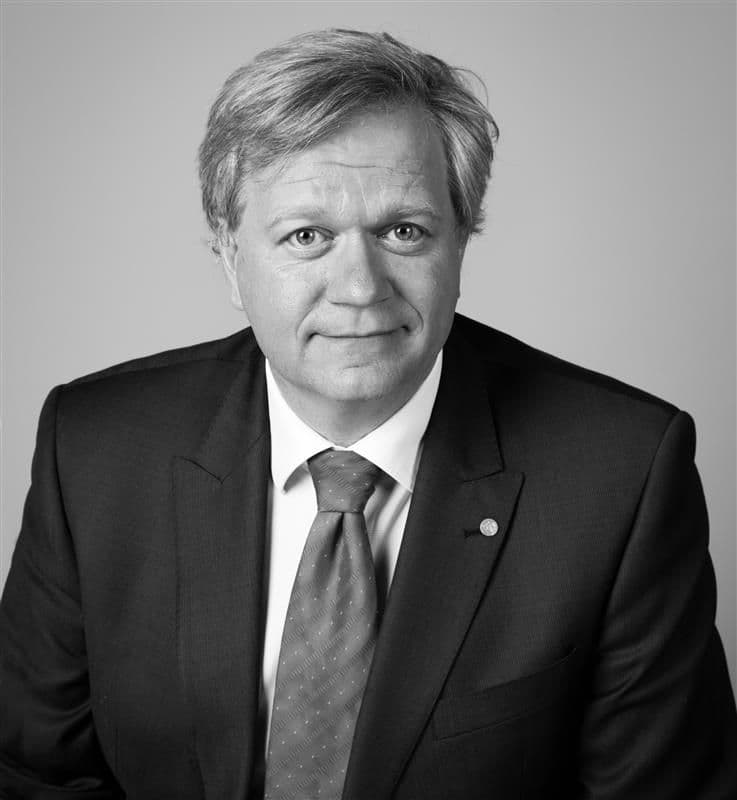
Every year, the international conference for students and young researchers in physics and natural sciences, “Open Readings 2026”, takes place in Vilnius. On 20 April at 3:00 p.m., attendees are invited to a lecture by Nobel Prize laureate Professor Brian Schmidt entitled “State of the Universe”.
The distinguished professor of Astronomy at the Australian National University, B. Schmidt, has made substantial contributions to modern cosmology through pioneering research. Awarded the 2011 Nobel Prize in Physics for the discovery of the Universe’s accelerated expansion, he provided the first robust evidence for dark energy. His research focuses on observational cosmology, supernovae, and large-scale astronomical surveys to clarify the composition, structure, and evolution of the Universe. He has also held important academic and scientific leadership roles, including serving as president of the International Astronomical Union.
Professor B. Schmidt’s lecture “State of the Universe” will offer a comprehensive and accessible overview of current cosmological knowledge, tracing the Universe’s development from the Big Bang through its subsequent evolution. The presentation will address fundamental properties of the Universe, including its size, age, density, shape, and composition, as well as insight from observational data concerning its history and possible future. The lecture will differentiate between established scientific findings and major unresolved questions in contemporary cosmology.
The event is free of charge and open to everyone interested in attending. Registration is required and is available here.
The lecture will take place on 20 April at 3:00 p.m. at the National Center for Physical Sciences and Technology (Saulėtekio Ave. 3, Room A101).
Event partner: Lithuanian Physical Society
“Open Readings” annually attracts over 500 participants in the Baltic States, including students, young researchers, and internationally recognised scientists, among them Nobel Prize laureates.