- 22 April 2026
- Justina Račaitė
VU Faculty of Medicine Hosts its Eighth Conference Dedicated to Health Issues Among Children and Adolescents
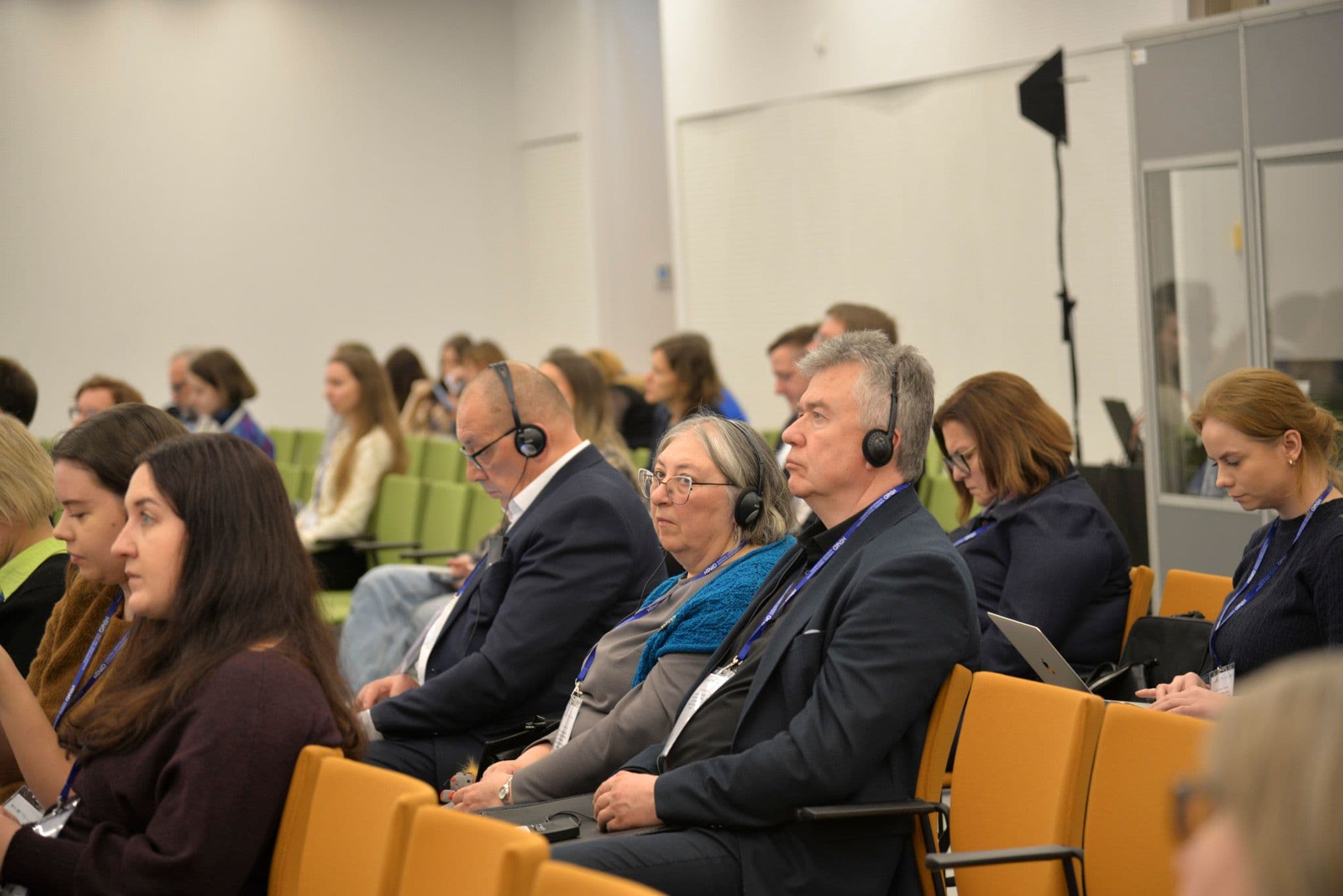
Continuing its longstanding tradition, the Department of Public Health at the Institute of Health Sciences (Faculty of Medicine at Vilnius University), in April, hosted an international conference, both research and clinically based, entitled “Let’s Raise a Resilient Generation: Children and Young People’s Resistance to Environmental Influences and the Use of Psychoactive Substances”. The event was attended by representatives from local government administrations and public health offices, professionals from the education, science, and healthcare sectors, representatives of children and youth, and other interested parties.
The conference aimed to highlight the World Health Organisation’s (WHO) 2026–2030 initiative, “A Healthy Start for a Healthy Life”, a strategy for child and adolescent health. These priorities align with Lithuania’s commitment to advancing the country’s health policy for children and adolescents.
According to the organisers, collaboration between the scientific and professional communities and the exchange of knowledge help to achieve the commitments of this new strategy. The Minister of Health, Dr Marija Jakubauskienė, noted that today a shift in the approach to young people’s health is essential. Greater focus should be placed on prevention, early intervention, and resilience-building, rather than merely addressing consequences. The Minister also noted that child and family health policy and priorities are currently on the Ministry’s agenda, and represent a cornerstone when building a resilient society.

Professor Dalius Jatužis, Dean of the Faculty of Medicine at VU, and Dr Marija Jakubauskienė, Minister of Health. Photo by Janas Karolis.
Dr Kremlin Wickramasinghe, Regional Adviser at the WHO Regional Office for Europe, raised a key question in his presentation: Are we truly making the best use of available data and evidence-based interventions to deliver the greatest benefit for children and their families? He noted that, unfortunately, economic and commercial interests often take precedence over children’s health. As a result, the new strategy focuses on understanding the systems through which commercial actors seek to influence health, manipulate data and steer decision-making in their favour.
The priorities set out in the new strategy for the health of children and adolescents are relevant to all 53 countries in the WHO European Region. To mark the 35th anniversary of the Nordic-Baltic partnership, representatives from Latvia, Estonia, Finland and Denmark were invited to the conference to deliver presentations and share their countries’ practices. Building resilience against environmental factors among children and youth, including commercial influences, is the cornerstone of prevention today. In Lithuania, specialists from municipal public health offices are carrying out vital work in this arena.
“We already have examples of successfully implemented best practices. However, we cannot stop here and must seek to ensure that more evidence-based interventions are developed, and that preventive measures reach every child and young person in Lithuania,” Dr Rita Sketerskienė, Director of the Drug, Tobacco and Alcohol Control Department and Partnership Professor of the Faculty of Medicine at Vilnius University, said while summing up the conference.
The conference was organised by the Department of Public Health at the Institute of Health Sciences (Faculty of Medicine at Vilnius University), the World Health Organisation Country Office in Lithuania, the Drug, Tobacco and Alcohol Control Department, the Nordic Council of Ministers Office in Lithuania and the Lithuanian Non-Formal Education Agency.