- 25 June 2026
- Eglė Misiūtė
Bone Implants That May One Day Fight Bacteria on Their Own
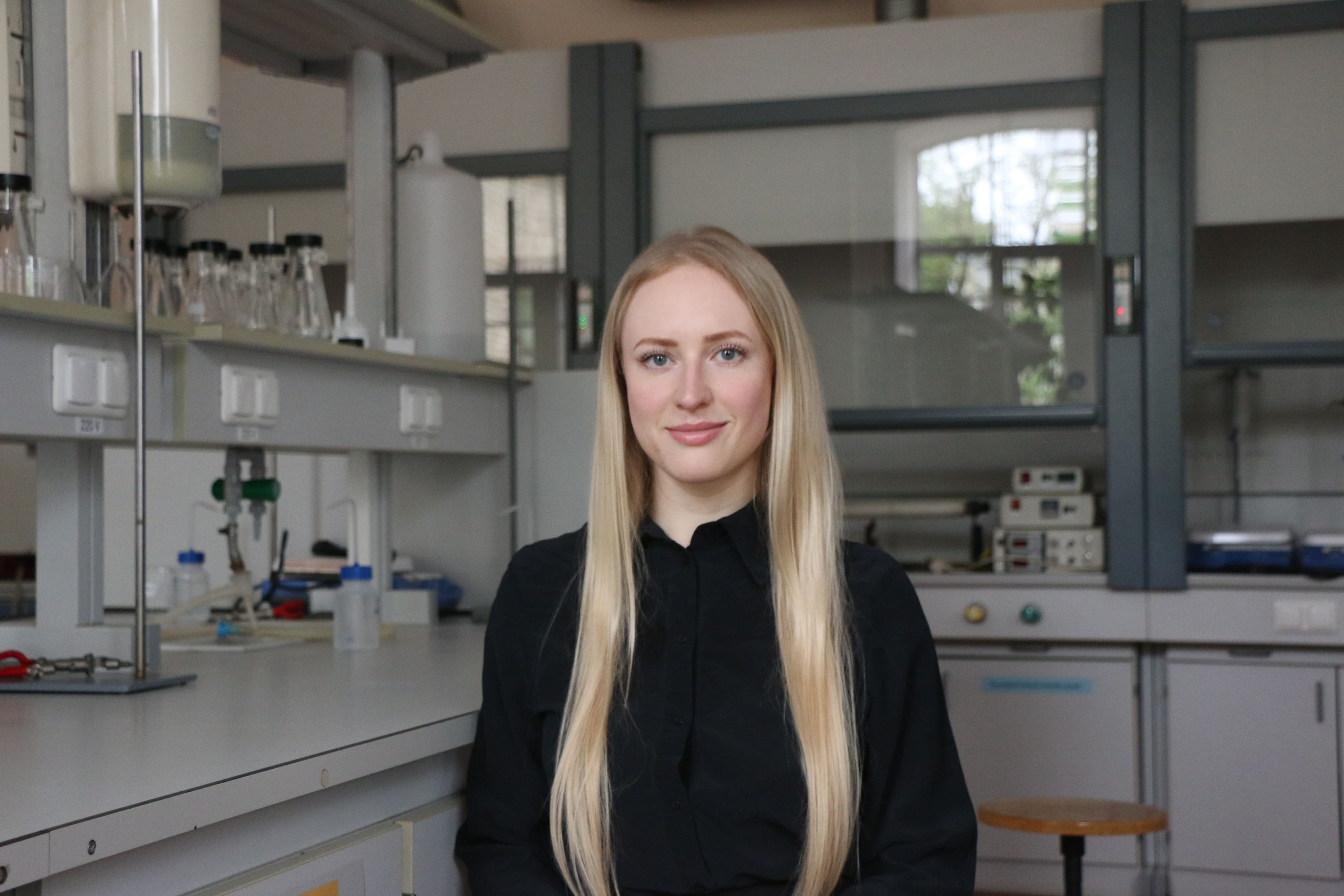
Bone implantation often marks not only the beginning of healing, but also a battle against infection. As the number of antibiotic-resistant bacteria continues to rise, scientists around the world are searching for ways to integrate infection protection directly into implants themselves. Dr Gabrielė Meižytė, a postdoctoral researcher in the Faculty of Chemistry and Geosciences (FCHG) at Vilnius University (VU), is developing a bioceramics material that could one day not only help restore damaged bone tissue, but also actively inhibit the spread of bacteria.
Materials that protect against infections
“The need for such materials in bone tissue regenerative medicine is extremely high, particularly in the fields of orthopaedics and dentistry. As the prevalence of antibiotic-resistant microorganisms grows, the development of biomaterials with antibacterial properties is becoming increasingly pressing. This project aims to enrich synthetic calcium phosphate materials used in medicine with antibacterial agents, ensuring their gradual release at the implantation site. This would help suppress inflammatory processes and is expected to reduce the risk of implant rejection,” says Dr Meižytė.
To this end, Dr Meižytė is carrying out a postdoctoral project entitled “An Approach to the Functionalisation of Calcium Hydroxyapatite Bioceramics: A Pathway from a Biocompatible Material to Advanced Functional Materials with Antibacterial Properties.” The project explores innovative solutions for developing materials that not only restore damaged bone tissue but also protect against post-implantation infections through their antibacterial properties.
How are biomaterials that replicate human bone developed
The researcher notes that while commercialisation potential exists, the path to practical application is a long one: “There are two possibilities – the theoretical one (preclinical studies, a manufacturing quality system, EU certification) or collaboration with industry partners or implant manufacturers who have the necessary infrastructure and expertise.”
Over the next two years, she hopes to develop durable composite granules of a specific size that exhibit antibacterial properties and controlled solubility in a physiological environment. The researcher’s greatest challenge is identifying the optimal synthesis conditions that would allow the desired granule properties to be maintained in the final composite. Studies on antibacterial properties are planned in collaboration with colleagues from the Life Sciences Centre and the Centre for Physical Sciences and Technology.
Dr Meižytė’s research reflects one of the most important directions in contemporary biomaterials science – the pursuit of developing materials that are not only effective, but also sustainable. In creating new composites, the researcher draws on the principles of green chemistry: she uses an easily accessible natural raw material – calcium sulphate – carries out synthesis at low temperature, and avoids organic solvents entirely.
“This approach makes it possible not only to reduce energy consumption and environmental impact, but also to obtain a material whose properties more closely resemble those of natural human bone. Low synthesis temperature is important not only for its environmental benefits. It enables the production of a low-crystallinity material that resembles human bone tissue not only in its chemical composition but also in its microscopic structure. Such biomimetic materials are attracting growing attention from researchers worldwide, as they are considered one of the most promising directions in regenerative medicine. This project, therefore, aligns with international trends in biomaterials research, where increasing emphasis is being placed not only on medical efficacy, but also on sustainability,” the researcher explains.
From Oxford to Vilnius
A postdoctoral fellowship at VU FCHG is not only a professional step forward, but also a return to Lithuania. “I feel a desire to give something back to Lithuania, as this is where I grew up. I want to contribute to building Lithuania’s future and strengthening its science, and to do work that is meaningful and beneficial to society. Within the Vilnius University research community, I hope to build connections, engage with my colleagues’ research, and collaborate. In the future, I would like to continue my research, and perhaps expand its directions and venture into new areas,” the researcher shares.
Dr Meižytė began her academic journey in the United Kingdom – she obtained her master’s degree in Glasgow and her PhD at the prestigious University of Oxford. Vilnius was not a coincidental, but a deliberate stop on her scientific journey. She chose VU FCHG for two reasons – a qualified team and suitable infrastructure: “Prof. Aivaras Kareiva and Assoc. Prof. Inga Grigoravičiūtė, my direct supervisor, have more than a decade of experience in this field. In addition, the faculty has all the equipment needed for materials synthesis and characterisation. Through collaboration with colleagues from other research institutions, opportunities arise to carry out studies on the antibacterial properties of the synthesised composites.”
The researcher’s academic journey has consistently shaped her scientific interests. The decision to deepen her expertise in the field of bioceramics was driven not only by her experience, but also by a desire to create added value: “When I saw the opportunity to apply for a postdoctoral fellowship, I realised I had the experience needed and that I could do something good and useful in the field of synthetic bone substitute development.” The researcher is particularly fascinated by the study of materials at the molecular level, which allows for a deeper understanding of their mechanisms of action and a purposeful search for new applications.