Emergency Response Guide
In the event of an air threat warning or other threats, it is important to know the key information and actions that help ensure your safety and that of those around you.

Recommendations in case of an air threat
What should you know in case of an air threat? Answers to frequently asked questions.
Remain calm, follow the instructions provided, and monitor official communications from Lithuanian authorities, as well as information broadcast via the Lithuanian National Radio and Television.
We encourage members of the Vilnius University community to familiarise themselves in advance with the locations of shelters in their work or study environment.
It is essential to prepare for such situations in advance – familiarise yourself with recommendations on how to act in various types of hazards and emergency situations, know which essential items you should keep at home, where the nearest shelters are located, and what preventive measures need to be taken. This information, along with the option to download a mobile application, is available on the website LT72.lt.
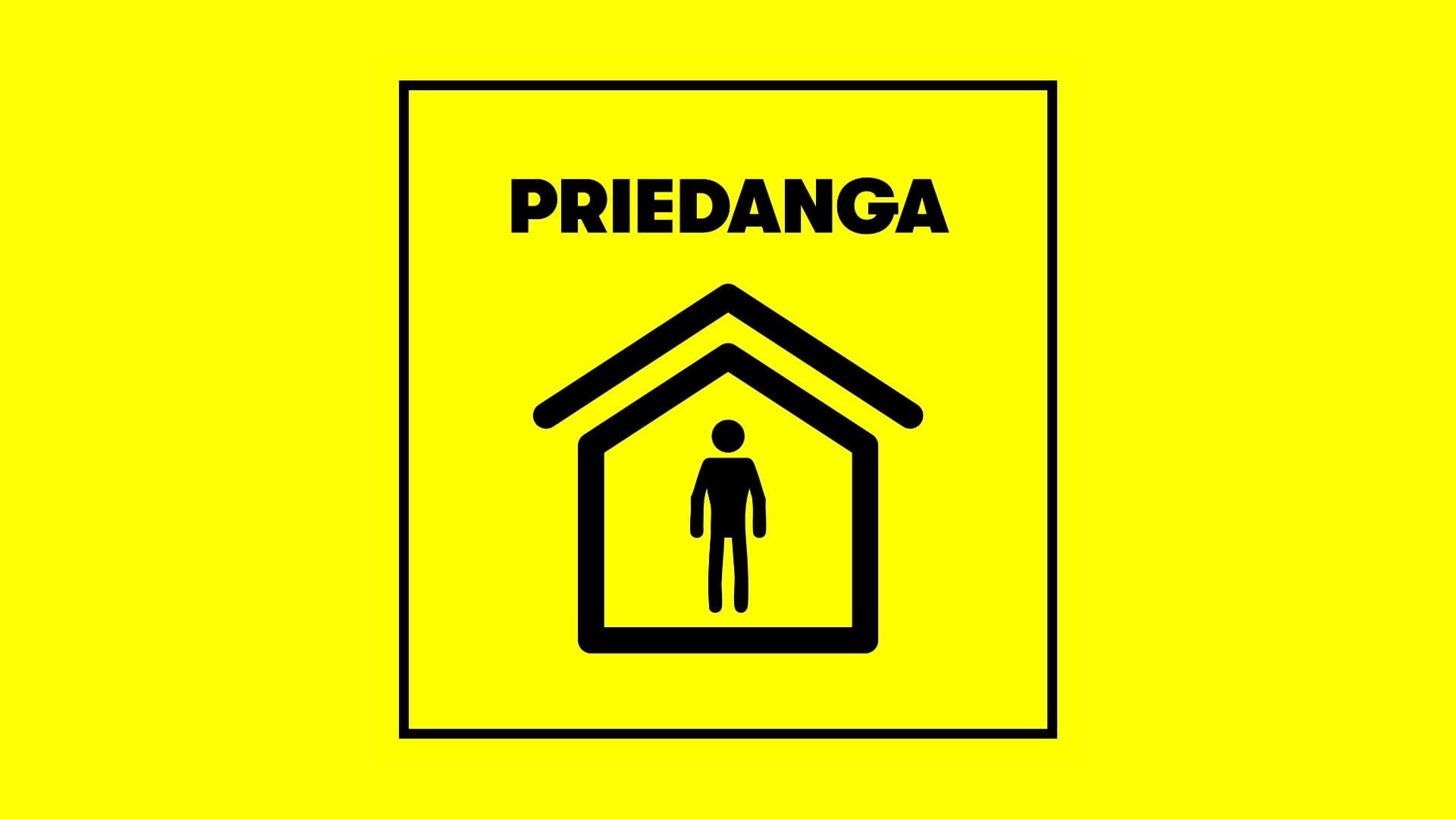
Shelter sign
Shelters are marked with a special “Shelter” sign on a yellow background.The following shelters are available on the VU campuses.
Central Campus area
Universiteto St. 3
M. K. Sarbievijaus Courtyard
A. Mickevičiaus Courtyard
Spaustuvės Courtyard
S. Daukanto Courtyard
Universiteto St. 5
Institute of Journalism, Faculty of Communication
Maironio St. 7
Institute of Journalism, Faculty of Communication
Vokiečių St. 10 | Safe place
Saulėtekis Campus
Saulėtekio Ave. 7
Saulėtekio Ave. 9, I-ieji, II-ieji, III-ieji rūmai, jungiamieji rūmai
Faculty of Mathematics and Informatics
Naugarduko St. 24
Didlaukio g. 47
Faculty of Chemistry and Geosciences
Naugarduko St. 24
Faculty of Medicine | Medical Science Centre
M. K. Čiurlionio St. 25 A
Žaliųjų ežerų St. 2
Visoriai
Mokslininkų St. 12
Akademijos St. 4
Frequently Asked Questions
1. What is an air threat alert, and are all alerts the same?
An air threat alert warns about a potential threat to the safety of the public. Upon receiving an alert notification or message, it is necessary to monitor official information and follow the instructions provided.
Alerts may differ, so the public is informed about different situations through separate notifications.
2. What are the different categories of air threat alerts?
Lithuania currently uses four categories:
YELLOW (potential air threat)
This alert indicates a potential air threat, but the objects that may pose a threat are not yet within Lithuanian airspace.
Instructions for the public following this alert notification:
Residents should remain calm, identify safe locations (basements, bathrooms, storerooms, other windowless rooms) or shelters, monitor official information and further notifications, and be ready to act, if necessary.
YELLOW AFTER RED (potential air threat, where the notification is received after an air threat alert, and the objects that may pose a threat are not presently within the airspace)
This alert indicates a potential air threat, but the objects that may pose a threat are not yet within Lithuanian airspace.
Instructions for the public following this alert notification:
Remaining in safe locations or shelters is advised until a notification that the threat is over (WHITE alert) has been received.
RED (air threat)
This alert indicates that an object has entered Lithuanian airspace, or that there is a high probability it will enter Lithuanian airspace and may pose a threat.
Instructions for the public following this alert notification:
Residents must immediately follow the instructions in the alert notification: hurry to the nearest safe locations (basements, bathrooms, storerooms, other windowless rooms) or shelters, monitor information from the Lithuanian Radio and Television (LRT) and follow further alert notifications.
WHITE (all-clear)
Instructions for the public following this notification:
Residents may leave safe locations and shelters, but are urged to remain vigilant and continue monitoring official information.
NOTE: the public receives a separate notification about the end of each threat (each colour category). Please continue following the most recent instructions unless you receive a notification of a change in the threat level or the end of the threat.
3. How do shelters, safe locations and collective security structures differ?
Shelters are locations meant for short-term protection (up to several hours) during an air threat. All shelters are marked with a special sign – a yellow square displaying the word Priedanga (Lithuanian for ‘shelter’).
Safe locations are places that may provide protection when no nearby shelters are available. They can be basements, indoor storerooms, windowless corridors or bathrooms, as well as places meeting the two-wall rule (there should be at least two walls between a person and the outside of a building). Windows, balconies, elevators and open spaces are to be avoided. Premises located on the top floor of a building are not suitable.
Collective security structures are locations designated by the municipality for public use where residents may stay for longer periods during emergencies, evacuations, or war. In addition to providing protection, such structures are also intended to meet essential needs. These structures are marked with a special sign – a blue triangle inside an orange square.
4. Is it always necessary to go to an official shelter?
No. If there is no shelter nearby, choose the safest available location in the immediate vicinity – a basement, underground premises, or a location that meets the two-wall rule. The priority is to leave the dangerous place as soon as possible and move to the safest available location nearby.
5. Where are the nearest shelters at Vilnius University?
They are listed in the ‘Emergency Response Guide’ at https://www.vu.lt/en/emergency-response-guide
6. What should I do if I receive an air threat alert?
Basic information on what you need to do in a specific situation is always provided in the alert notification delivered to your mobile phone. Once you receive the notification, it is important to read it carefully and follow the instructions provided.
Depending on the situation and the level of threat, the public may be advised to prepare for a potential threat, to remain in a safe location or shelter, or to proceed to a shelter or another safe location immediately.
Lithuania currently uses four categories:
YELLOW (potential air threat) – members of the community should remain calm, identify safe locations or shelters, monitor official information and further notifications.
YELLOW AFTER RED – remaining in safe locations or shelters is advised until a notification that the threat is over (white alert) is received.
RED (air threat) – members of the community must immediately follow the instructions in the alert notification, proceed to the nearest safe location or shelter, and monitor official information.
WHITE (all-clear) – members of the community may leave safe locations and shelters but are advised to remain vigilant and stay informed.
Note: the public receives a separate alert notification of a change in the threat level or the end of the threat. Please continue following the most recent instructions unless you receive a new notification.
If a student or an unclassified student is the first to receive information about a declared air threat, they must immediately inform the relevant person – the lecturer conducting the session, the chairperson of the commission, or the group head. Having verified that the information is accurate at the present time and applicable to the current location, the responsible person must inform everyone: ‘An air threat has been declared. We are suspending the session or work. We must proceed to a safe location.’
7. What to take when going to a shelter or a safe location?
If you have time and it does not create additional risk, take your mobile phone, charger or external battery, personal documents, essential medicines and drinking water. However, the priority is to reach a safe location as quickly as possible and without delay.
8. What should I do if I receive an air threat alert while outside?
- Find your nearest shelter or another safe location as quickly as possible and hide there. This may include, in addition to locations designated with a shelter sign, underground pedestrian crossings, tunnels, basements or any other locations that may provide protection.
- Do not go out into the street or move in open spaces unnecessarily.
- To prevent phone lines from being overloaded or blocked, avoid unnecessary calls to your relatives, friends, or acquaintances on mobile phones. To reach your relatives, send messages instead.
- Only make phone calls if you need to request emergency services or report injured people or unexpected threats.
- Continuously monitor official information transmitted through the media, as recommendations may change as the situation evolves.
- Remain hidden until you are notified that the air threat is over (WHITE alert).
- Do not give in to panic – remain calm, composed, and follow the instructions as they are transmitted.
- Do not film or photograph any flying objects. No photo is worth risking your life for.
9. What should I do if I receive an air threat alert while at a place of work/study or in another building?
- Upon receiving the notification, follow the instructions of heads of units or obligated representatives.
- If no such instructions are given, immediately leave the place of work/study or another location and proceed to the nearest shelter, safe location, or basement.
- If there is no shelter close to you, use other safe premises in the building where you are located, such as basements, ground floors or other windowless premises separated from the outside by two walls.
- If you must remain in a room with windows, move away from them as far as possible. Areas near windows are particularly dangerous.
- Do not use elevators.
- Remain hidden until you are notified that the air threat alert has been lifted.
10. What if an examination or other assessment is interrupted due to a declared air threat?
If an examination or other assessment is interrupted due to a declared air threat, it shall be postponed to a later date. The member of the teaching staff, in agreement with the CAU’s Studies Office and the CAU’s deputy head for studies, shall announce the new date within one working day, informing the students accordingly via the VU email and, if necessary, additionally via the VU MS Teams channels or the VU Virtual Learning Environment. This shall apply unless the member of the teaching staff and all the students agree otherwise, and the member of the teaching staff confirms the agreed arrangements for the assessment to all students by VU email.
11. What if the final examinations or the defence of final theses are interrupted due to a declared air threat?
If the final examinations or the defence of final theses are interrupted due to a declared air threat and the threat alert is lifted within one hour of its announcement, the decision whether to continue the examination or defence on the same day shall be taken by the chairperson of the examination commission. If the declared threat lasts more than one hour, the final examinations or defence of that day shall be cancelled, and a new date shall be agreed in coordination with the CAU’s Studies Office and the CAU’s deputy head for studies. The new date shall be announced within one working day. The students shall be informed accordingly via VU email and, if necessary, additionally via the VU MS Teams channels or the VU Virtual Learning Environment.
12. What should I do if I receive an air threat alert while at the dormitory?
YELLOW (potential air threat):
- remain calm and assess the situation
- put on suitable clothing and be ready to leave the room quickly if needed
- monitor official information.
RED (air threat):
- remain calm and act immediately according to the alert messages or notifications
- dress appropriately for the conditions and take your essential items
- if reaching a shelter safely is not possible, remain inside the dormitory building:
- choose an inner corridor or another windowless room, separated from the outside by at least two walls
- move as far away as possible from windows and outer walls
- avoid windows, balconies, elevators and open spaces
- the premises located on the top floor of a building are not suitable
- monitor official information and wait for the notification that the threat is over
- once the threat is over and there are no further instructions, return to your rooms
13. When can I leave a shelter or a safe location?
Only leave the shelter or the safe location after receiving a notification that the threat is over (WHITE alert) or other official instructions from the competent authorities. Please continue following the most recent instructions unless you receive a new notification.
14. What are the procedures in the event of an air threat declared during the diploma award celebrations
If a YELLOW (potential air threat) alert has been received, the ceremony will continue, but you will be invited to remain vigilant and monitor information from the organisers and the competent authorities. In the event of a RED (air threat) alert, the diploma award ceremony will be suspended immediately; participants (both in the church and in open spaces) must proceed to shelters and safe locations within the territory of the Central Campus of Vilnius University. Anyone planning to take part in the diploma award celebrations at the Central Campus of Vilnius University is invited to familiarise themselves in advance with the locations of shelters and other safe locations within the territory of the Central Campus of VU. For the exact locations of the shelters, photos of the entrances, and other relevant information, see the ‘Emergency Response Guide’ at https://www.vu.lt/en/emergency-response-guide.
15. Why didn't I receive an alert notification?
If you did not receive an alert notification, it is recommended that you check your mobile phone settings and ensure that the Emergency Alerts (Cell Broadcast) function is enabled. It is also essential that your mobile phone is switched on and updated to the latest version of the operating system.
On mobile devices that support two SIM cards, the Cell Broadcast function can only be set up when the first SIM card is enabled; otherwise, alert notifications will not reach you.
16. How can I enable alert notifications on my mobile phone?
In Lithuania, alert notifications are sent to mobile phones using the Cell Broadcast technology. This system enables important information about an impending or existing threat to be transmitted rapidly to all residents in a specific area via their mobile phones.
To receive alert notifications, your phone must have the alert notification feature enabled. Most newer phones have it enabled automatically, but it is recommended to double-check that the function is enabled and that you will indeed receive alert notifications when necessary.
Instructions for activating alert notifications
On iPhone mobile phones:
Open ‘Settings’.
Select ‘Notifications’.
Scroll to the bottom.
Under ‘Government Alerts’ enable all available options.
If this section is not available, ensure you have the latest version of your mobile operating system.
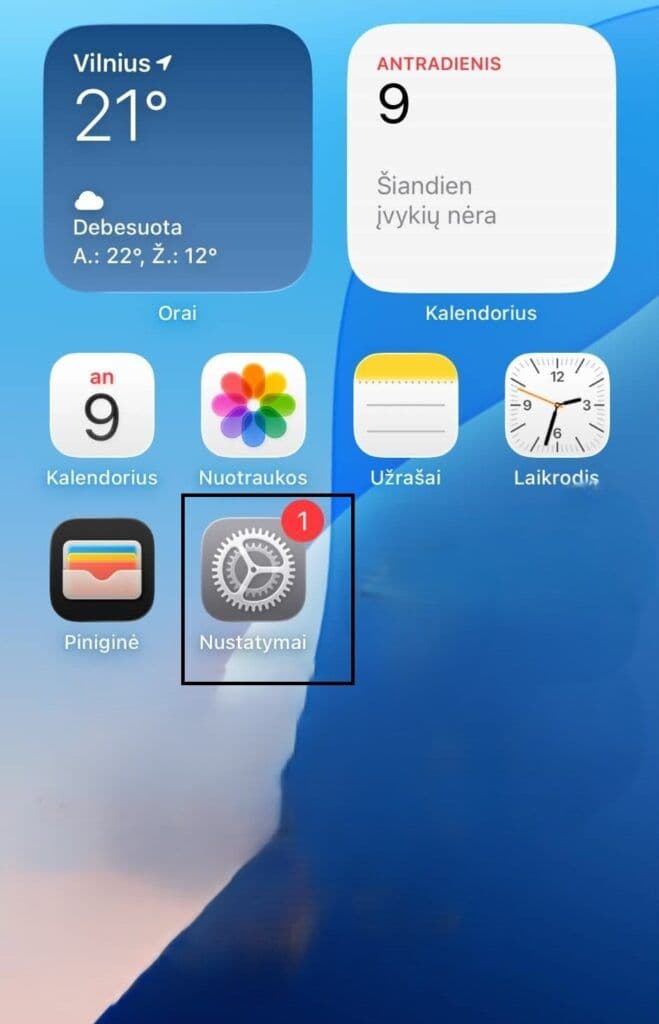 | 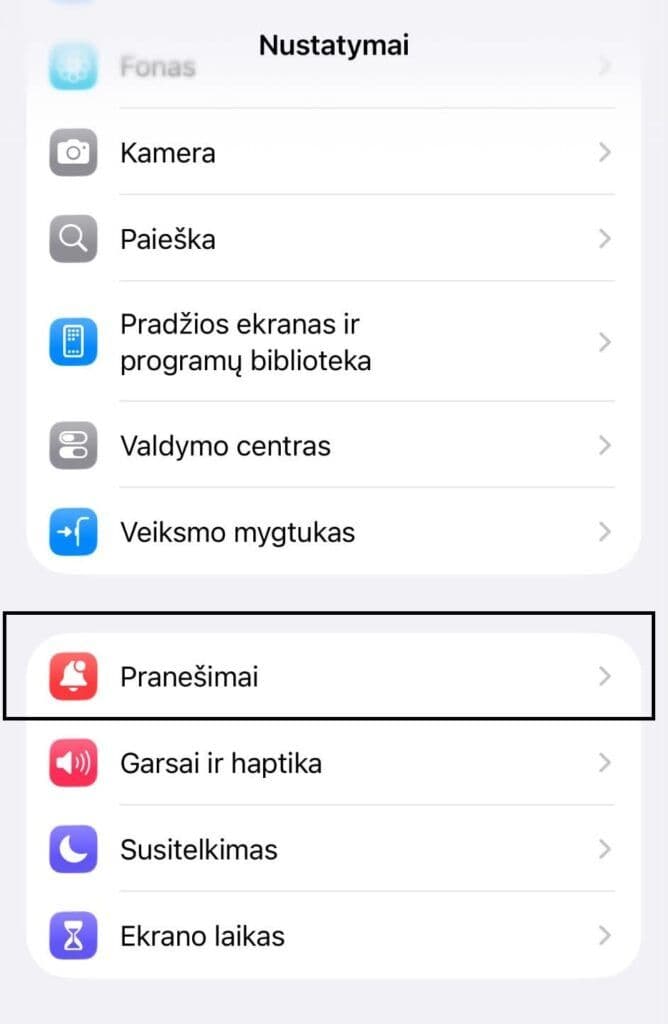 | 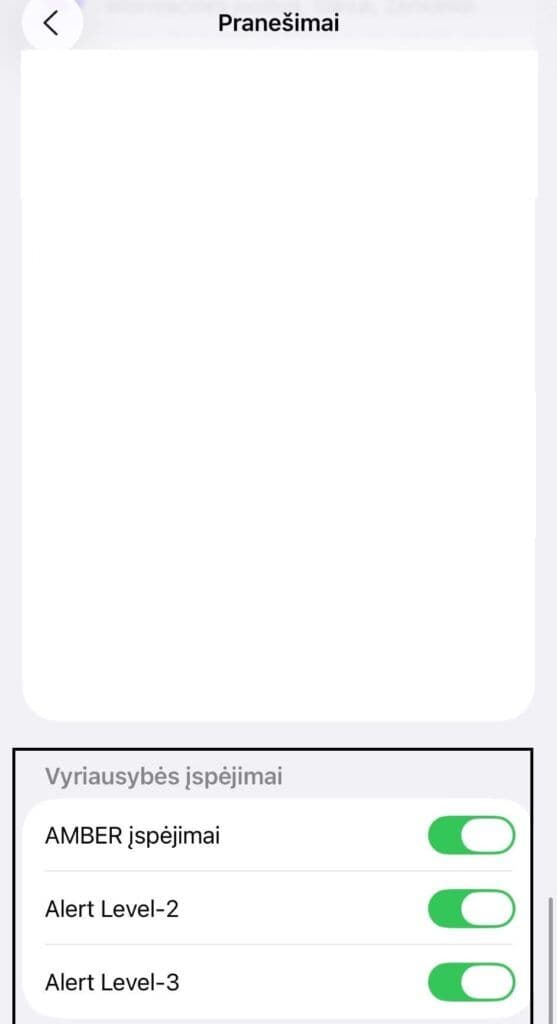 |
On Android phones:
Open ‘Settings’.
Select ‘Safety & Emergency’ or ‘Notifications’.
Select ‘Wireless Emergency Alerts’ or ‘Cell Broadcast’.
Enable notifications and all the alert categories.
Some mobile phone manufacturers (e.g. Samsung, Xiaomi, OnePlus, and others) might display these settings slightly differently. If you cannot find them, use the Search function in your phone settings and use keywords such as ‘Alert notifications’, ‘Emergency alerts’, ‘Wireless Emergency Alerts’ or ‘Cell Broadcast’.
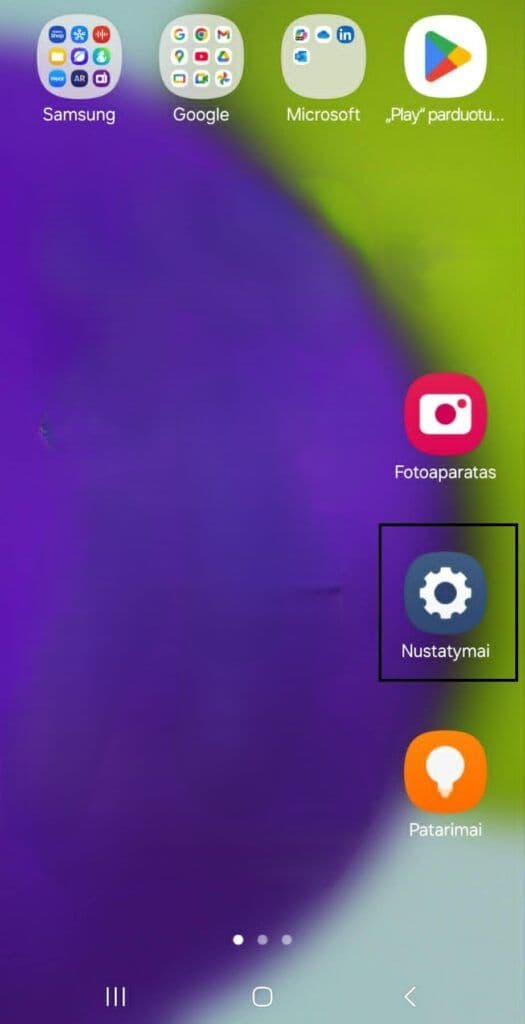 | 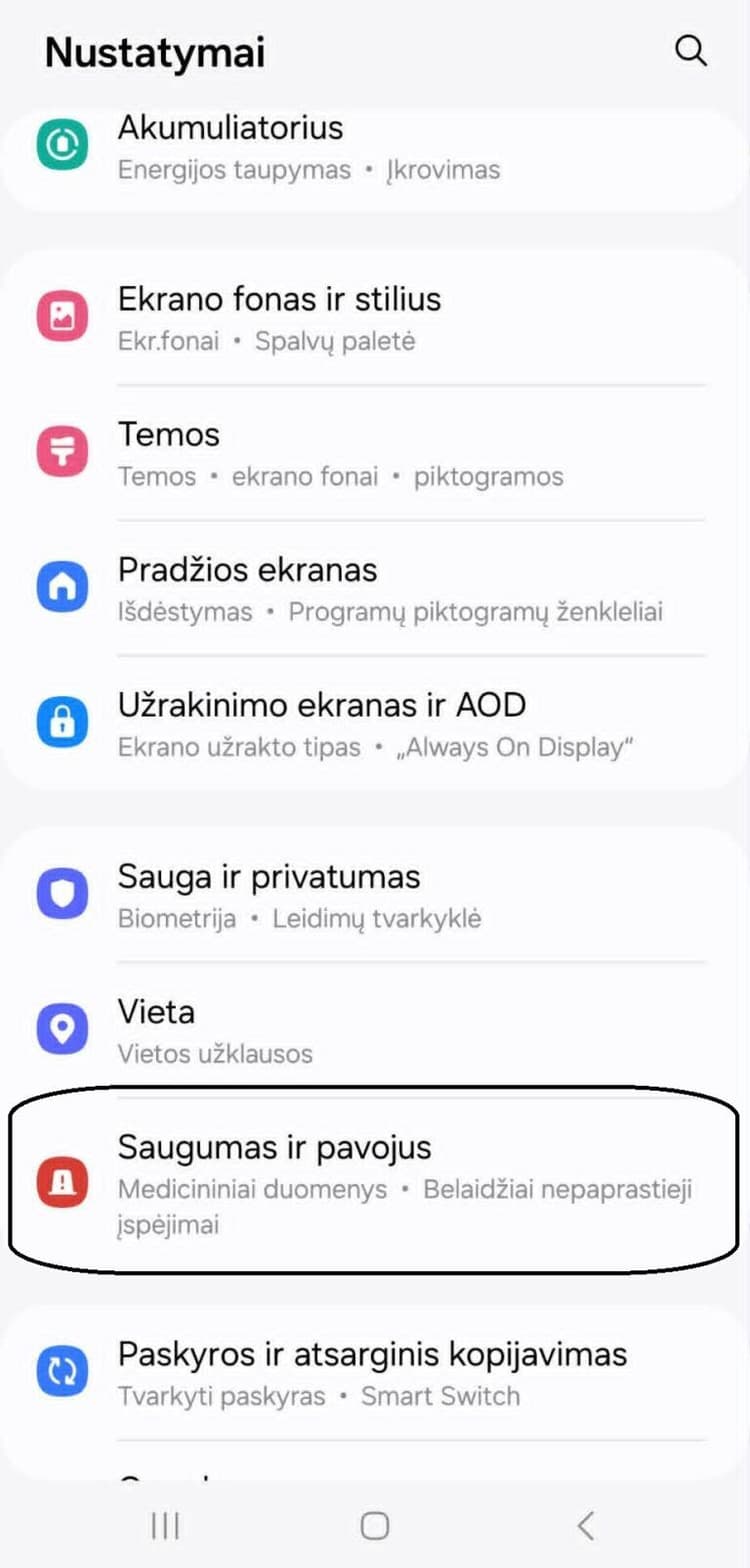 | 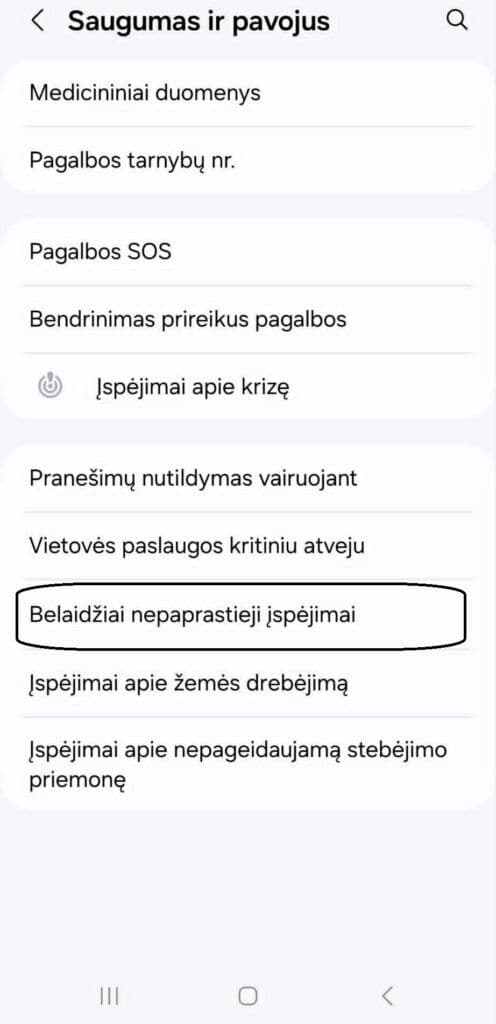 | 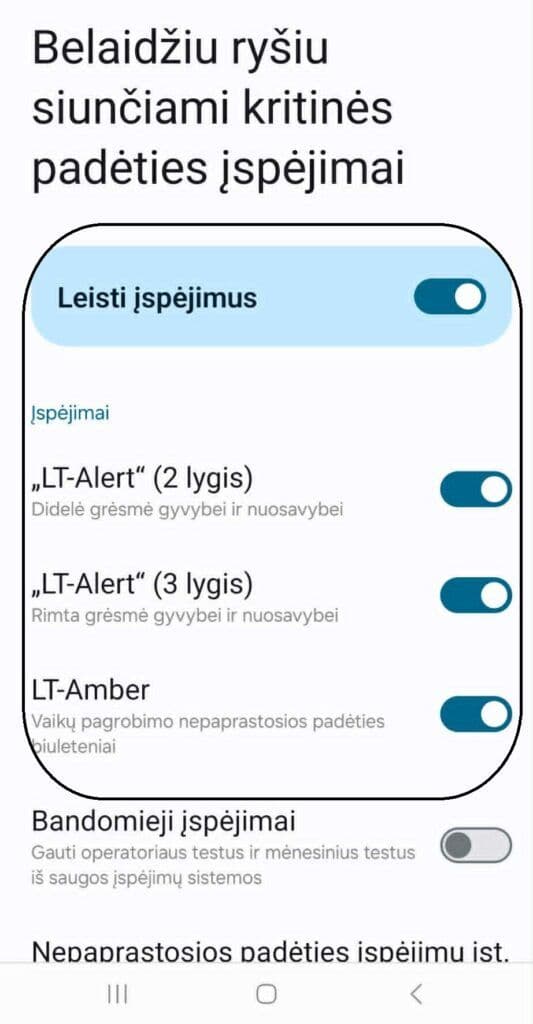 |
How do I check if alert notifications have been sent?
If you want to check whether alert notifications have been sent to your phone, visit the ‘Sent Messages’ section of the LT72 website. It publishes information about alert notifications sent to residents and the content of the notifications (note the territory in which the notifications were sent and whether you were within that territory).
IMPORTANT: on mobile devices that support two SIM cards, the Cell Broadcast function can only be set up when the first SIM card is enabled; otherwise, alert notifications will not reach you
17. What should I do if I receive an air threat alert while on public transport?
Follow the driver's instructions, do not distract the driver or request a stop in your preferred location. Once the bus or trolleybus stops and you get off, proceed to the nearest shelter. This may include, in addition to locations designated with a shelter sign, underground pedestrian crossings, tunnels, basements or any other safe locations. Do not go out into the street unnecessarily.
18. What should I do if I receive an air threat alert while driving in the city?
- Do not panic. Follow the traffic rules and drive calmly towards the nearest shelter without endangering other road users.
- If reaching a shelter is not possible, look for the nearest location that may provide protection against the effects of shrapnel and impact – a solid building, an underground car park, an underground crossing, a basement or another safer location.
- Do not brake abruptly on the carriageway and do not leave the vehicle in places where you may obstruct traffic or present an additional hazard.
- Avoid stopping on bridges, viaducts, in tunnels, under overpasses, near gas stations, energy infrastructure facilities, military sites, large gatherings of people or other potentially dangerous areas.
- Once you have reached a safer place, switch off the engine, leave the vehicle and go to the shelter or inside the building.
19. Where can I find psychological or emotional support?
VU community members, students and staff can seek psychological support in cases of anxiety, stress or emotional difficulties.
Information on psychological support and registration for psychological counselling can be found here.