- 13 May 2026
- Greta Zulonaitė
Council of Europe Secretary General: Europe Must Not Choose Between Security and Democracy
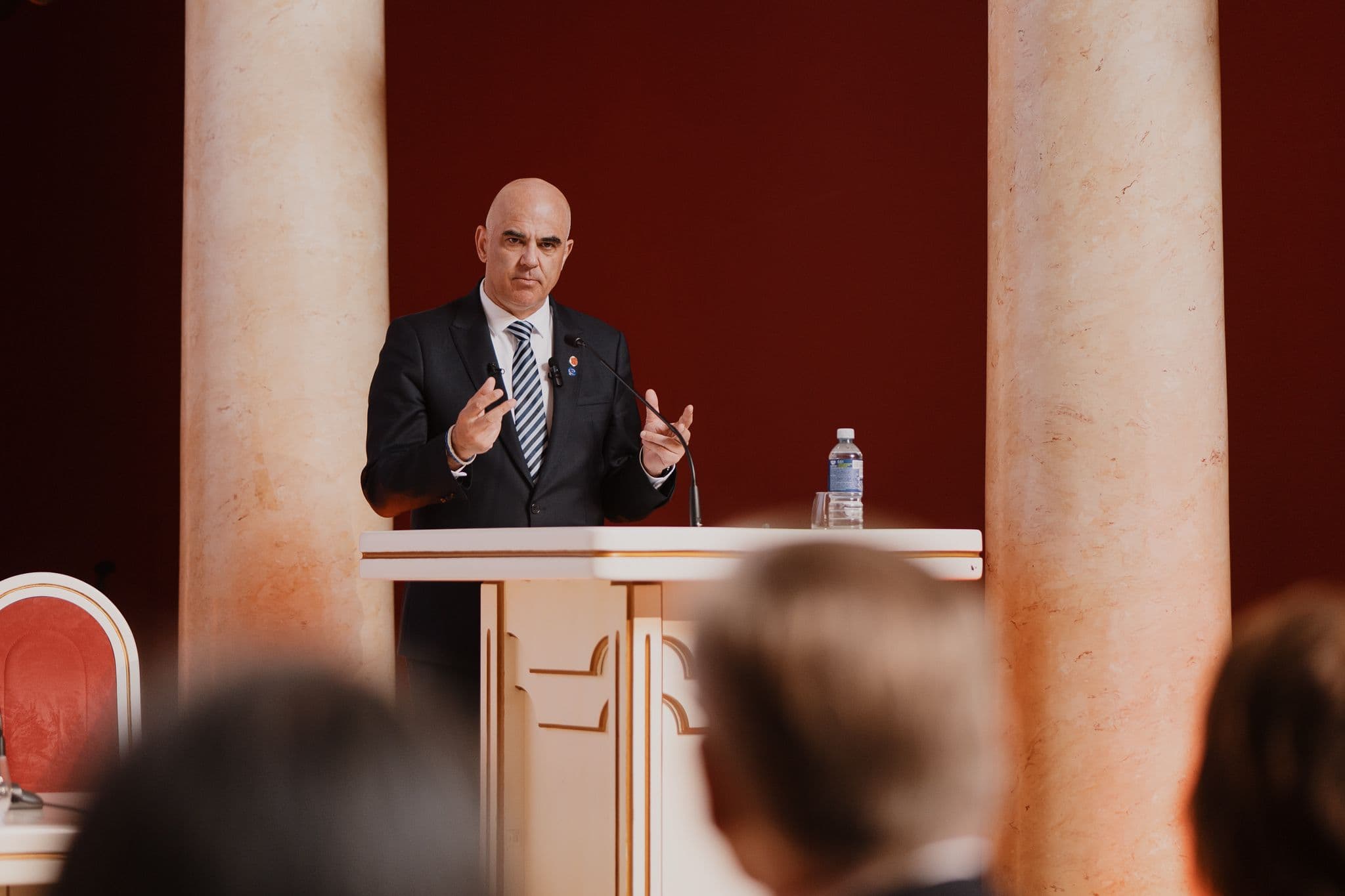
‘In times of rupture, Europe must answer with democratic security, with lad, institutions, and a society strong enough to defend its own future,’ said Council of Europe Secretary General Alain Berset in a lecture delivered at Vilnius University (VU). During the event, he introduced the New Democratic Pact for Europe and discussed how Europe should respond to challenges facing democracies across the continent.
What kind of world do we want to live in?
Speaking about the difficult choices Europe currently faces, Alain Berset referred to the example of Ukraine: ‘During my most recent trip to Kyiv, I visited a power plant that supplies electricity to more than half of the city. This facility is under constant missile attack. Whenever missiles approach, an air raid alert is announced, and the people working there have only minutes to reach a shelter.’
Inside the plant’s control centre, Berset noticed a small steel capsule and asked about its purpose. He was told that once the sirens sound, at least one employee must enter the capsule to ensure the uninterrupted operation of the power plant. According to the Council of Europe Secretary General, this example illustrates Ukraine’s resilience.
‘The attacks against Ukraine continue, which is why our work there remains a priority – and that also includes accountability. And accountability for Ukraine is about far more than Ukraine itself. This is the choice we face today: do we want to live in a world ruled by brutality, war, aggression, force, and violence, or one where peaceful relations, respect for international law, dialogue, and accountability prevail?’ he asked.
The weakening of democracies
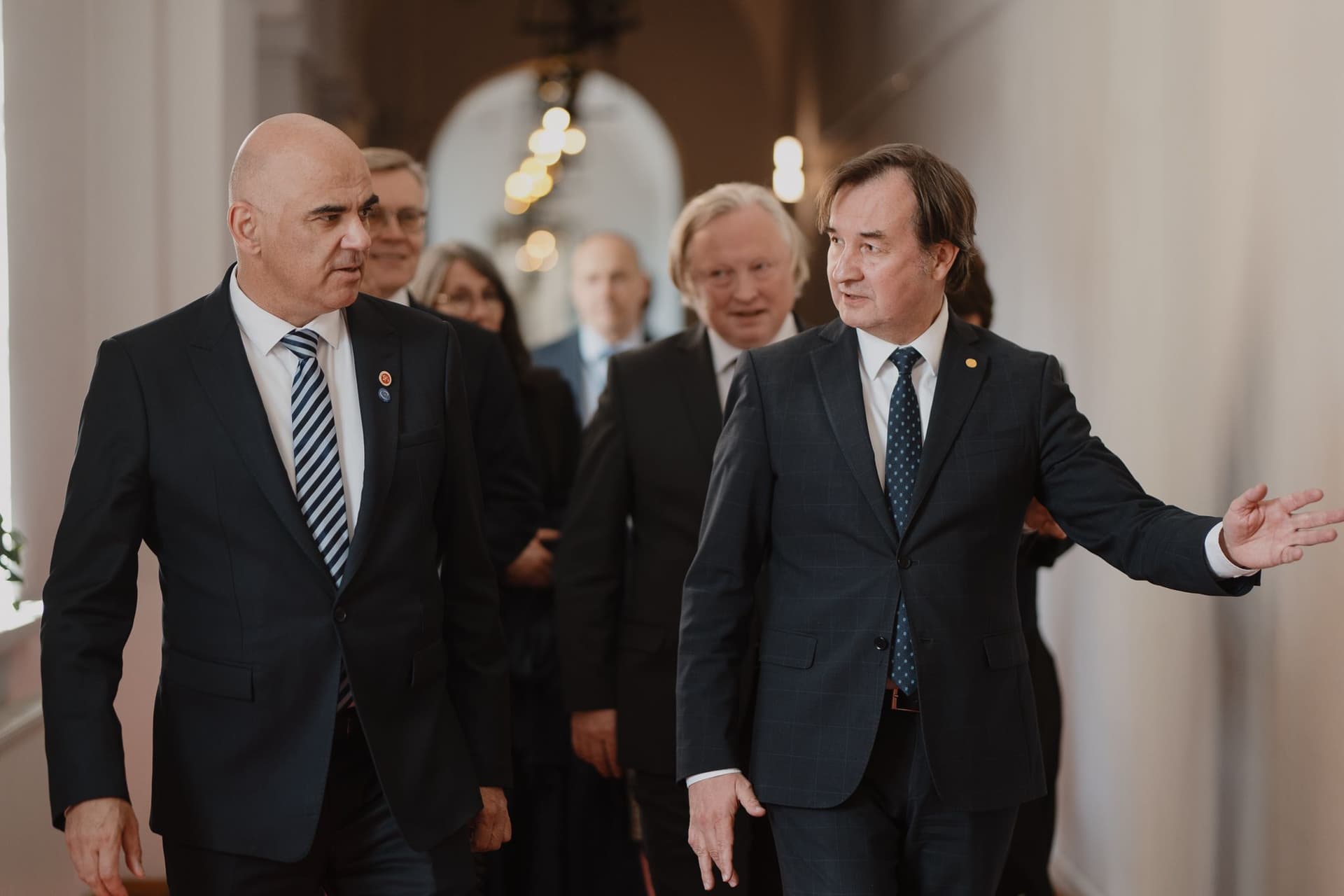
Highlighting the role of European institutions, Berset spoke about his recent meetings with representatives from the United Kingdom, Ireland, North Macedonia, and Bosnia and Herzegovina.
‘The question is: what do these countries have in common? They each have different historical backgrounds, yet they are united by a shared legal space. At the core of this common European legal space, encompassing 46 member states, are the European Convention on Human Rights and the European Court of Human Rights,’ said the Council of Europe Secretary General.’
He described the European Convention on Human Rights as a tool that has shaped the face of Europe: ‘The Convention helped preserve peace in Northern Ireland through the Good Friday (Belfast) Agreement. That peace agreement between Ireland and the United Kingdom regarding Northern Ireland relied on a shared commitment to one key principle respected by all – the European Convention on Human Rights.’
However, according to Berset, the Convention is increasingly being questioned, while court rulings are coming under growing political pressure. He added that, on the one hand, European countries are paying greater attention to defence, but on the other, democracy across the continent is weakening.
‘What kind of Europe will we see in ten years – one that is militarily strong, yet democratically weakened? Can we truly speak of security if democratic institutions are no longer capable of overseeing the military power, however strong it may be? These are also questions we must ask ourselves,’ Berset said.
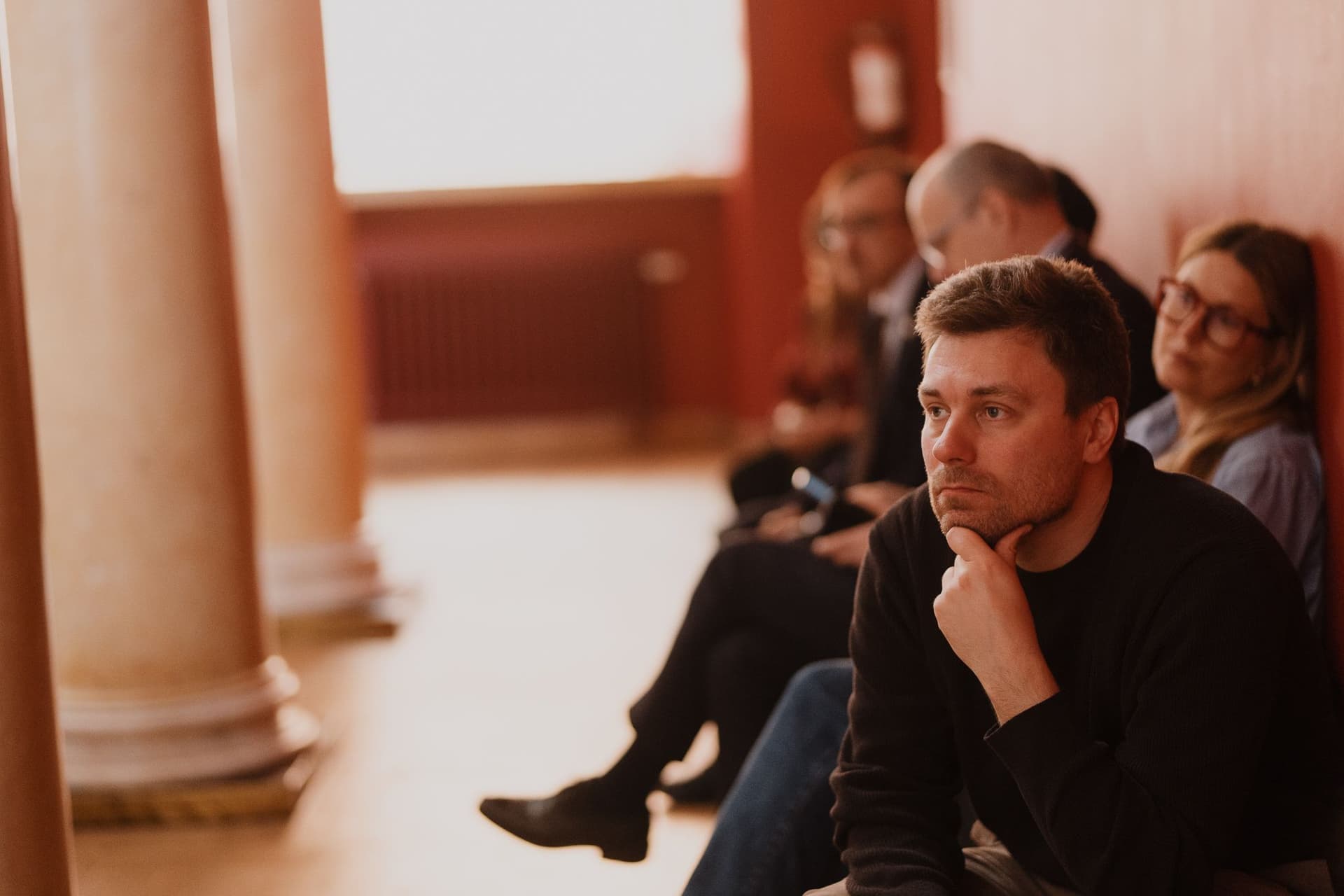
‘My remarks should not be interpreted as criticism of efforts to strengthen defence capabilities. I simply want to show why it is essential to invest in democratic values and democratic principles. This is precisely why the New Democratic Pact for Europe is far more than just another attractive initiative within the broader landscape. It is essential to our stability in today’s world,’ the Council of Europe Secretary General stressed.
The Baltic Way as a lesson Europe needs today
In concluding his lecture, Berset said he believes that long-term security begins with institutions people can trust and democracies capable of withstanding pressure.
‘Democratic security protects people and democracy itself because it ensures that power remains accountable to democratic principles, human rights, and the rule of law. All of this transcends the old distinction between so-called hard and soft security,’ said the Council of Europe Secretary General.
In his view, hard security is understood as military power, whereas soft security concerns education, institutions, and democracy: ‘Today, we can no longer separate the two, as democratic security requires a comprehensive approach. That means independent courts, transparent elections, and a free media. But it also means the capacity to counter threats such as cyberattacks, terrorism, information manipulation, and interference in democratic processes.’
According to Berset, this concept of democratic security lies at the heart of the New Democratic Pact for Europe. The initiative aims to restore trust in institutions and strengthen democratic resilience.
The Secretary General concluded by stressing that Europe must not choose between security and democracy: ‘Lithuanians know this well from their own history – I am referring to the Baltic Way. In 1989, just months before the fall of the Berlin Wall, the world witnessed something extraordinary. Two million people across the three Baltic states joined hands in a human chain stretching more than 600 kilometres from Vilnius to Tallinn. A secret pact had divided these countries, but their message was clear: we remember, and our future will not be decided without us. I believe this is precisely the message Europe needs today.’
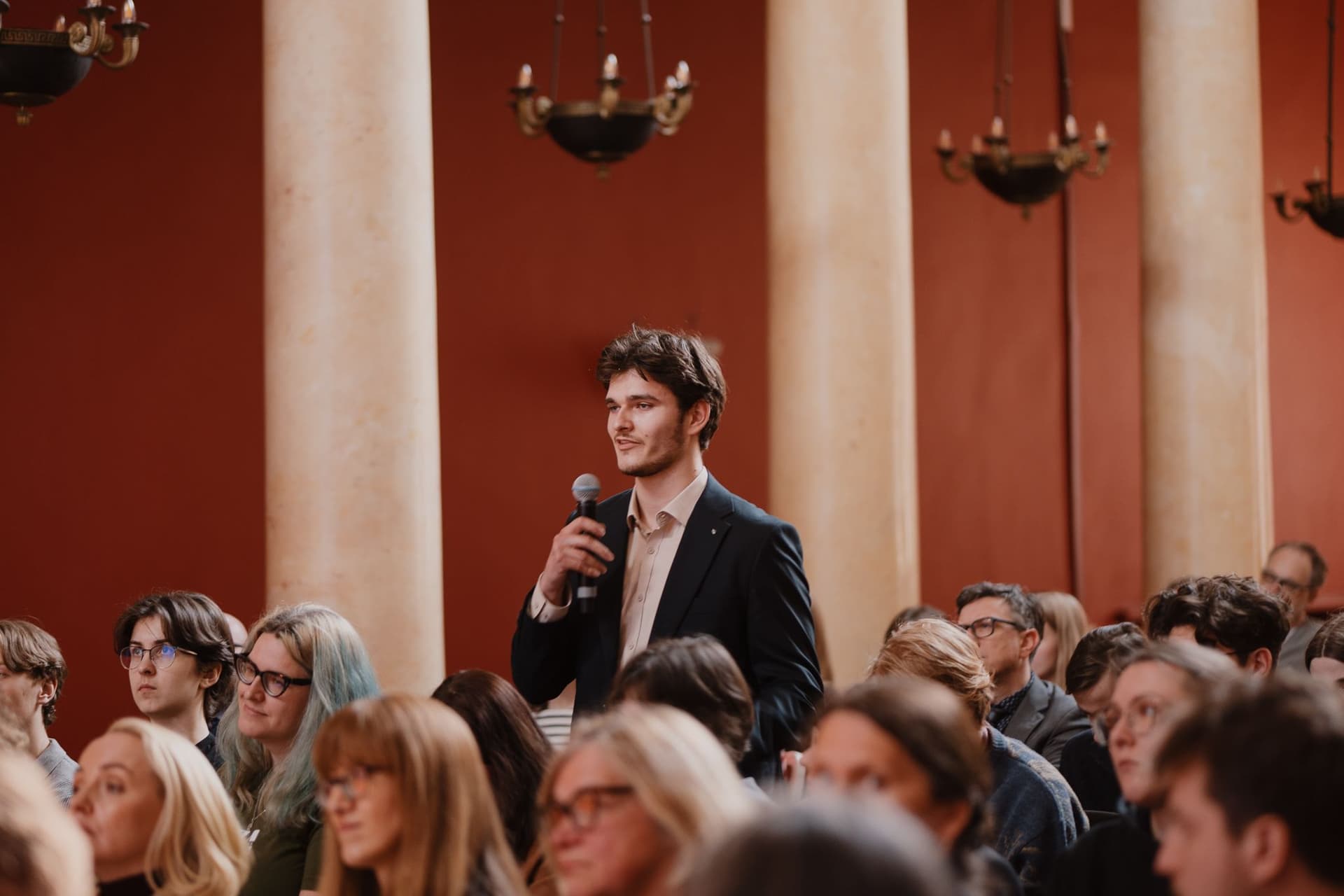
During the discussion following the lecture, Berset answered questions from students and other members of the VU community on human rights, international law, demographic and generational challenges, and relations between Europe and the United States. The event was also attended by Rimvydas Petrauskas, Rector of Vilnius University.
‘Symbolically, shortly after Europe Day, we spoke with Alain Berset about Europe’s experiences and strengths – ones that critics of the European project often overlook or deliberately underestimate. Europe’s ability and willingness to constantly rethink itself, to question itself critically, and to reflect carefully before taking action have always been among its greatest strengths and its way of responding to challenges,’ said the VU Rector.