- 29 May 2026
- Dr Santautė Venslavienė, dr Julija Gavėnaitė-Sirvydienė, dr Julija Bužinskė, Business School
Double Income, No Kids: How Such Families View Finance and Sustainability

Until quite recently, couples without children were relatively rare in Lithuania. Today, however, this has become an increasingly common lifestyle choice. The number of so-called DINK (double income, no kids) households – where both partners work but have no children – is rapidly growing, and not only for economic reasons. More and more often, this is a conscious choice shaped by personal values, attitudes towards sustainability, and consumption patterns.
What does this mean in practice? A study conducted in Lithuania in 2025 offers insight into how childfree families understand sustainability and how these attitudes are reflected in their everyday decisions – from shopping habits to investment choices.
Financial freedom as a key priority for childfree families
Over the past few decades, the number of DINK couples has increased significantly. The term refers to married couples or partners in long-term relationships who have consciously chosen not to have children.
The DINK lifestyle began to gain prominence in the 1980s and became widespread and socially accepted during periods of economic downturn, when the cost of raising children rose sharply. Several interconnected economic and social factors contribute to the growth of this demographic group. One of the most significant is the long-term increase in women’s participation in the labour market. Career ambitions and higher income levels often make it more difficult to step away from work to raise children. Another important factor is the substantial rise in the cost of raising children. As a result, the decision to live in a DINK household is often motivated by the pursuit of financial security, personal readiness for parenthood, as well as health-related or physical considerations.
Modern couples increasingly prioritise personal development and financial independence. Studies indicate that childfree members of the middle-class millennial generation value the opportunity to pursue careers and personal goals without additional family responsibilities. With higher incomes and lower child-related expenses, such households often exhibit distinctive consumption and investment patterns shaped by personal, social, and psychological factors.
From a psychological perspective, DINK couples tend to invest more frequently in real estate, precious metals, or education, seeking long-term security or career advancement. Quality of life and the pursuit of luxury also play significant roles, reflected in self-care, the purchase of high-end cars, and the early adoption of new products and services.
From a consumption perspective, household size is an important factor in sustainability. Smaller households lose the benefits of economies of scale; therefore, their carbon footprint per person is often higher, even if their total emissions remain lower than those of families with children. Research shows that shrinking household size tends to increase emissions per capita, although the type of urban housing may partly offset this effect. Consequently, the sustainability impact of DINK households depends not only on the absence of children but also on how they use their incomes, particularly in such areas as housing, energy, mobility, and food consumption.
A study of sustainability practices in DINK families
A study conducted in Lithuania in 2025 provides insight into how DINK families perceive sustainability and how it shapes their everyday decisions – from purchases to investments. The survey focused on five key areas to assess different aspects of sustainable living: sustainable consumption behaviour, sustainable technologies, travel and commuting habits, green investments and financial behaviour, and lifestyle and attitudes towards sustainability.
The first area assessed the willingness of DINK families to incorporate sustainable products and services into their daily routines. Questions related to sustainable technologies explored the use of environmentally friendly technologies, particularly in the context of reducing greenhouse gas emissions. The section on travel and commuting habits examined the choices made by childfree families regarding sustainable forms of travel and mobility. Questions on green investments and financial behaviour evaluated respondents’ interest in investment strategies aligned with environmental, social, and governance (ESG) criteria, as well as their views on environmentally oriented policy measures, such as the development of renewable energy projects or government incentive programmes. Finally, the lifestyle and sustainability section aimed to reveal how DINK households understand sustainability and how their relationship with it may evolve in the future.

Lithuania was selected as the case study for this research due to the significant social and economic transformations the country has experienced over the past three decades. According to Eurostat data for 2024, the country also faces persistent demographic challenges, including one of the lowest fertility rates in the European Union and ongoing emigration, both of which contribute to the growth of childfree households. In addition, national-level initiatives increasingly emphasise financial literacy, while strategies are being implemented to promote sustainable consumption and support the transition to a green economy.
DINK households represent a significant yet still insufficiently studied demographic group in Lithuania. Their decisions related to consumption, saving, and investment influence not only individual long-term well-being but also broader trends in sustainable consumption and economic resilience within a small European Union economy.
Sustainable consumption: a daily practice, not just a declaration
A study conducted last year revealed that couples in which both partners work but do not have children tend to enjoy greater financial flexibility than, for instance, people living alone or those raising children. DINK households are therefore more likely to consciously plan their finances and make decisions guided by a long-term outlook.
A third of the surveyed childfree couples reported earning more than €3,000 per household per month. Their most frequently mentioned financial goals included investing, purchasing a home, and retiring early. The findings suggest that not having children creates more opportunities to focus on strategic resource planning aimed at long-term goals. These choices typically develop gradually – through changing habits, reconsidering purchasing decisions, or simplifying everyday routines. In this context, sustainability is not seen as an additional burden but becomes a natural part of daily life, grounded in the rational use of resources.
The survey also revealed that DINK families view sustainable consumption very positively. Most respondents stated that when shopping, they prioritise quality and durability, avoid products from companies perceived as environmentally harmful, and frequently buy second-hand clothing or repair items instead of buying new ones.
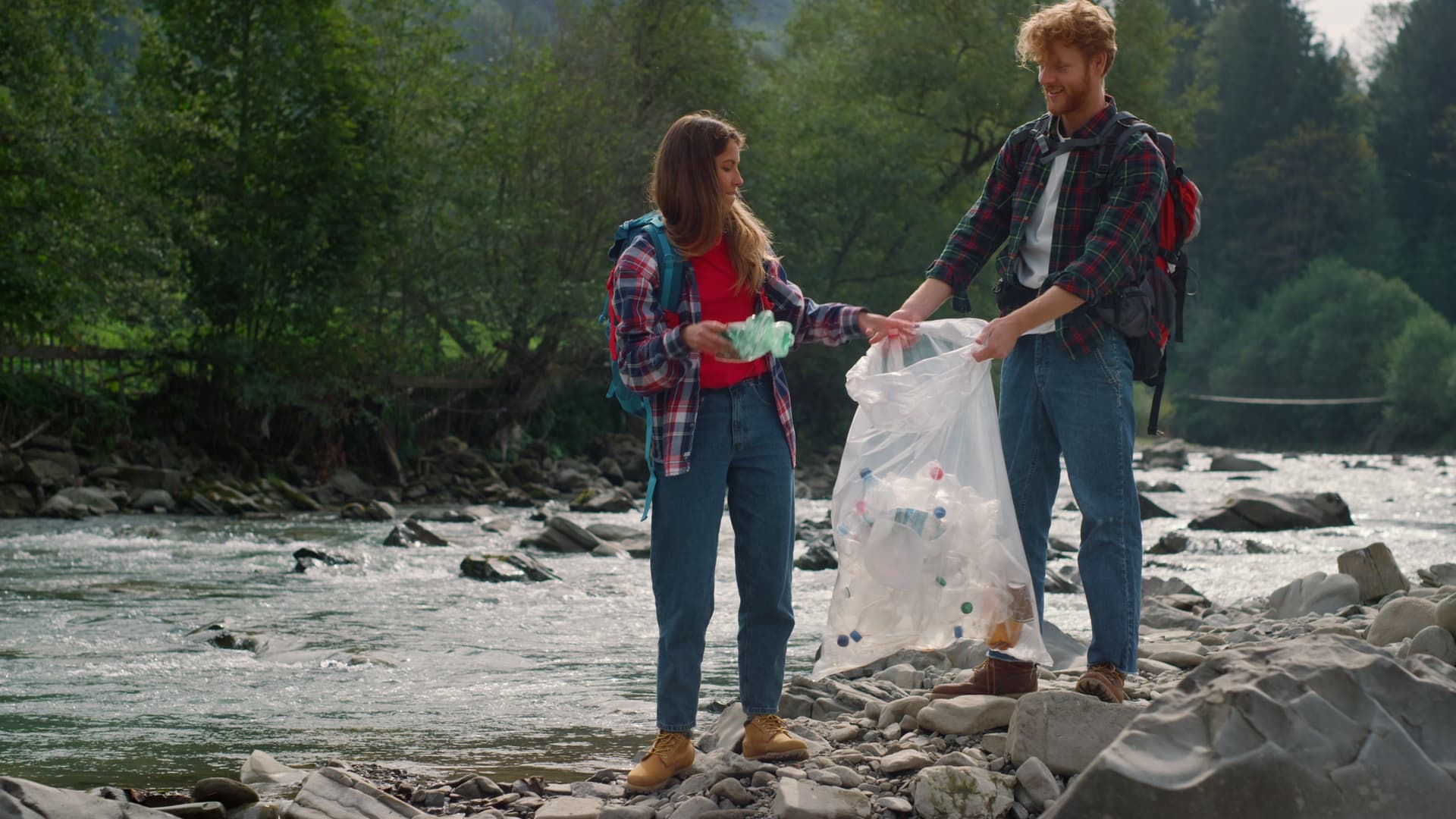
Their approach to food consumption was particularly notable: the majority of childfree couples reported making more sustainable dietary choices and actively reducing food waste at home. This suggests that, for DINK households, sustainability typically begins with simple everyday decisions rather than with formal pledges.
Support for green initiatives, yet reluctance to invest
When it comes to technological solutions, DINK families demonstrate considerable engagement. Respondents often invest in energy-efficient solutions, such as LED lighting, smart thermostats, and measures to reduce water and electricity consumption. Many also reported considering or planning to install solar panels or other renewable energy sources.
However, the picture is somewhat different when it comes to investment. Although the vast majority of respondents support the expansion of renewable energy and government incentives for green initiatives, only a small share actively invests in funds that take into account not only financial returns but also ESG criteria. In other words, relatively few respondents invest in companies that adhere to sustainability principles, and environmental considerations rarely influence their choice of bank. This reveals a clear trend: DINK households support sustainability as a societal goal, yet in their personal financial decisions, they tend to prefer clear, tangible, and easily understandable options over complex financial products.
Is a childfree lifestyle more environmentally friendly?
In the areas of transport and travel, the choices of DINK households are more mixed. The study showed strong interest in electric and hybrid cars, yet the use of public transport, cycling, or walking remains relatively limited.
In terms of travel, sustainability considerations also often give way to convenience. Although some childfree families try to avoid unnecessary flights, most are unwilling to pay extra for carbon offsetting or to choose travel destinations based on their environmental impact. This suggests that even for environmentally conscious consumers, travel remains a domain where sustainable choices often require greater compromise.
Nevertheless, one of the most important findings of the study is that household size itself influences sustainable choices. More than half of respondents shared this view. Some believe that living without children offers more opportunities to adopt environmentally friendly lifestyles: consuming less, investing more in quality, and dedicating time to community or environmental initiatives.
Childfree families often perceive sustainability as a balance between personal needs and social responsibility. They tend to support educational initiatives, a role for the state in promoting sustainability, and long-term green economy strategies, even if they do not always engage actively through financial instruments.
What does this mean for Lithuania?
The study shows that DINK households represent an important but still insufficiently explored segment of society. Their consumption and financial decisions may have a significant impact on sustainable development, particularly in countries like Lithuania that are facing demographic challenges.
One key trend emerging from the study is that DINK families tend to perceive sustainability as an integral part of everyday life, rather than as an activity requiring constant effort or additional commitments. This is especially evident in household management and consumption practices, where decisions are made without a sense of obligation.
A similar logic can be observed in their stance on the role of the state. Respondents clearly support public initiatives to promote renewable energy and environmentally friendly investments, yet they also expect solutions that are simple, transparent, and easy to implement. This suggests that DINK households are not opposed to sustainability policies, but they are also reluctant to adopt complex solutions without a clear and tangible benefit.
This perspective also helps explain why certain areas of sustainability – such as green financial products or travel-related carbon offsetting – remain less popular. When solutions seem too abstract or insufficiently tangible, they attract less attention. Meanwhile, when sustainability is directly linked to the quality of life at home or everyday expenses, it is embraced with far fewer reservations.
For policymakers and businesses, this sends a clear signal: there is a need to develop clearer and more reliable sustainable financial solutions, promote convenient and accessible sustainable mobility options, and communicate with this demographic group in ways that resonate with its priorities. The example of DINK families demonstrates that sustainability often begins not with grand declarations but with consistent everyday choices.