- 16 April 2026
- Povilas Sabaliauskas
From Nuclear to Medical Breakthroughs: Lithuania’s Laser Industry Enters a New Era

Lithuania has every reason to be proud of being home to some of the world’s most talented laser scientists and globally recognised companies. The Physics Faculty Laser Research Center (LRC) at Vilnius University (VU) is at the forefront of the field. Historically, it has been the major hub of laser physics, and today the centre is training the next generation of laser physics specialists and future scientist-innovators. Another recent milestone was reached this year when VU signed a partnership agreement with ELI (Extreme Light Infrastructure), marking a new chapter in collaboration and further strengthening of both VU’s and Lithuania’s role in this unique research ecosystem.
SYLOS laser – a unique achievement for Lithuanian scientists
Lithuania entered the laser world early. The country’s first laser was switched on at VU in 1966. Since then, both its research and the industry as a whole have grown steadily. According to the Lithuanian Laser Association, more than 60 companies now operate within the country’s laser ecosystem. Among them are world-class companies with exceptional expertise and a reputation for creating unique products.
Dr Dalia Kaškelytė, the director of the LRC, points out that Lithuanian experts are in increasing demand worldwide. This is in large part due to numerous significant achievements, one of which is the development of chirped-pulse parametric amplification methodology, an internationally recognised and widely used technique for generating intense laser pulses.
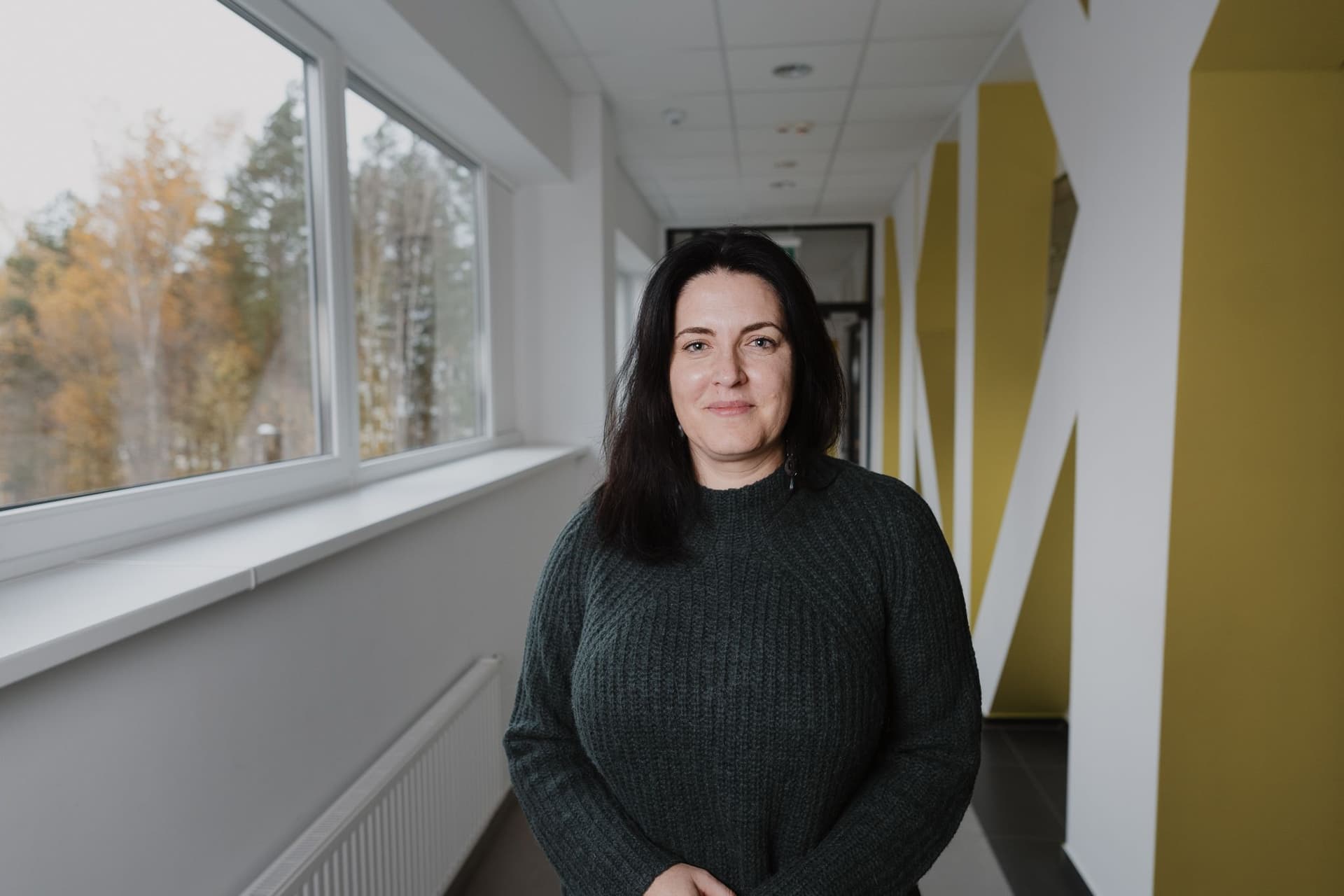
The director of the LRC Dr Dalia Kaškelytė. Photo by Vilnius University.
“Based on this methodology, the LRC created a prototype laser system – the “Naglis” laser complex. Building on this, Lithuanian laser companies have manufactured and installed systems capable of generating pulses shorter than 10 femtoseconds. The system, better known as SYLOS, is now used at the ELI Beamlines facility in the Czech Republic and the ELI-ALPS facility in Hungary,” says Dr Kaškelytė.
Dr Arūnas Varanavičius, one of the creators of SYLOS, received the Lithuanian Science Award last year in recognition of this achievement. He says that creating these unique, ultrafast, high-intensity laser systems is one of the most significant accomplishments in Lithuanian laser science, and that this would not have been possible without years of dedicated work.
“The project first began when we realised that Lithuanian companies already had all the components needed for this future system,” Dr Varanavičius recalls. “We began thinking that our concept, which existed only in theory, could become a real, working machine. We decided to experiment: we borrowed some equipment, quickly assembled it, and tested whether it would work together. We succeeded, and, as they say, our appetite grew with the eating.”
Of course, progress also depended on the ability to convince others of an idea’s potential. Dr Varanavičius and his team approached the Lithuanian Council for Science to present their vision and implementation plan. Funding was gathered gradually, in stages. The device grew and improved bit by bit. The team carefully observed global developments and adopted best practices. The machine that originally fit on a single table eventually expanded into an extremely complex apparatus.
“What makes our methodology unique is that the laser fits in one room,” explains Dr Varanavičius. “Similar machines at other centers typically occupy entire buildings. This means we’re significantly democratizing access to lasers. Even smaller centers can now acquire such equipment. And, frankly, demand for our system is enormous.”
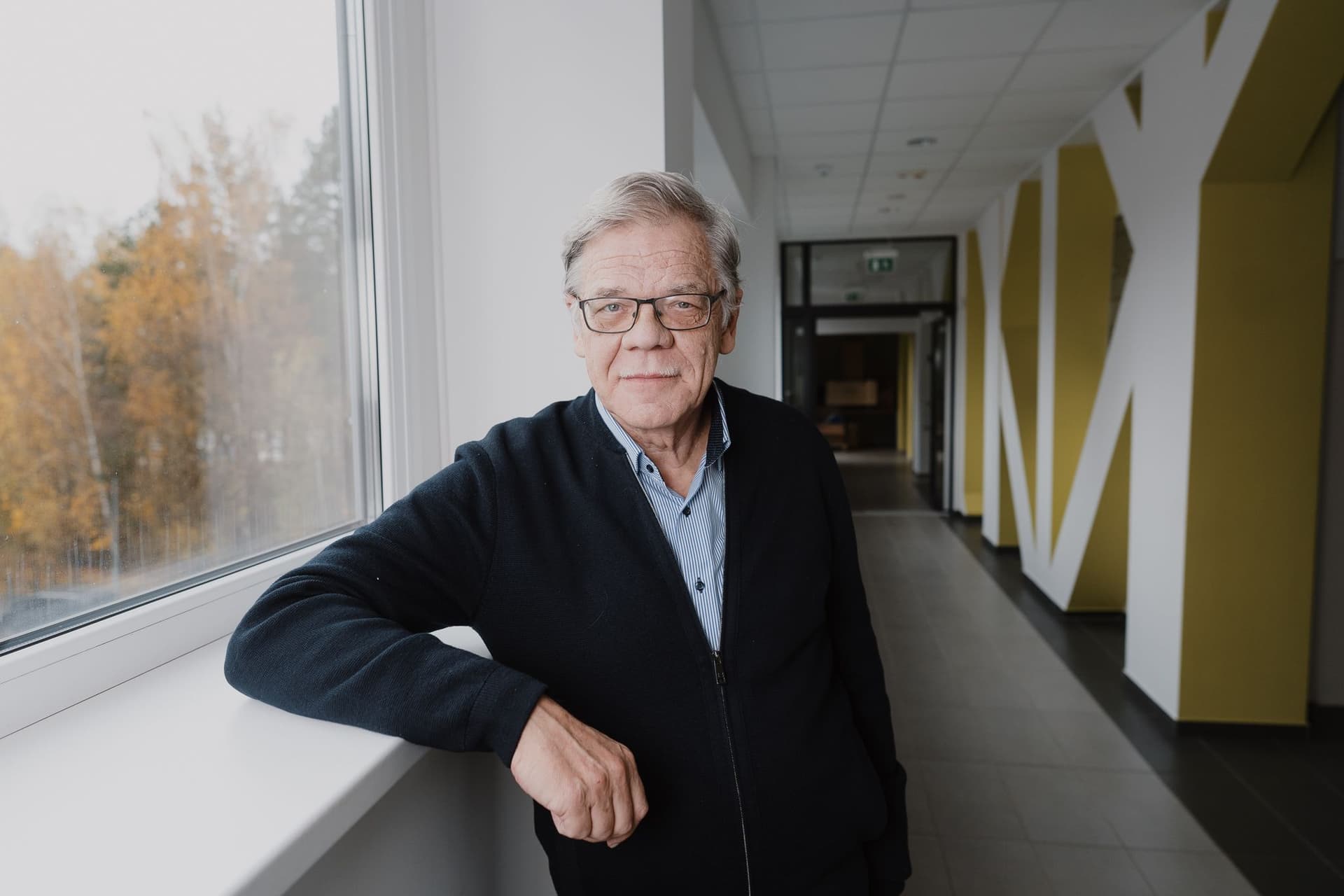
Dr Arūnas Varanavičius. Photo by Vilnius University.
Applications that could change the world
The SYLOS system is primarily used for high-level fundamental and applied research. For instance, the laser enables scientists to examine the structure of matter, identify molecules, and analyse the processes occurring within them. This is achieved by directing the laser beam at materials at various frequencies and intensities. In this way, researchers can investigate the structure and dynamics of the microscopic world.
However, such laser systems have potential for far broader applications. While some of these may sound like science fiction, research shows that, with continued improvements, major breakthroughs could be just around the corner.
“Everyone agrees that nuclear energy has many advantages,” explains Dr Varanavičius. “But the question remains: what do we do with all the radioactive waste?’ Currently, it’s usually stored underground, and some even consider sending it into space. But this isn’t a long-term, sustainable solution. However, research suggests that lasers can be used to convert radioactive waste into non-radioactive material in a process known as transmutation. This is still in the early stages, but research is ongoing. If successful, it would be a breakthrough of enormous proportions.”
Lasers are already widely used in medicine, yet their potential has not yet been fully realised. One of the most promising areas of research involves radiation therapy technologies that use extremely powerful lasers. Radiotherapy is particularly promising. Compared to chemotherapy, which affects the entire body, radiotherapy is far superior as it allows doctors to concentrate radiation with extreme precision on a tumor while protecting the surrounding healthy tissue.
“Currently, these technologies are still expensive and are typically developed only at major research centers,” notes Dr Varanavičius. “However, recent research shows that particle sources created using laser technology could become significantly more affordable.”
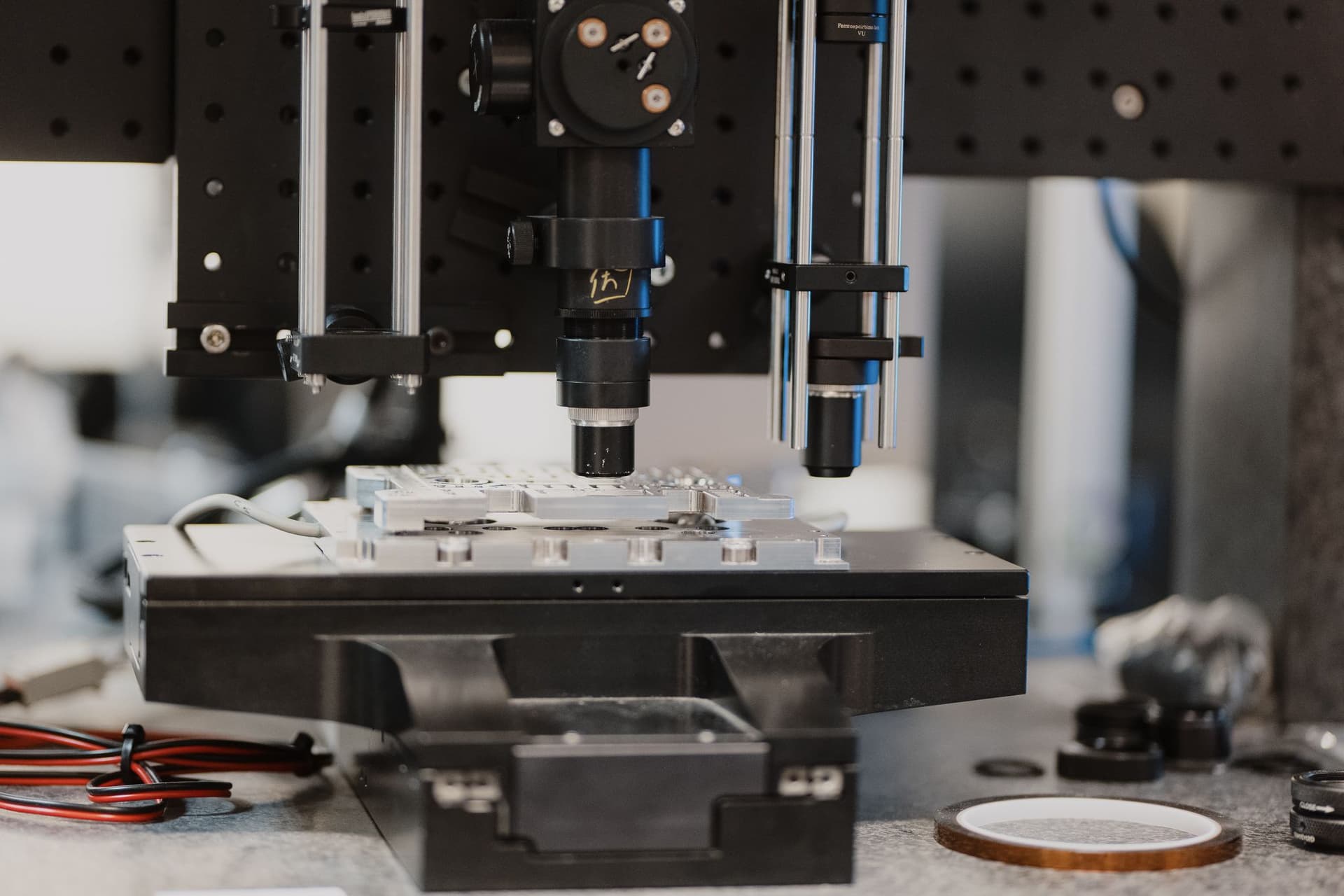
Photo by Vilnius University.
A new chapter in collaboration
It’s hardly surprising that Lithuania’s laser innovators also play an active role in international scientific initiatives. The country was involved in the ELI project from the outset. This strategic European Union initiative aims to establish a unified, distributed, and unique laser research infrastructure. Scientists at VU’s Laser Research Center have been involved in this initiative for two decades.
This led to an official invitation for Lithuania to join the ELI-DC international association as a member in 2015. In 2021, the country’s laser community became a founder and full governing board member of ELI ERIC, gaining voting rights. According to Dr Kaškelytė, the new VU-ELI agreement will create opportunities to expand and strengthen collaboration further in scientific research, the development of advanced laser technology, and the training of young researchers.
“The new partnership promises even more intensive joint activities, knowledge exchange, expert services, and collaborative projects,” she explains. “Significant attention will also be given to closer collaboration across different scientific disciplines, combining expertise in physics, chemistry, materials science, and biomedicine for joint research. We also plan to engage students at all levels more actively in ELI-organised events, develop their skills through researcher internship programs, and strengthen partnerships through research and development activities.”