- 25 March 2026
- Gintarė Bidlauskienė
Light as a Diagnostic Tool: Prof. Valdas Šablinskas' Physics Transforming Medicine
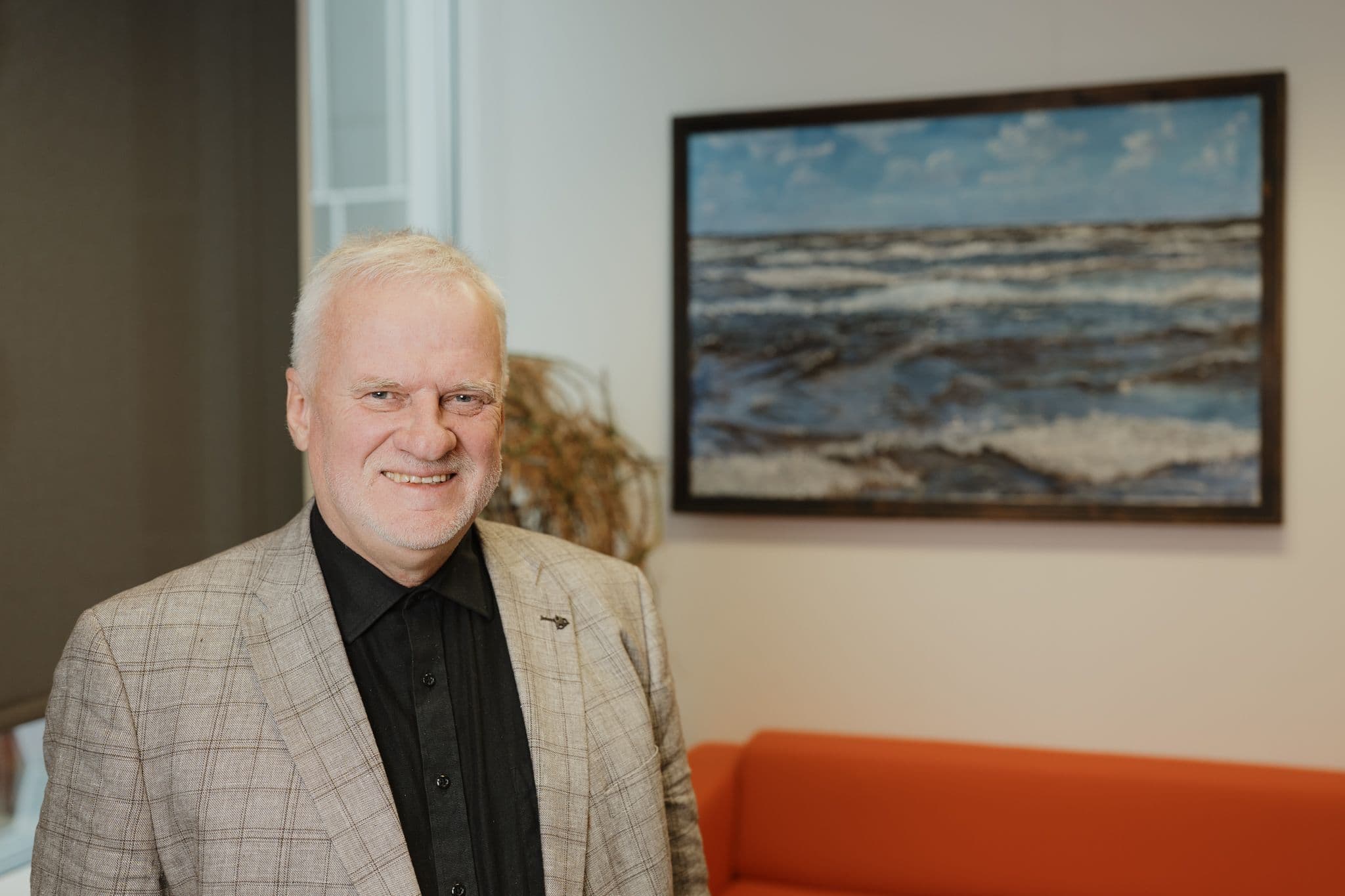
Light as the focal point of the research conducted by Valdas Šablinskas, Professor at the Faculty of Physics of Vilnius University (VU), a laureate of the Science Prize, is not a metaphor. It is a precise, calibrated, laser-controlled tool that allows one to examine places the human eye cannot see – the molecular structure of cells, biochemical changes, and early pathological processes. This light is used to create sensitive biosensors, detect early signs of oncological changes, and refine chemical analysis of materials in clinical practice.
‘In physics, light is an electromagnetic radiation that covers a much wider range of wavelengths than a narrow stretch of visible light,’ explains the Professor. Ultraviolet and infrared radiation are also forms of light; it is just that our vision is insensitive to them. It is this ‘invisible light’ that serves as the analytical method, allowing us to study the makeup and structure of materials without breaking them down.
Light Outside the Boundary of Visibility
Optical spectroscopy, the area in which Prof. Dr Šablinskas specialises, is based on the interaction between light and material. When an object is illuminated, changes in light intensity, wavelength, or scattering are recorded. The resulting spectrum becomes a kind of molecular signature.
‘This method is contactless and non-destructive, which is especially important when working with biological tissues. Cells and biological fluids can be tested without altering their structure. This provides an opportunity to analyse living processes and develop new, less invasive diagnostic methods,’ says the VU Professor.
According to Prof. Šablinskas, this is where physics serves as a way to ‘read’ chemical information without destroying it. ‘Not to destroy, but to understand. Not to disturb, but to hear what molecules “tell” by their vibrations.’
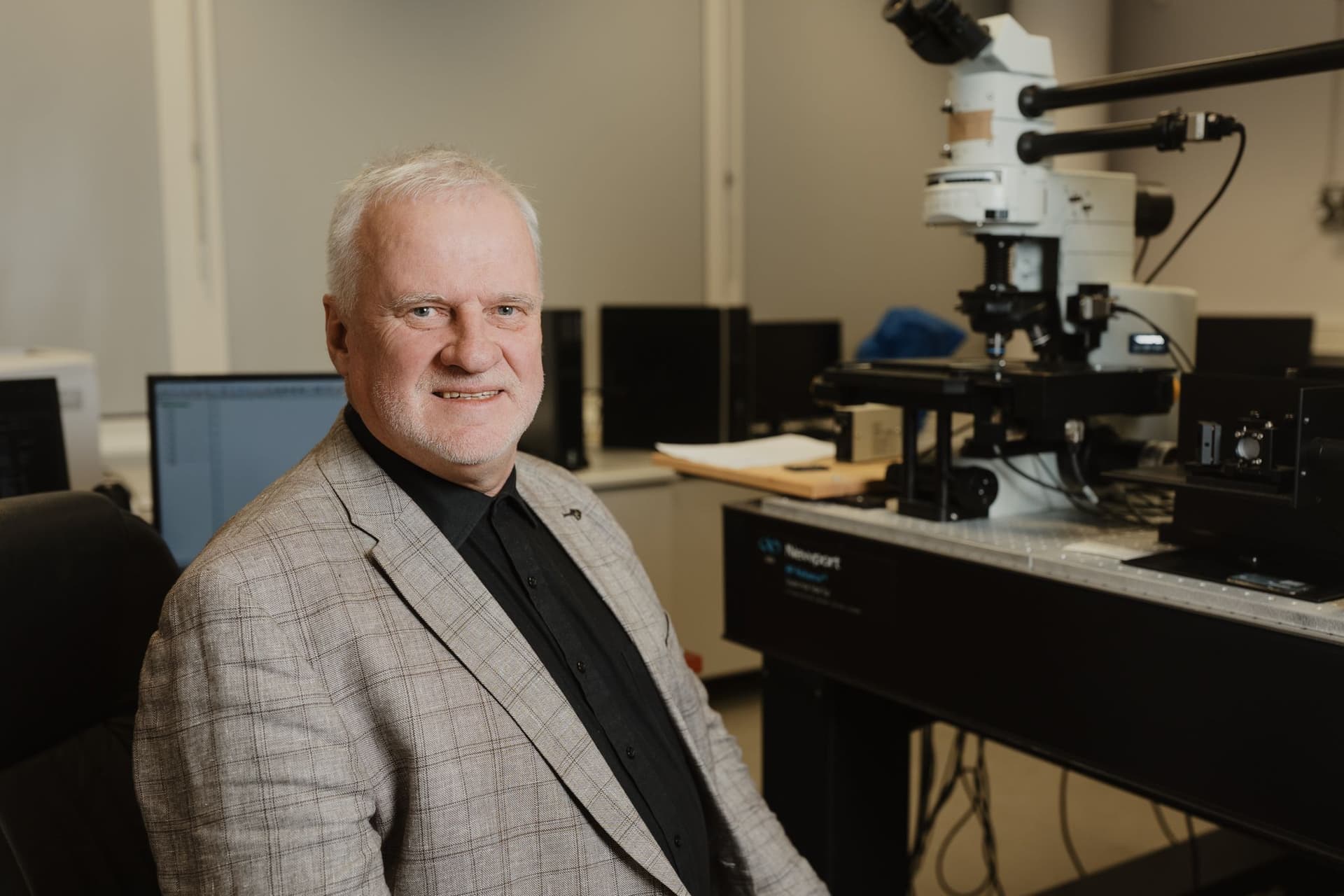
Prof. Valdas Šablinskas. Photo by Ugnius Bagdonavičius / Vilnius University
What Molecules Tell Us About Diseases
Biological cells are composed of molecules; thus, their chemical composition is reflected in their vibrational spectra. ‘Healthy and cancerous cells have different metabolisms and chemical compositions, which means that their spectral “fingerprints” are also different. In theory, spectroscopy allows these differences to be captured at the molecular level and used for diagnosis,’ explains Prof. Šablinskas.
However, these differences are often very subtle, so methods that amplify the signal are used to detect them. One of them is surface-enhanced Raman scattering (SERS), which enables researchers to significantly enhance molecular signals and detect even extremely low concentrations of materials. According to the Professor, this enables capturing changes that would otherwise go unnoticed and developing more sensitive diagnostic methods.
Glycogen – an Indicator of Early Changes
One of the scientist’s research objects is glycogen, which is stored in cells as an energy reserve. Fast-dividing cells need a lot of energy, but with the growth of the tumour, the vascular network may not always manage to provide the tissue with sufficient oxygen. The cells then change the metabolic strategy.
‘An increase in glycogen often reflects these metabolic changes. Spectroscopic methods enable researchers to determine glycogen concentration at the molecular level, thereby contributing to the development of earlier diagnostic solutions. The lower the concentration we can detect, the earlier the stage at which we can record changes,’ claims Prof. Šablinskas.
However, the method is not universal. Some healthy tissues can also accumulate glycogen; therefore, precise interpretation and, sometimes, the search for other spectral markers are necessary. This is where the physicist’s competency – the ability to analyse the signal, evaluate the context, and create reliable diagnostic criteria – flourishes.
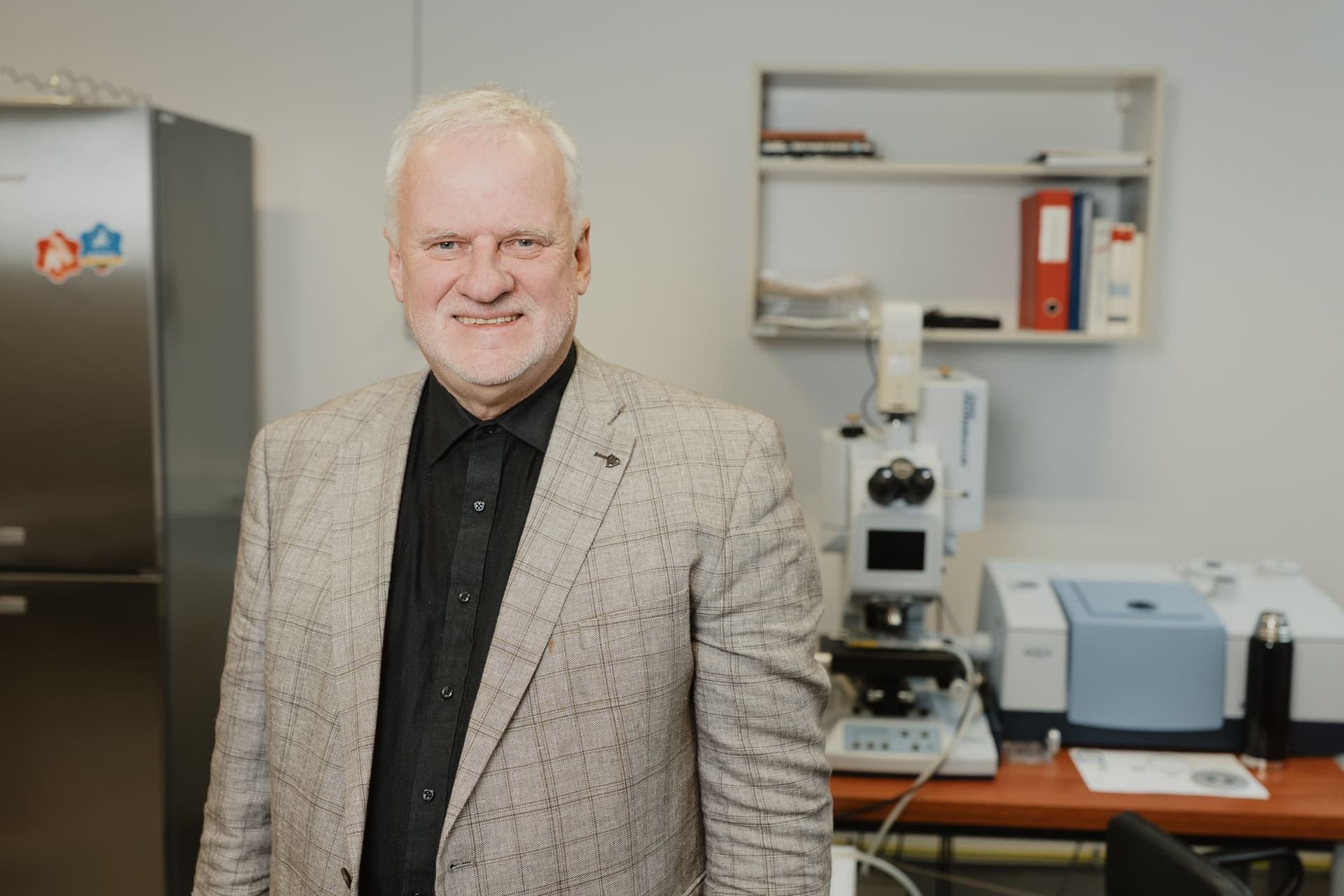
Prof. Valdas Šablinskas. Photo by Ugnius Bagdonavičius / Vilnius University
From Kidney Stones to Clinical Practice
Prof. Šablinskas's research is not limited to oncological diagnostics. Spectroscopic methods are also used to determine the chemical composition of kidney stones. Because stones can be composed of different chemical compounds, their identification helps determine the appropriate treatment and prevention.
‘Spectral analysis, in this case, acts as a standard qualitative and quantitative chemical analysis,’ explains the Professor.
This research reflects the broader direction of translational medicine, in which fundamental laboratory studies are linked to clinical applications. The creation of biosensors, signal-amplification technologies, and nanostructure engineering – all of it requires knowledge in physics, chemistry, and biology. The path from laboratory to clinic is long, but it is physics that provides the opportunity to develop solutions that can change diagnostic practice.
Value-Creating Physics Is a Choice and Way of Thinking
Prof. Valdas Šablinskas’ journey began with studies in optics and spectroscopy. He found the use of light for materials research to be an elegant and accurate way to understand complex systems. However, as he himself claims, his choice of studies was accompanied by curiosity and the desire to understand the fundamental laws of nature.
‘In physics, mathematics is a tool, not a goal. Numerical values, equations, and models are needed to accurately describe phenomena, but the essence of physics is the ability to establish causal relationships and understand why and how the processes occur. It is a way of thinking that allows us to see structure where there is only chaos at first sight,’ says Prof. Šablinskas.
For the Professor, science goes beyond an intellectual challenge. According to him, learning about the world is important, but it is equally important that this knowledge helps solve problems, improves the quality of life, or even contributes to the preservation of life. If the method or device created is effective and can be applied in practice, that is when, according to the Professor, it acquires true value.
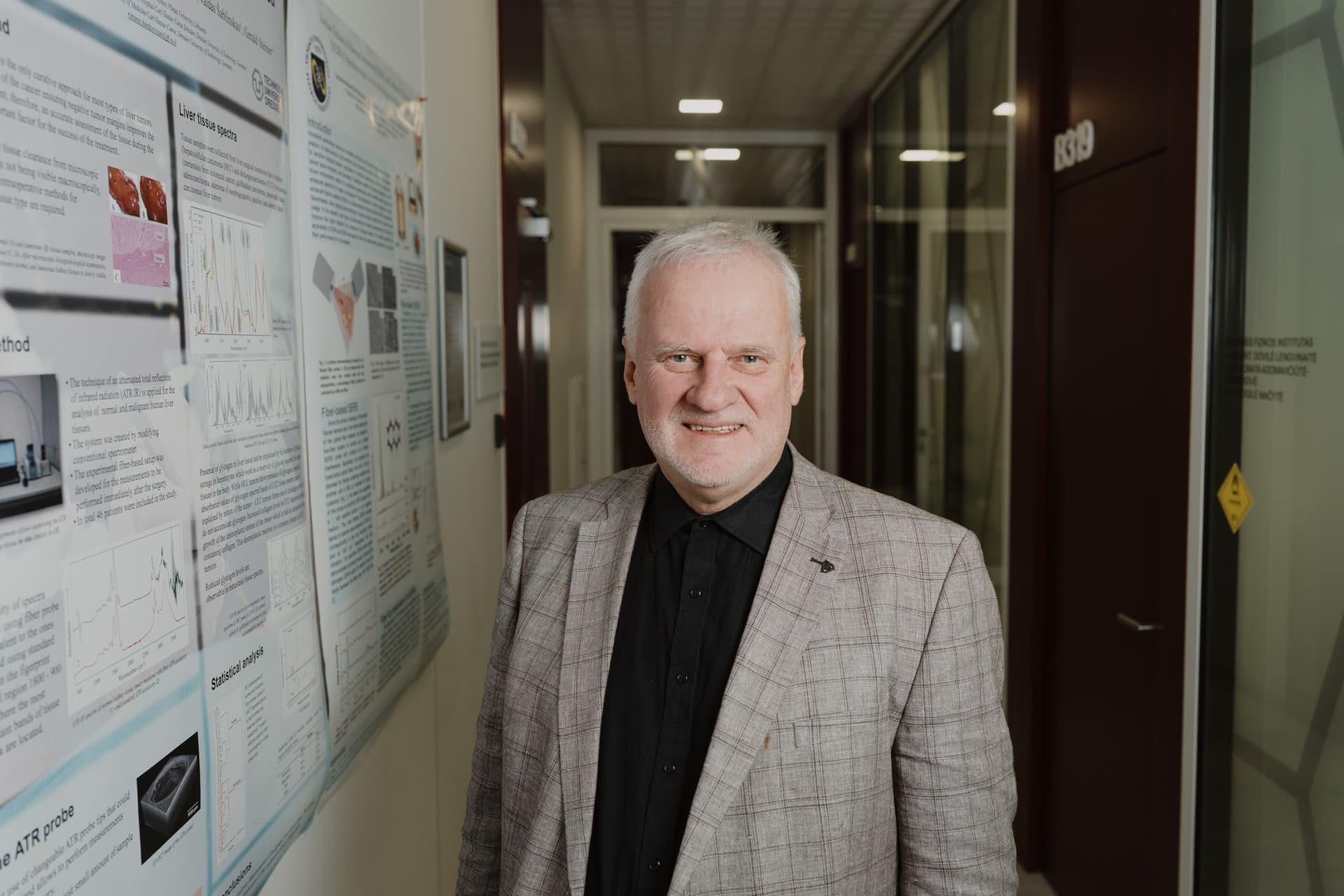
Prof. Valdas Šablinskas. Photo by Ugnius Bagdonavičius / Vilnius University
Professor Šablinskas's advice to future physicists is not to be afraid. ‘It is important to start feeling the beauty of physics as early as possible, not only in solving tasks, but also in realising that behind every formula, there is a real phenomenon. When choosing a field, it is not enough just to have a hobby or an ability to measure accurately. It is important that the area of research is relevant and necessary for society,’ advises the physicist.
This article is part of the VU campaign ‘More Than You Can Imagine’. More stories about members of the VU community, their research, scientific discoveries, and meaningful initiatives can be found here.