- 15 July 2026
New Study Reveals Long-Distance Migration into Medieval Vilnius During the City’s Earliest History
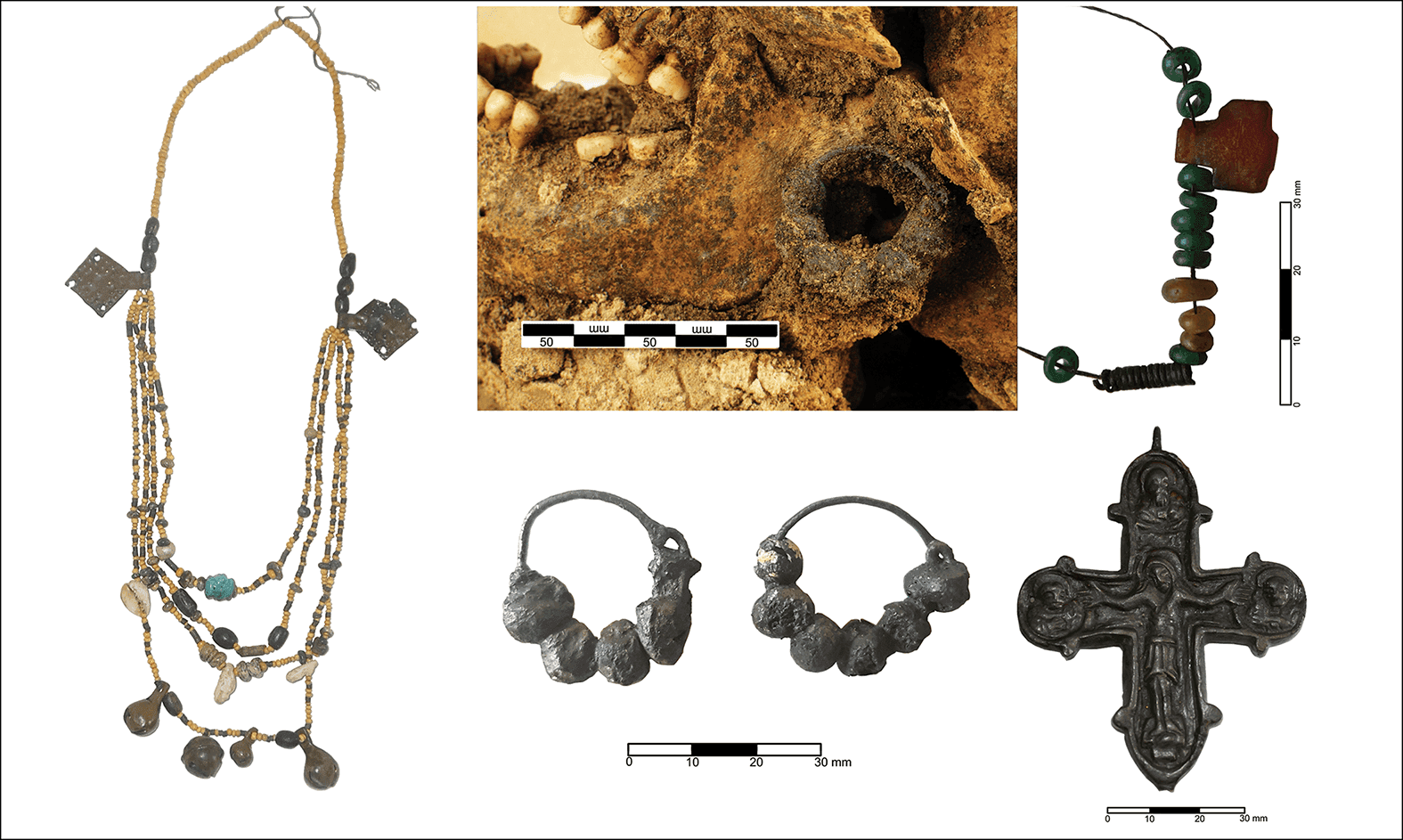
New evidence suggests that medieval Vilnius was already attracting Christian migrants from hundreds of kilometres away while Lithuania remained the last pagan state in Europe. A study published in "Antiquity" has uncovered the first direct scientific evidence for long-distance migration into the city during its earliest formation. Using isotope analysis of human remains from a 13th-14th-century Bokšto Street cemetery in Vilnius Old Town, researchers revealed that some of the earliest Christians buried there likely arrived from the regions of the former Kievan Rus’, corresponding to present-day western Ukraine and southern Poland.
The international research team combined archaeological evidence with carbon, nitrogen, oxygen and strontium isotope analyses of teeth and bones from individuals buried at the historic Civitas Ruthenica (Ruthenian Quarter) of medieval Vilnius. The findings provide unprecedented insight into how Vilnius emerged as a multicultural and multi-confessional city during the Middle Ages.
“Human remains preserve remarkable information about mobility, diet and social interaction that cannot be detected through archaeology alone. By combining archaeological and historical investigations with multi-tissue isotope analysis of human osteological remains, we can, for the first time, directly identify individuals who migrated into medieval Vilnius during the city’s earliest formation. This research shows that Vilnius was already a highly diverse and internationally connected city from the very beginning of its history,” says the first author of the study Prof. Giedrė Motuzaitė Matuzevičiūtė of the Faculty of History at Vilnius University and the Lithuanian Institute of History.
A Migrant from the South
Among the 15 individuals analysed, one young man stood out from the rest of the population. Identified as the individual buried in Grave 311, he appears to have spent his childhood in a warmer southern region where millet, uncommon in medieval Lithuania, formed a large portion of his diet. By adulthood, however, his diet had shifted to match that of the local population, suggesting that he migrated to Vilnius during adolescence and became integrated into the Christian community of Vilnius City.
In addition, chemical signatures preserved in his teeth revealed that he grew up outside Lithuania. During his childhood, when his teeth were forming, oxygen and strontium isotopes incorporated into his enamel chemistry reflect a non-local signal, thereby confirming that he grew up in more southern regions of Europe. Under constant threat from the Catholic world during the Crusade raids, Lithuania’s rulers maintained close diplomatic ties with Orthodox lands. The archaeological artefacts in human graves confirm a strong Byzantine influence. All this multiproxy evidence points to the potential origin of Vilnius migrants.
Therefore, researchers believe that the grave 311 most likely originated from territories associated with the former Kyivan Rus’, in present-day Ukraine or southern Poland.
In contrast, most women buried in the cemetery were local to the Vilnius region, pointing towards a community shaped by migration and intermarriage. The findings suggest that local women may have adopted Christianity through contact with migrant men from Orthodox lands.
Revealing the Hidden Origins of Medieval Vilnius
The Bokšto Street cemetery represents one of the largest known medieval Christian burial grounds in pagan Lithuania. During the 13th and 14th centuries, Lithuania remained officially pagan, while the individuals buried there followed Orthodox Christian burial traditions.
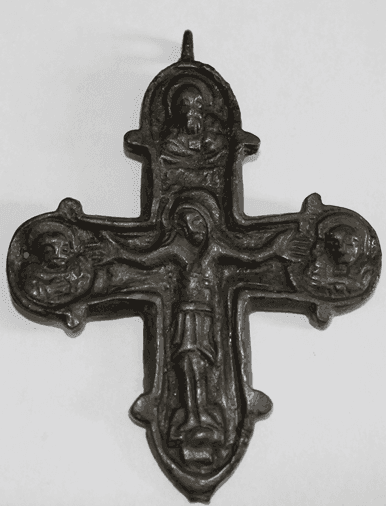
Archaeological evidence, including Byzantine-style ornaments, crosses, chaplets and imported grave goods, had long suggested connections with the Ruthenian and Byzantine worlds. The new isotope evidence now provides direct biological confirmation that migration played a role in the formation of Vilnius’ earliest Christian communities.
Archaeologists have long suspected that the Civitas Ruthenica community included migrants from the Ruthenian lands. The isotope evidence now confirms that at least some individuals buried at the Bokšto Street cemetery came from far beyond Lithuania. Together with archaeological evidence, including grave goods and burial customs, these findings help reconstruct not only where people originated, but also how they became integrated into medieval Vilnius society.
“These findings are particularly significant for studies of Vilnius’ history. They reinforce the idea that medieval cities were centers shaped by mobility, cultural interaction and adaptation,” says Prof. Rimantas Jankauskas of the Faculty of Medicine at Vilnius University and the senior author of the study.
The study also raises broader questions about migration in medieval Europe. Researchers suggest that movement into Vilnius may have been linked to political ties between Lithuania and Ruthenian territories, trade opportunities, religious mobility, or displacement associated with the Black Death pandemic, which devastated much of Europe in the mid-14th century.
The research was led by scientists from Vilnius University and the Lithuanian Institute of History in collaboration with Vrije Universiteit Brussel. The study was supported by the European Research Council (ERC) through the MILWAYS Consolidator Grant and by the Research Council of Lithuania (Grant No. S-MIP-23-59).
Article: Multi-proxy analysis reveals migration and potential origins of the first Christians in medieval Vilnius
(Published in Antiquity, 2026)
https://doi.org/10.15184/aqy.2026.10389