- 3 June 2026
- Liudmila Januškevičienė
Military Doctor Dmitrijev: The Hardest Moments Are When You Can’t Help Everyone at Once
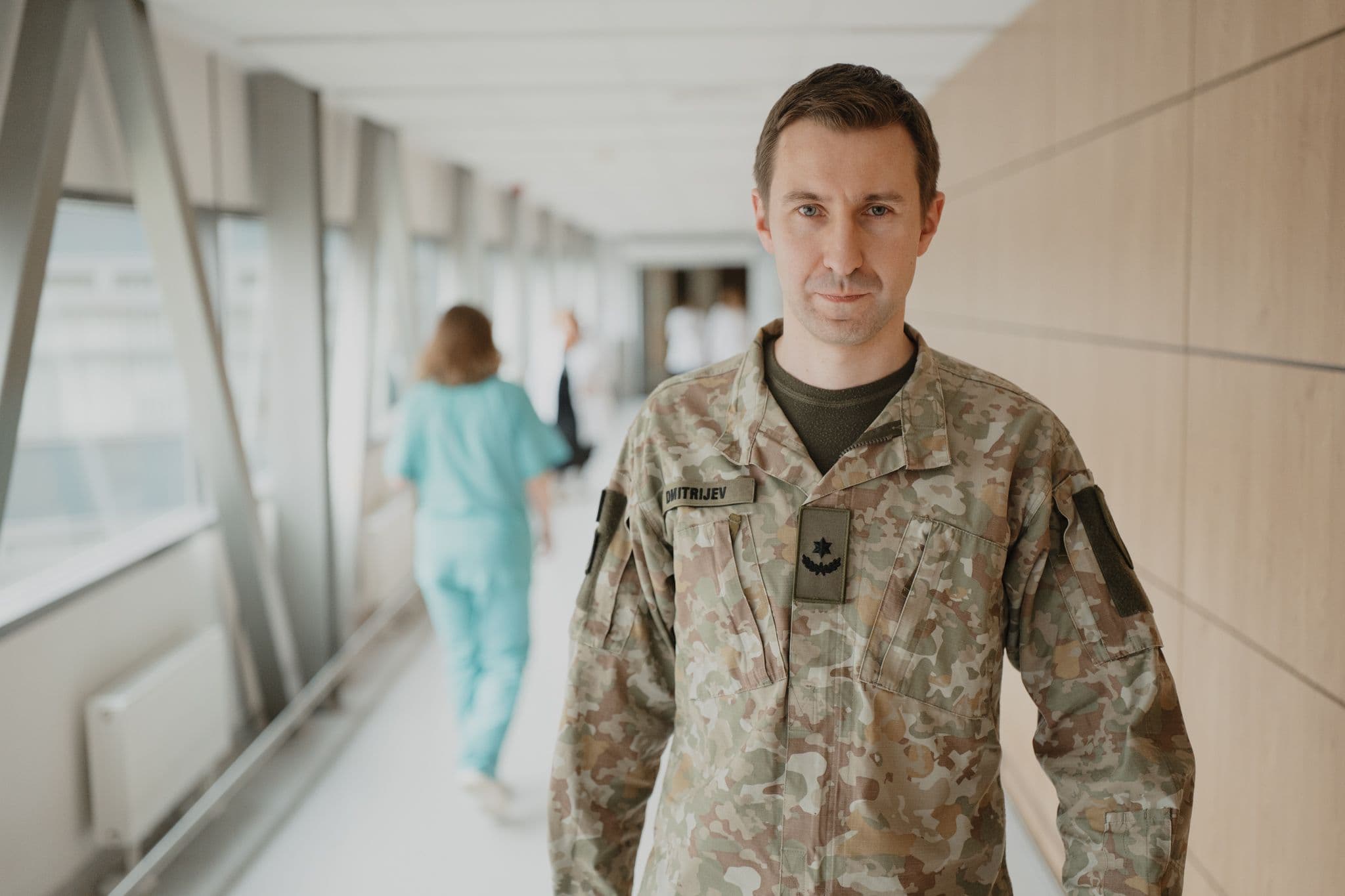
In military medicine, the first few minutes after a soldier is injured are the most critical – moments when chaos, panic, and confusion often take hold. That is why military medics are continuously trained to ensure that, even under extreme stress, they can make decisions quickly, accurately, and confidently.
Although military medicine is often associated with the front line, preparing for war is a constant process. ‘There is very little distinction between ‘peacetime’ and ‘wartime’ medicine. The military is always preparing for war, which is why military medics are constantly training and learning from the experience of real conflicts,’ said Maksim Dmitrijev, military physician and lecturer at the Faculty of Medicine of Vilnius University. Part of this experience today comes from Ukraine, where medical professionals treat war‑injured patients and draw on the treatment practices developed there.
According to him, Lithuania’s geopolitical situation requires the country to be prepared for potential scenarios that could unfold much closer to home: ‘If NATO’s ‘hot spots’ used to be Afghanistan or Iraq, today Lithuania is increasingly becoming one.’
A military medic is also a soldier
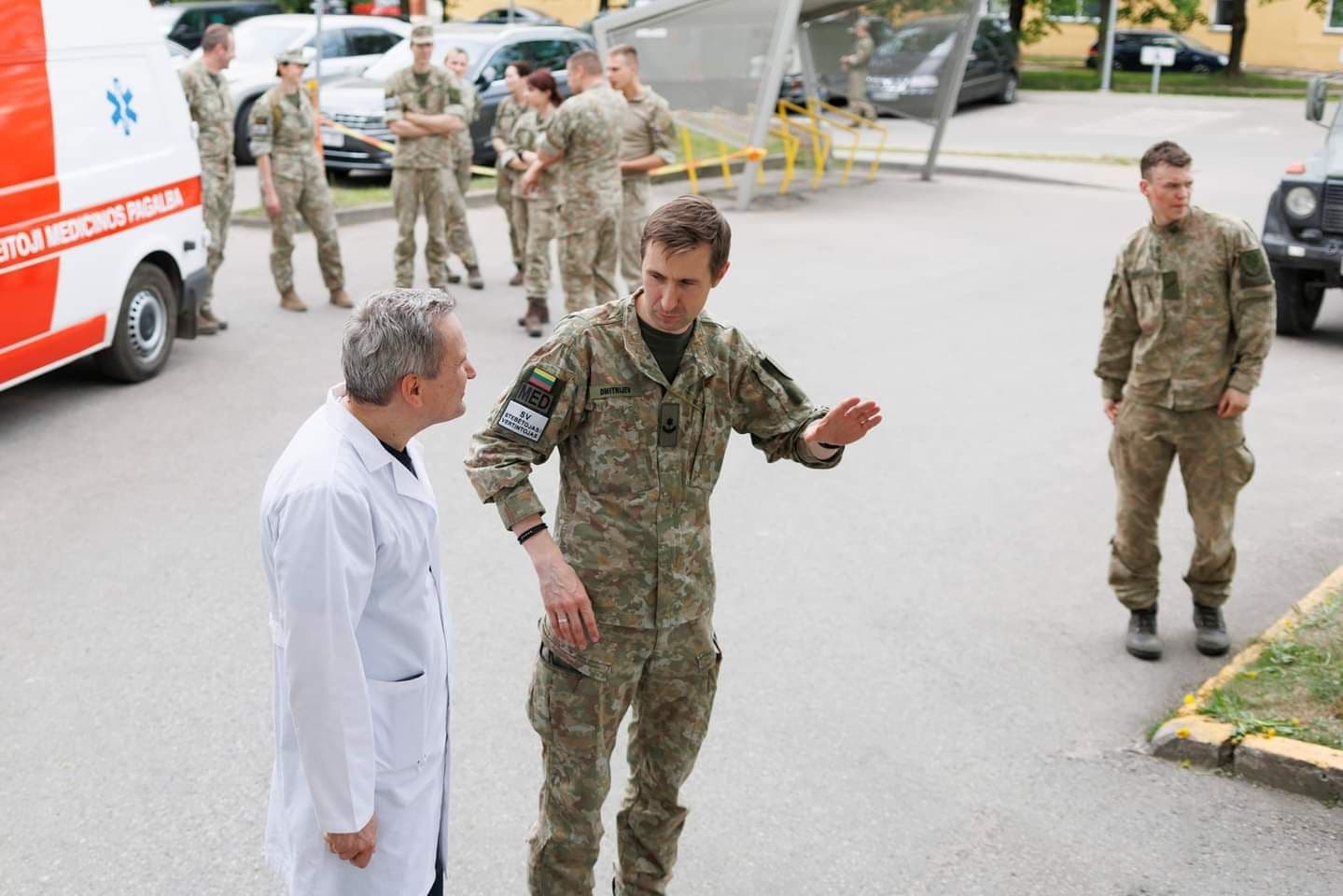
Major Maksim Dmitrijev, currently a commander of the Klaipėda Medical Support Unit of the Jonas Basanavičius Military Medical Service, only began to seriously consider a career in military medicine during the final years of his residency. At the time, he was actively involved in university life – serving as chair of the Residents’ Council and collaborating with various healthcare institutions and organisations. ‘It was 11 years ago that I first met representatives of the Military Medical Service at a career fair. That encounter sparked my curiosity to try my hand at a new and less familiar field of medicine,’ recalled the doctor of internal medicine.
He explains that physicians who choose a career in military medicine not only become medical professionals but also soldiers. Upon joining the Military Medical Service, they must undergo the same selection process as all professional military service members, including physical fitness assessments and completion of basic military training. For many young doctors, this becomes an entirely new experience, as they often have had no prior connection with the armed forces.
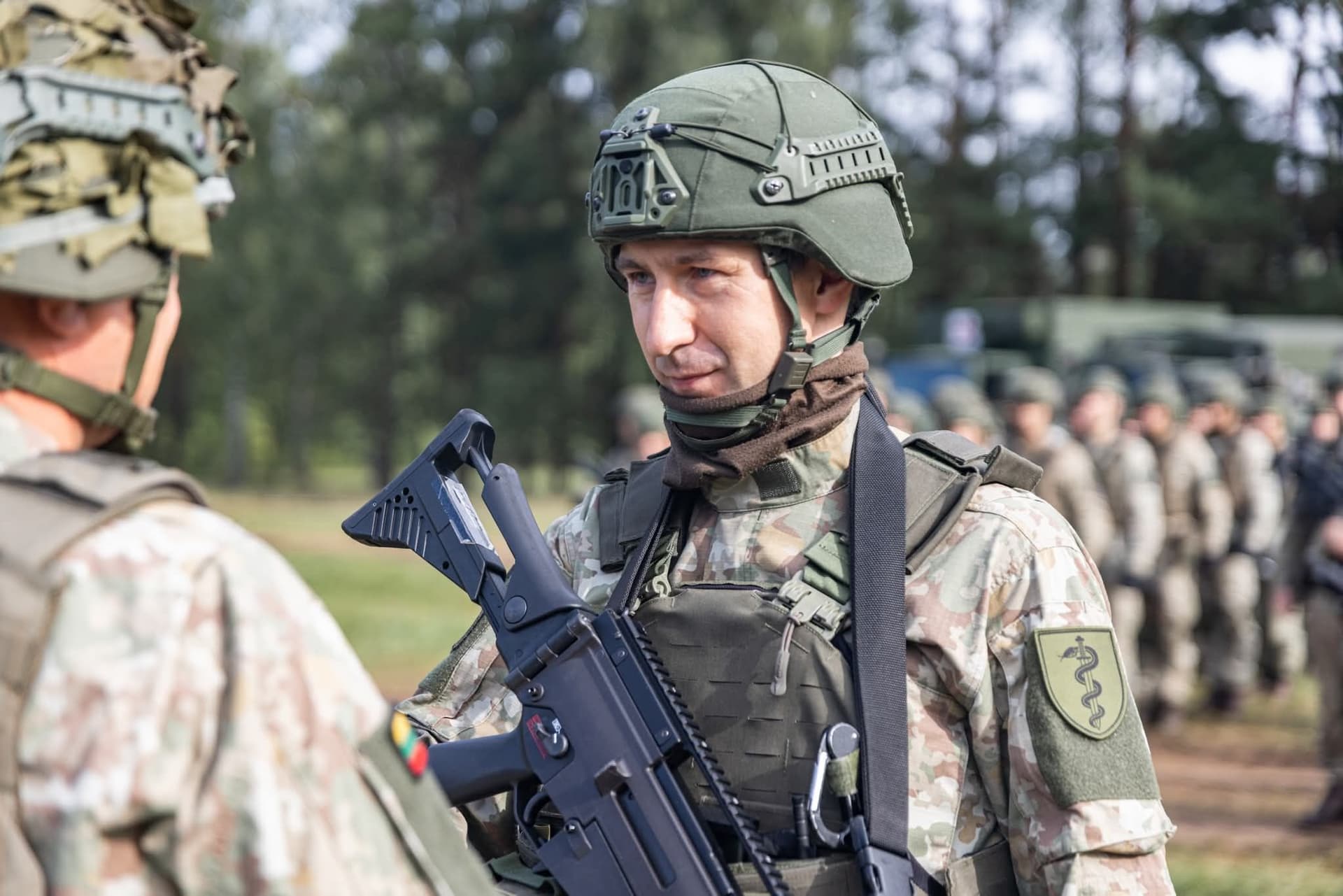
‘During the five‑week intensive training, we had to learn everything from the ground up: military discipline, weapons handling, safety procedures, dress codes and uniform regulations, and even the routines of military life. As future military medics, we lived in a training camp, slept in tents, ate field rations, and took part in field exercises. Much of it was unfamiliar territory – new terminology, a new environment, and the way military life was structured,’ he recalled.
Yet it is precisely this absence of routine that he still values most about his work as a military medic. The profession combines extensive military practice with a daily routine that includes exercises, training, missions, and patient care.
How is the location of a field hospital chosen?
According to Maksim Dmitrijev, military medicine has two distinct sides. In peacetime, it differs little from civilian healthcare: medical professionals work in healthcare facilities, provide care to professional soldiers and conscripts, and perform the routine duties of a physician. Its other side, however, emerges during military exercises, deployments, and armed conflicts.
‘When we put on a uniform and set up our medical unit in an operational area, that’s when the true specificity of military medicine becomes apparent,’ he said. According to him, military exercises are conducted in environments designed to replicate real wartime conditions as closely as possible. As a result, military personnel are required not only to train but often to provide real medical assistance when needed. It is precisely the ability to operate effectively under extreme conditions that most clearly distinguishes military medicine from civilian healthcare.
As Maksim Dmitrijev explains, medical facilities have become one of the key targets in modern warfare. Therefore, military medics constantly balance the need to reach casualties quickly with the need to protect their own teams. ‘This requires close cooperation with other military units, as well as continuous assessment of the air defence situation and potential missile or drone threats. A field hospital needs to be close enough to the battlefield but, at the same time, it must also be located in a safe area,’ noted the Major.
When it comes to providing care to wounded soldiers on the battlefield, time remains the most critical factor. ‘According to NATO standards, an injured soldier must receive medical assistance within the first ten minutes. The goal is to stop heavy bleeding as quickly as possible, stabilise the casualty, and keep them alive until they reach a hospital, where they can receive comprehensive treatment in accordance with all medical standards. This fast, carefully coordinated chain of care is the essence of military medicine,’ said Maksim Dmitrijev.
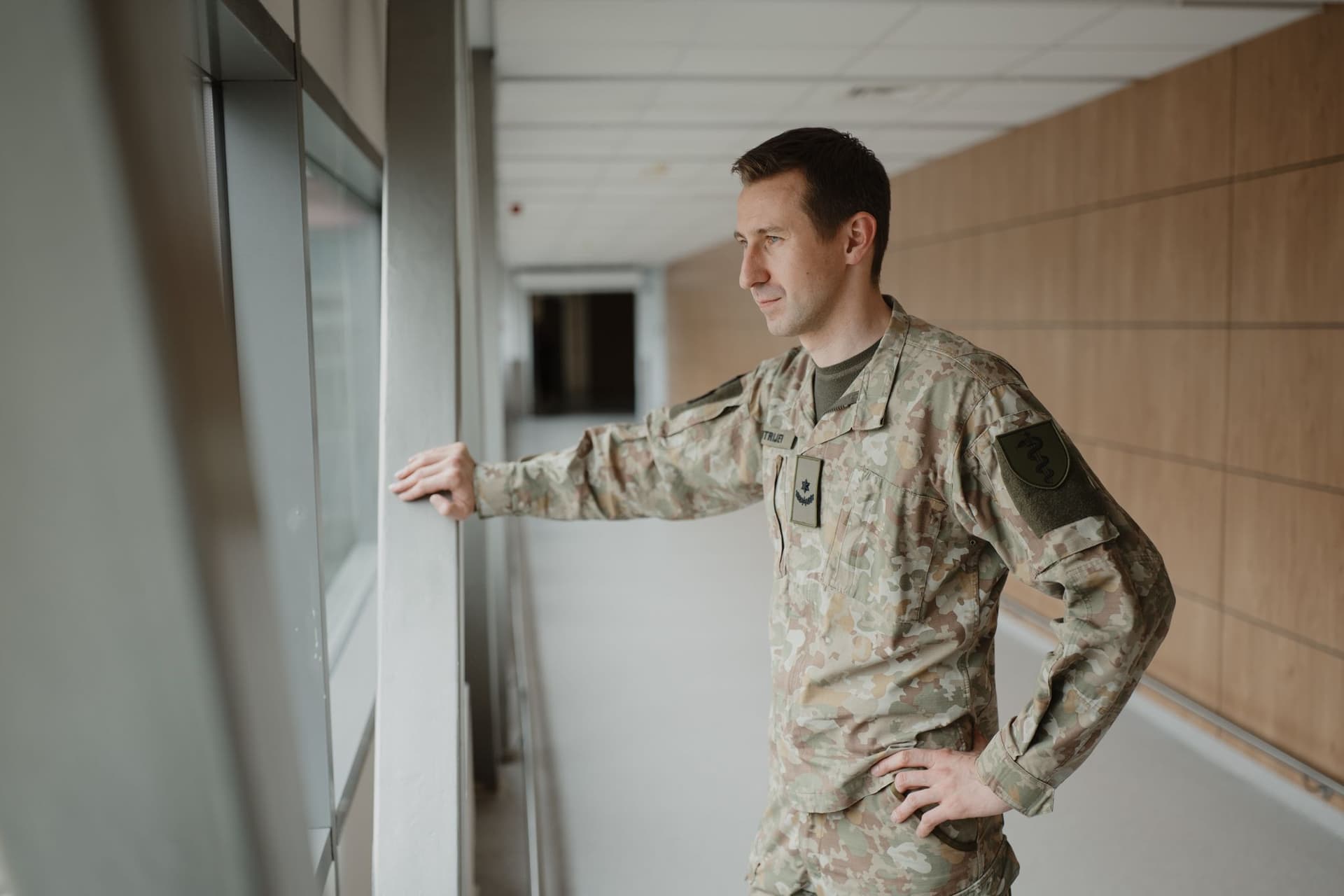
Yet professional expertise and quick reactions are not enough. Military medicine also requires the psychological resilience to function under the most challenging circumstances. ‘We need to be mentally tough while remaining empathetic, so that we do not reach the point of emotional burnout,’ the physician explained. For this reason, training exercises recreate highly stressful situations in which medics and soldiers must operate under fatigue, chaos, and pressure, so that they can respond automatically and confidently when it comes to real-life emergencies.
Automatic responses can save lives
Clear protocols play a vital role in high-stress situations. The systems and algorithms used in military medicine enable personnel to continue functioning even when panic or exhaustion sets in. ‘When everything becomes overwhelming, you remember those acronyms and follow the protocols. In extreme situations, automatic responses can literally save lives,’ he said.
That is why all soldiers receive first-aid training. Everyone must know how to stop bleeding, apply a tourniquet, and provide self‑aid or help a nearby colleague.
According to Maksim Dmitrijev, protocols ensure that all team members act within the same system and understand what treatment has already been provided to an injured person. Still, there are situations where improvisation becomes necessary. ‘You need to know the protocols, but sometimes you also have to think outside the box,’ he said, adding that modern warfare evolves at a faster pace than the official guidelines can be updated.
How is it decided who receives treatment first?
One of the most difficult decisions military medics face arises when the number of wounded people exceeds the medical resources available to treat them. In such situations, the most important tool is triage – a system that allows medics to quickly determine who needs urgent care. ‘There are red-category casualties who must receive treatment immediately, otherwise they will not survive. Then there are yellow-category casualties who can wait for a short period, and green-category casualties – the walking wounded – who can be treated later,’ explained the military physician.
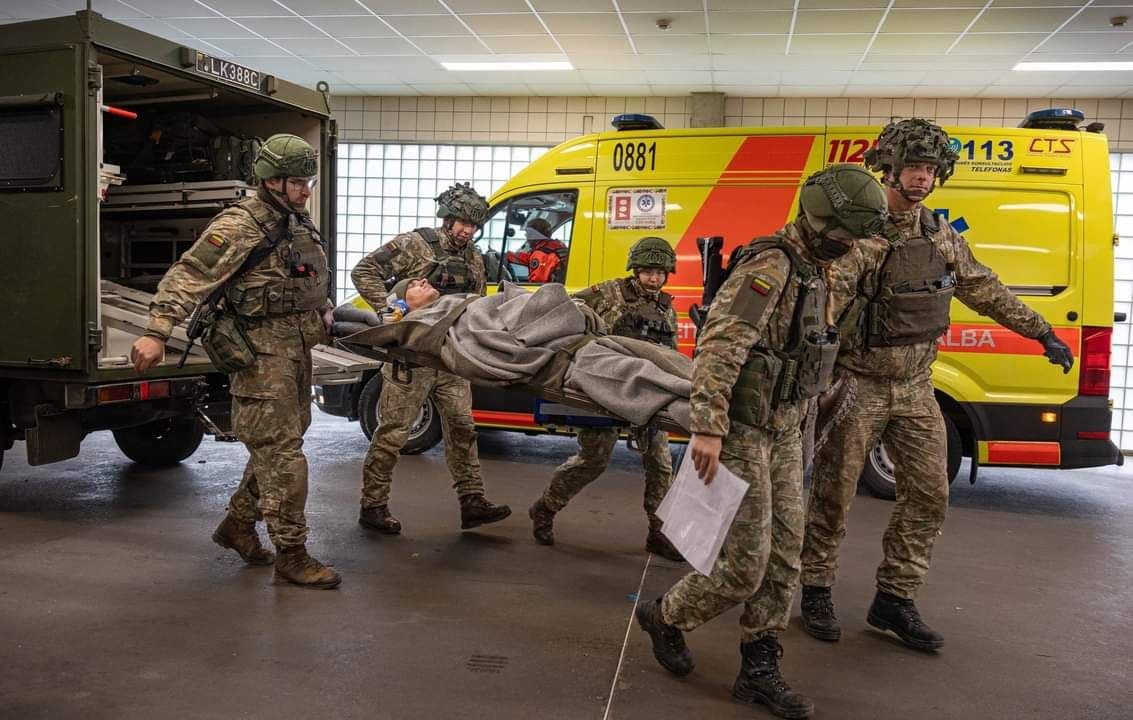
If casualty numbers become very high, mass-casualty protocols are activated: additional help is called in, evacuation procedures are accelerated, and extra resources are mobilised.
‘Sometimes you have to set your emotions aside and simply do your job professionally,’ noted Maksim Dmitrijev. According to him, the most emotionally challenging moments are those when it is impossible to help everyone at once. In such situations, the key is not to panic but to pause for a moment, assess priorities, and act in accordance with clear guidelines, as the primary goal of a military medic is to provide professional care as quickly as possible and save the wounded soldier’s life. The military physician emphasises that a soldier’s life is of the utmost value, as every service member is a highly trained professional who undertakes missions at the risk of their own life. ‘That’s why it is important for every soldier to know that if they are injured, we will be there to help,’ he stressed.
The nature of combat injuries has also changed in modern conflicts. Whereas military medicine once focused heavily on gunshot wounds, today’s medics most often encounter complex injuries caused by explosions, artillery fire, and drone attacks.
Asked whether injured enemy combatants are treated differently, the military physician explains that there is no discrimination within the medical chain of care – every wounded person is provided with the same standard of treatment. ‘When we receive information about a wounded enemy soldier, we report it to the relevant commanders and military police; the individual is then treated as a wounded patient and receives the same level of medical care as one of our own. Once their condition has been stabilised, they are transferred into the custody of the military police.’
Sometimes you also have to be a dentist
At times, military medics must take on unexpected responsibilities – from filling cavities to treating rare and unusual medical conditions.
One of the biggest challenges for Maksim Dmitrijev occurred during a NATO mission in the Baltic Sea, when a crew member developed symptoms of decompression sickness – a dangerous condition caused by rapid pressure changes that result in gas bubbles forming within the body. ‘It was quite a stressful situation; I had to quickly recognise a condition that you rarely encounter in practice, begin treatment, and organise evacuation,’ he recalled.
According to the physician, in such situations, it is crucial not to hesitate to consult colleagues and seek help: ‘You should never face a problem alone.’
Service at sea brought other challenges as well. As the only physician responsible for the crews of seven vessels, Maksim Dmitrijev was once called to another ship due to a suspected case of appendicitis. To reach the patient, he had to transfer between vessels in rough seas. ‘I had to jump onto a rope ladder and make sure I didn’t end up in the water,’ he recalled.
This article is part of the VU campaign ‘More Than You Can Imagine’. More stories about members of the VU community, their research, scientific discoveries, and meaningful initiatives can be found here.