- 3 July 2026
- Life Sciences Center
VU Life Sciences Centre Publication Receives Prestigious ACS Editors’ Choice Recognition
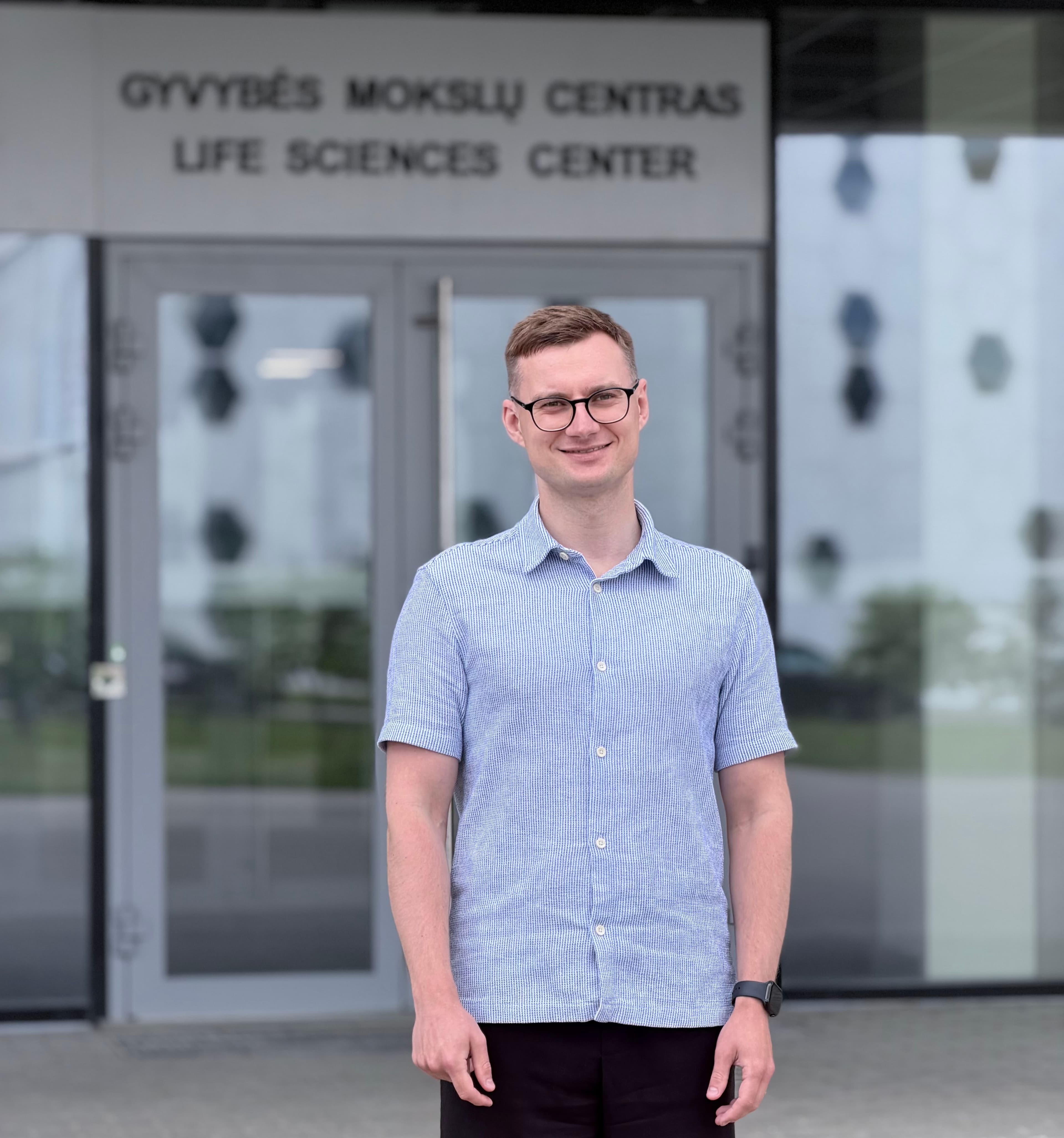
A review article by Dr Dalius Ratautas and colleagues from the Vilnius University Life Sciences Centre, published in the prestigious ACS Sensors journal, has been selected as an ACS Editors’ Choice article.
The ACS Editors’ Choice distinction is awarded by the American Chemical Society (ACS). Each day, editors select a single paper from more than 70 ACS journals that stands out for its scientific significance and broader societal relevance. The recognition highlights not only the impact of the team’s research, but also the growing international profile of the VU Life Sciences Centre in the fields of bioanalysis and biosensor research.
Rather than presenting a new biosensor, the review offers a critical analysis of why electrochemical DNA biosensors, despite more than three decades of intensive research, have seen only limited uptake in clinical practice. Reviews of this kind help distinguish technologies with genuine translational potential from those that remain largely confined to laboratory research, while also helping to shape future research directions.
According to Dr Ratautas, the idea for the review arose from many years of experience developing electrochemical DNA biosensors. From the outset, the team sought to ensure that their research would extend beyond the laboratory and deliver tangible benefits to society. This ambition ultimately prompted the researchers to take a critical look at the field as a whole and examine why promising laboratory technologies so rarely reach routine clinical use.
“When our team began researching electrochemical DNA biosensors in the Department of Bioanalysis at the VU Life Sciences Centre, practical application and societal benefit were always among our highest priorities. As our work progressed, however, we encountered limitations that revealed a substantial gap between promising laboratory results and real-world clinical implementation. In the review, we examine the reasons behind this gap and propose possible ways to bridge it,” says Dr Ratautas.
He stresses that the purpose of the article is not to highlight the technology's shortcomings or to question its future prospects. Rather, the review identifies the scientific and technological advances needed for electrochemical DNA biosensors to become more widely adopted diagnostic tools. In particular, the authors argue that progress will depend on integrating advances in DNA biology with technological innovation, clinical needs, and market realities.
“Electrochemical DNA biosensors remain a highly promising technology, provided that scientific vision is combined with a solid understanding of DNA biology, technological challenges, clinical needs, and market realities. DNA is a programmable molecule that can be used not only as the subject of analysis but also as a functional building block for next-generation biosensors,” he explains.
Dr Ratautas describes the ACS Editors’ Choice recognition as an acknowledgement of the entire team’s work and as evidence that impactful scientific discoveries emerge in academic environments that encourage openness, creativity, and independent thinking.
“I am grateful to the entire team, especially Dr Marius Dagys, Head of the Department of Bioanalysis. Academic freedom, trust in researchers, and the opportunity to pursue independent ideas are essential ingredients for achieving internationally recognised results,” says the lead author.
The article, Quo vadis, electrochemical DNA biosensor? Lessons from three decades of SNP sensing, published in ACS Sensors, was authored by Dalius Ratautas, Skomantas Serapinas, Deimantė Stakelytė, Simona Guobužaitė, Andrijana Danytė and Marius Dagys.