- 28 May 2026
- Lina Kocienė
When Seconds Save Lives: Vilnius University Researchers Introduce VR Solutions into Medical Education
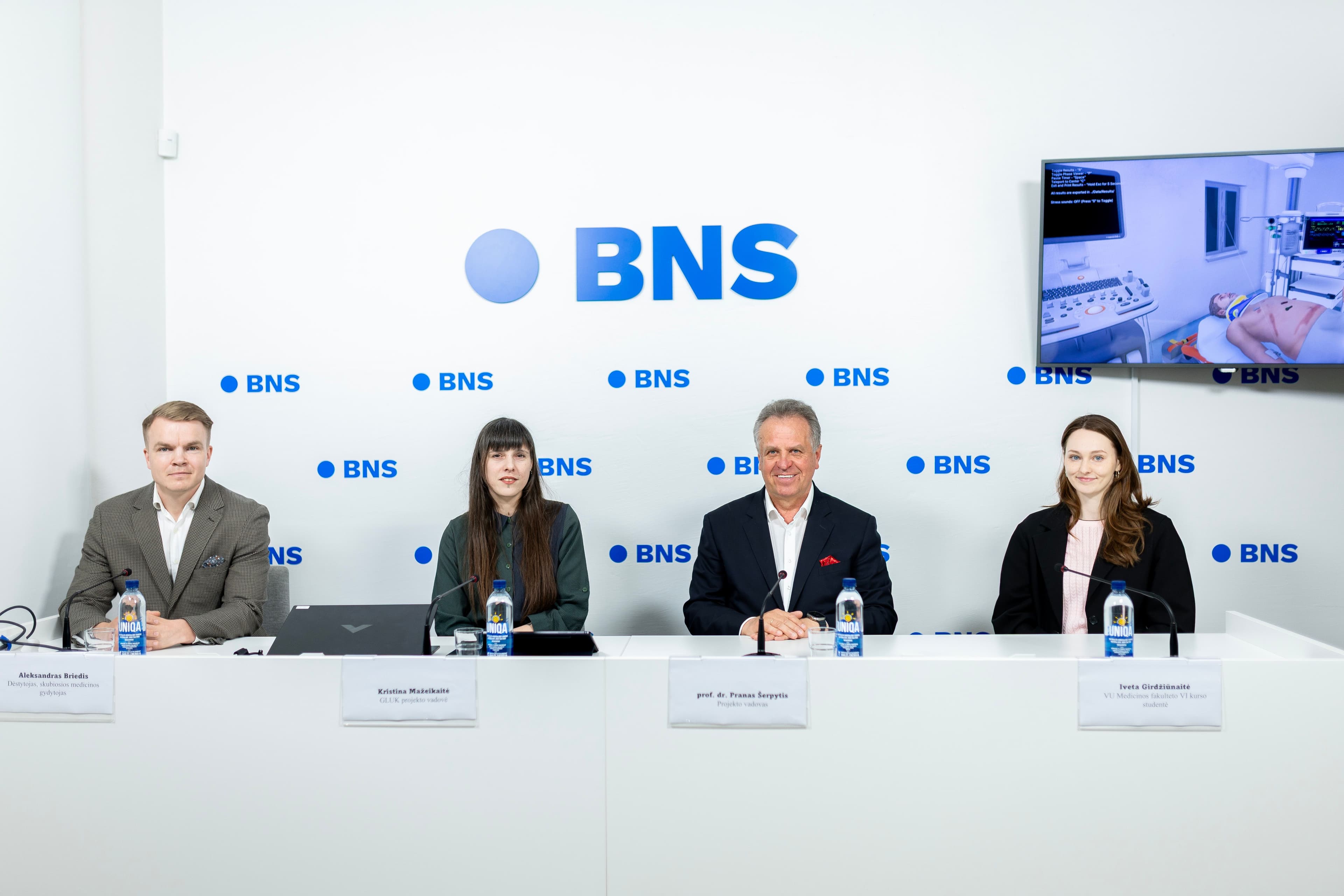
The Faculty of Medicine at Vilnius University (VU), together with international partners, is completing the implementation of the Erasmus+ project “MedEd Polytrauma VR”, aimed at strengthening the competencies of current and future healthcare professionals in the treatment of patients with multiple traumatic injuries through the use of virtual reality (VR) technologies. The training scenarios and methodology developed during the project will be made available to universities and training centres worldwide.
The project team organised a press conference at the BNS news agency's premises to present the project results. During the event, participants discussed the importance of virtual reality technologies in medical education and clinical practice, as well as their future potential within healthcare systems. Representatives of the media were also introduced to the virtual reality training tool developed for the project.
According to the project coordinator, Prof. Pranas Šerpytis of VU, virtual reality solutions are opening up new opportunities in the training of medical professionals.
“Virtual reality in medicine is no longer a vision of the future but a practical training tool. This project enables students to experience situations that are nearly impossible to recreate using traditional teaching methods,” says the professor.
The project is being implemented by VU together with partners from France and Poland, as well as virtual reality developers GLUK Media. During the project, VR training modules were created, international training sessions and pilot testing were conducted, and methodological materials for lecturers were prepared.
Kristina Mažeikaitė, Project Manager at GLUK Media, explains that one of the biggest challenges in developing the VR training tool was transferring real clinical situations into a digital environment.
“We had to clearly define which competencies students should acquire and how information technologies could help meet these learning needs. In the virtual environment, students must be able to assess a patient’s condition, prescribe the necessary procedures and medication, and perform specific actions. Each scenario involves numerous decisions, choices, and action algorithms,” says Mažeikaitė.
Polytrauma is considered one of the most complex medical conditions, requiring rapid and coordinated decision-making. The VR training solutions developed during the project allow healthcare professionals to train in a simulated environment replicating real clinical situations – from massive bleeding to severe head and chest injuries – and to make decisions without risking patient safety.
According to emergency medicine lecturer and physician Aleksandras Briedis, one of the project’s key goals was to prepare students for situations they rarely encounter during their studies.
“Traditional teaching methods in clinics and at the patient’s bedside remain extremely important. However, during their studies, only a small number of students encounter severely injured trauma patients. Virtual reality helps students recognise critical conditions and develop decision-making skills,” says Briedis.
Iveta Girdžiūnaitė, a sixth-year student at the Faculty of Medicine of VU, admits that learning through VR technologies makes medical studies more engaging and practice-oriented.
“VR allows you to feel closer to the patient, actively participate in the process, and make decisions yourself. Many students experienced mild stress and anxiety after their first VR session – as if the situation were happening in real life. These experiences help us prepare better for future clinical work,” says the student.
The project team emphasises that virtual reality will not replace traditional teaching methods, but can serve as an important complementary tool, making the learning process safer for patients and closer to real clinical situations.