Faculties, Institutes, Centres & Other Departments
The departments of Vilnius University combine science, creativity, and community spirit – faculties and research centers encourage the pursuit of knowledge, while libraries, cultural, sports, and administrative centers take care of the community's daily life, inviting people to learn, improve, and collaborate.
Faculties
Other Divisions
University
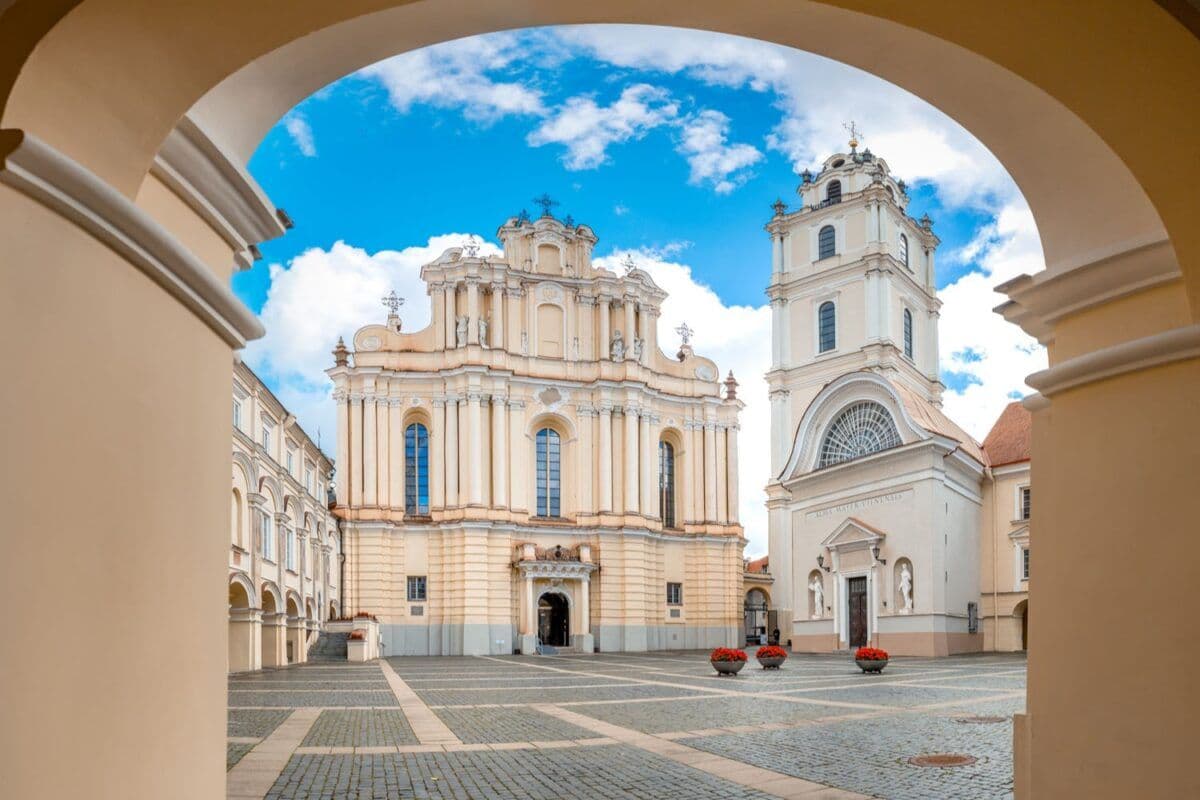
The Vilnius University Complex
Built in the 16th century in the center of Vilnius, reflects Gothic, Renaissance, Baroque, and Classicist architectural styles. The ensemble consists of 13 courtyards, 13 buildings, St. John's Church, and a bell tower. It houses faculties, a library, and the rector's office. In 1985, the university was awarded the European Gold Medal for the protection of monuments, and the complex represents Lithuania in the Mini Europe park in Brussels.
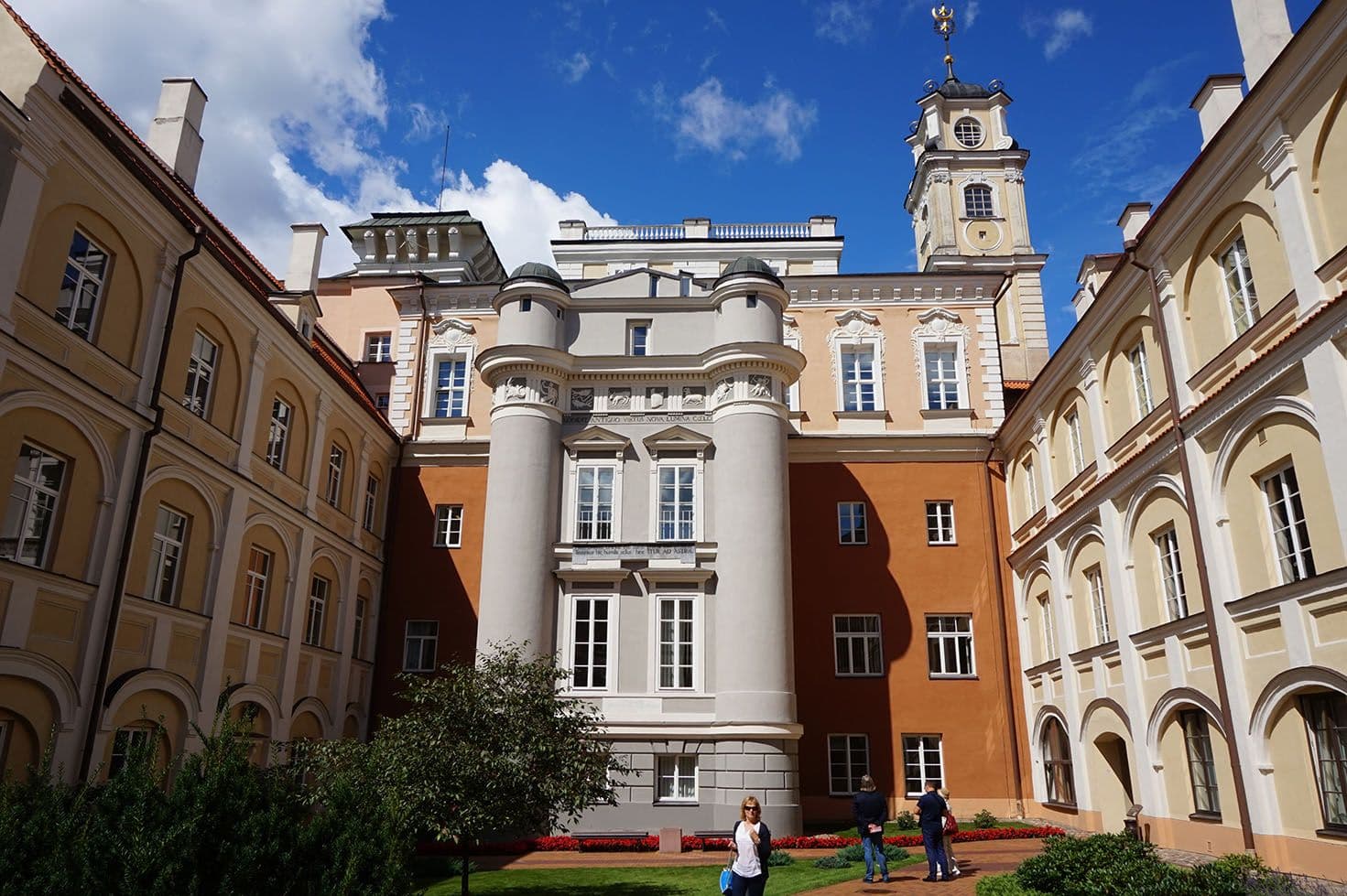
The Vilnius University Astronomical Observatory
Founded in 1753, is the oldest in Lithuania and Poland. Established on the initiative of Tomas Žebrauskas and with the support of Elžbieta Oginskaitė-Puzinienė, it flourished under the leadership of Martynas Počobutas. In 1876, it was ravaged by fire, and in 1882, by order of the tsar, the observatory was closed and its equipment distributed.
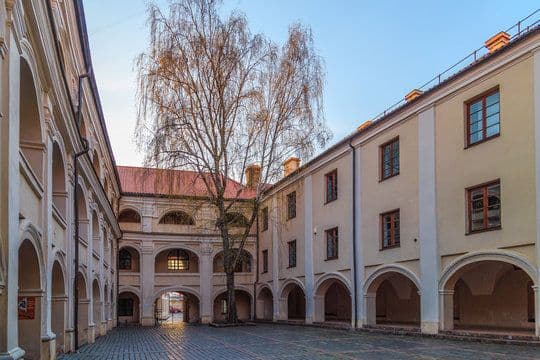
The Arcade Courtyard
Formed in the 19th century, is a cozy part of Simono Daukanto Courtyard. In the 16th century, buildings donated by patrons served as student dormitories, and the courtyard was used for open theater performances. Now it houses the Institute of Foreign Languages, the departments of the Faculty of Philology, and the auditoriums of the Center for Oriental Studies. The metal gates created by Juozas Kėdainis, installed on the occasion of the university's 400th anniversary, add to the coziness of the courtyard.
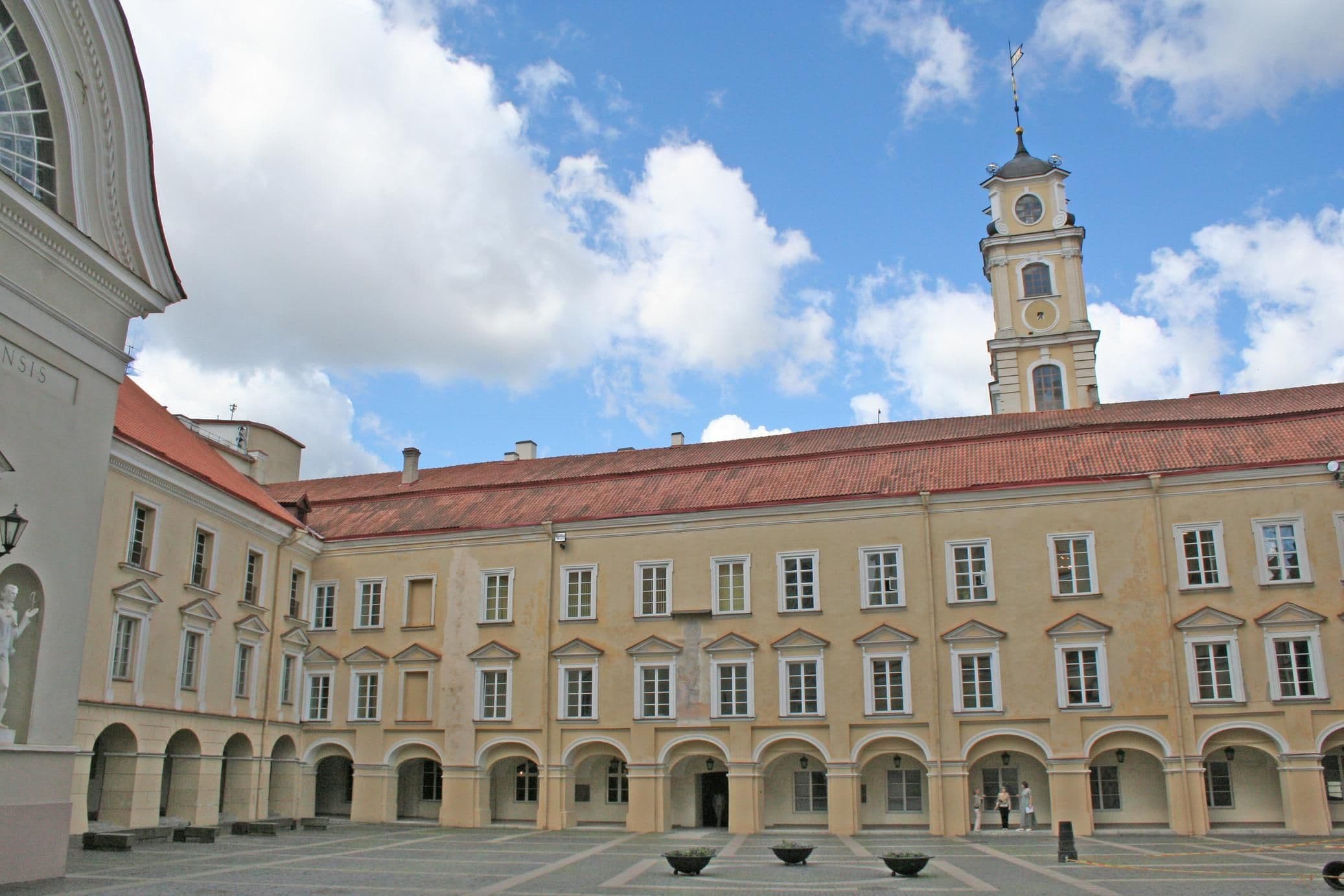
The Library Courtyard
Formed at the end of the 16th century, is one of the oldest courtyards in the university complex. It features a three-story library building with a Jesuit monastery refectory and an astronomy observatory building next to it. The courtyard is decorated with pilasters bearing astronomical symbols and a monument to Kristijonas Donelaitis by Konstantinas Bogdanas, while the entrance is marked by a monumental door dedicated to the first Lithuanian book.

Bursų Courtyard
Previously, this courtyard housed dormitories for poor students and the homes of musicians from Vilnius Cathedral. At the beginning of the 19th century, a three-story building with a courtyard was constructed, and at the beginning of the 20th century, amenities and apartments were added. After reconstruction in 2005, the Faculty of Philosophy moved in, and a royal beech tree was planted in the courtyard.
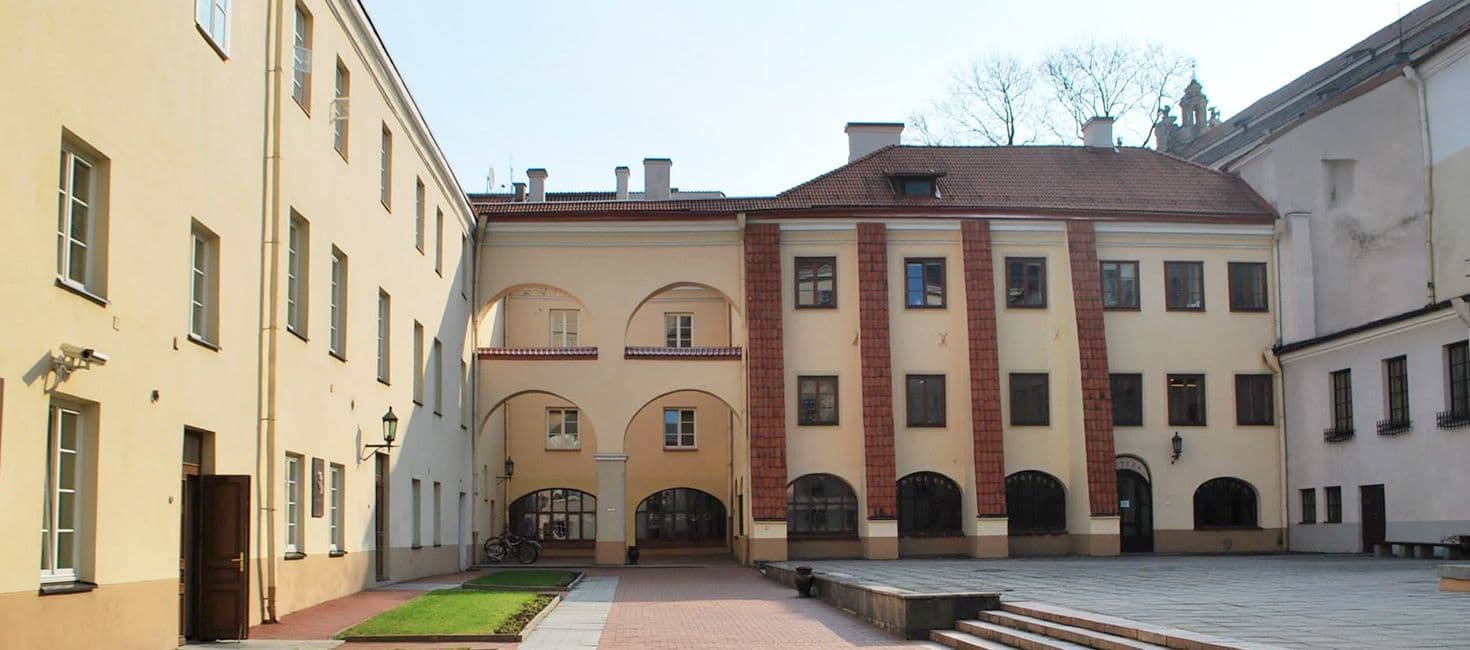
Simono Daukanto Courtyard
The northeastern part of the palace, which began to take shape at the end of the 18th century from donated noble houses, consists of Simono Daukanto's courtyard. Its southern wing is adorned with a Renaissance attic, while the western wing has been adapted for use as a printing house. In the center of the courtyard stands an oak tree from S. Daukantas's birthplace, planted on the occasion of the university's 400th anniversary, and the wall is decorated with a bas-relief of S. Daukantas.