- 27 January 2026
VU Historian Prof. Verbickienė: The ‘Recovering Memory’ Initiative Brought to Light What Had Long Remained Unspoken
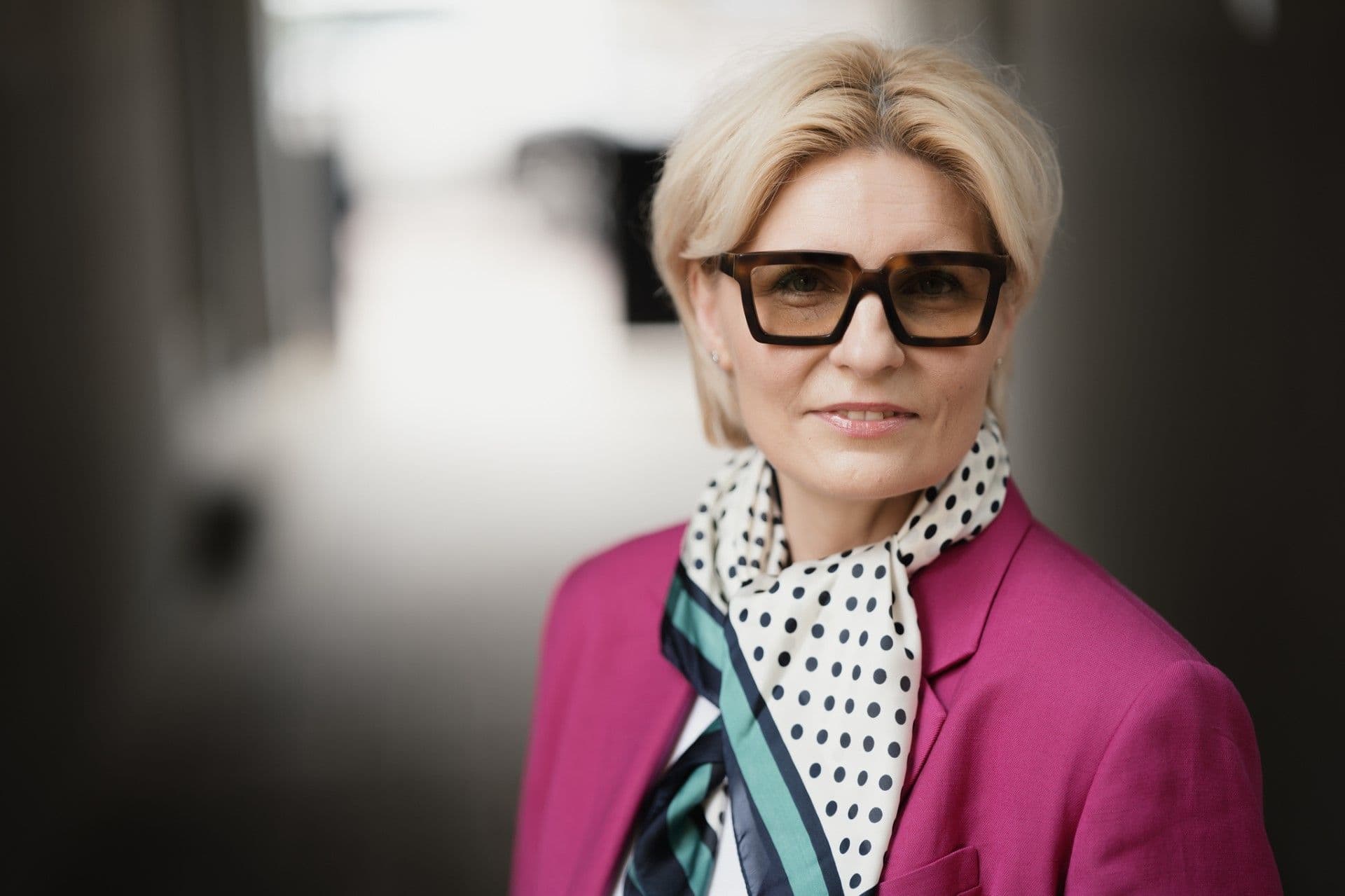
Vilnius University (VU) has received exceptional recognition for its historical initiative ‘Recovering Memory’ – the St Christopher Award, granted for civic engagement in preserving historical memory. Professor Jurgita Verbickienė from the VU Faculty of History, the initiator of the project, views the award in two ways: both as a commitment to continue the initiative in the years ahead, as it is meaningful and ethically just, and as an acknowledgement of a significant scholarly contribution.
‘This VU initiative restores historical justice. From the very beginning, there was a clear commitment to see this process through to the end. In practical terms, this means addressing the fate of all members of the VU community who were expelled during the occupation years – likely well over a thousand individuals. So far, we have identified 301. Another crucial aspect is that the restoration of justice can teach us a great deal – not only as a society or the University community, but even as historians. The scholarly findings uncovered through this initiative were new and had not previously been recognised,’ said Prof. Verbickienė.
Research uncovered unexpected facts
It may come as a surprise that at a university with nearly 450 years of history, some significant aspects of its past have not yet been fully uncovered. Yet when the research-based historical initiative was launched in 2016, it brought to light facts that had never been clearly articulated before.
‘For the first time, it was documented that during the Nazi occupation, individuals were expelled from the University on the basis of ethnicity and political views. Archival sources revealed a directive received by the then Rector of Vilnius University, Mykolas Biržiška, ordering the removal of Jewish and Polish students and staff, as well as individuals accused of collaboration with the first Soviet occupation authorities,’ recalled the founder of the initiative.
These findings were entirely unexpected and prompted a reassessment of the University’s functioning under Nazi rule. Until then, public discourse had primarily focused on the University’s closure on 15 March 1943, often interpreted as a firm refusal to cooperate with the occupying regime. The research, however, demonstrated that for a certain period, the University administration did comply with occupation policies, expelling students and staff members for ideological reasons.
At the same time, archival evidence shows that professors attempted to help students, and the administration sought ways to protect those who were persecuted. ‘One such case is the story of Prof. Vladas Lazersonas. Although he was dismissed from the University, Rector Mykolas Biržiška provided him with documents that might have enabled him to escape. However, Lazersonas did not use them and was later murdered in the Kaunas Ghetto.’
A similar case concerns Ona Šimaitė, a University librarian who had official permission from the Rector to enter the ghetto to ‘retrieve books’. In reality, each visit became an opportunity to smuggle food and weapons inside, hide Jewish manuscripts, and help rescue children.
An initiative that sparked action across universities
According to Prof. Verbickienė, the core message of the initiative lies in taking responsibility for the past. VU openly acknowledges the complexity of its history and, through this project, reflects on one of its most difficult chapters. This approach has not only shed light on a challenging historical period but has also encouraged other higher education institutions in the region to critically assess the impact of totalitarian regimes on their own communities.
‘Research into antisemitism at the former Stephen Báthory University attracted interest from Poznań University. Our initiative inspired them to examine manifestations of antisemitism within their own institution. Other Lithuanian universities have also shown active interest. Quite unexpectedly, VU has become a regional leader, encouraging other universities to rethink their relationship with their own past,’ noted Prof. Verbickienė.
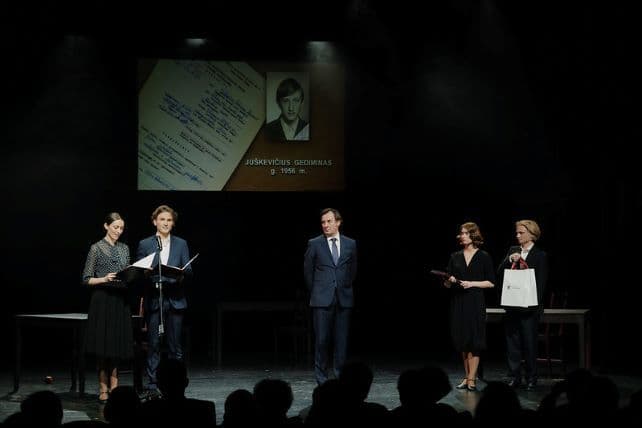
At the same time, when the VU initiative ‘Recovering Memory’ was launched, the University of Wrocław restored revoked academic degrees to its professors (mostly of Jewish origin), though this was a one-off act. Vilnius University stands out as the only institution to have transformed the awarding of symbolic Memory Diplomas into a long-standing tradition, now already ongoing for a decade.
‘Discussions about how to address the injustices suffered by members of the University community during the Soviet period date back to the Sąjūdis – a political movement which led the struggle for Lithuanian independence – and the first years after the country regained its freedom, but they never developed into broader and more sustained initiatives. However, a decade ago, appropriate forms of commemoration were finally formulated, resulting in the ceremony of awarding symbolic Memory Diplomas, which continues to this day,’ explained Prof. Verbickienė.
Beyond statistics: individual lives and personal stories
The research revealed the true scale of injustice: well over a thousand individuals – Jews, Poles, and Lithuanians – were expelled from the University during the interwar and occupation periods. ‘These people are no longer reduced to statistics but recognised as individual human beings. Each name represents interrupted studies, shattered futures, and often even lost lives. For this reason, the ‘Recovering Memory’ initiative seeks not merely a symbolic gesture but the restoration of justice, even when there is no longer anyone left to receive the diploma.’
One such case is that of Lithuanian Jewish poet Matilda Olkinaitė. Expelled from the University and later murdered along with her entire family, she left no surviving relatives who could accept her Memory Diploma. Therefore, it was presented to the school she attended, symbolising the endurance of memory even when family lineage has been extinguished.
Some of the most moving experiences of the initiative are the encounters with individuals whose lives were directly affected by historical injustice. Prof. Verbickienė recounts the case of Kristina Rzewuska, a lady of advanced years living in Gdańsk who had witnessed Józef Piłsudski’s funeral. She had been expelled from Vilnius University in her youth, and a few years ago, she was honoured – the University awarded her a Memory Diploma, symbolically restoring her to the community.
Over time, the initiative has also led to unexpected, and sometimes even bizarre or poignant, situations. Increasingly, relatives themselves contact the University to report family members who were expelled from Vilnius University during World War II or in the post-war period. In some cases, the submitted surname has already been identified by researchers.
‘There are instances when relatives, having learnt about the initiative, reach out to nominate a family member as someone who was expelled from Vilnius University, only for us to discover that the person has already been awarded a Memory Diploma. We simply had not been able to identify any relatives living abroad.’
The Professor noted that the initiative has uncovered a number of different stories. In one case, a single family was awarded two Memory Diplomas – one for the mother and one for the father, both medical professionals who had been expelled from the University and deported.
These stories show that the initiative exists not only in archives but also in living family memory. For this reason, Prof. Verbickienė encourages those familiar with their family history to consult the University’s research and the published list of nominees.
Identifying those affected
The historical research behind the initiative is carried out by a team of researchers from the VU Museum and VU historians. The collected material is evaluated by the Memory Diploma Award Commission, composed of VU researchers and members of the Genocide and Resistance Research Centre of Lithuania.
According to VU Museum specialist Dr Vaiva Kubeckienė, she and her colleague Julija Jonušaitė-Varapnickienė start by gathering information on nominees and searching archival records concerning students and teaching staff members expelled due to occupation, ethnicity, or political reasons. The Museum also stores undelivered Memory Diplomas when neither the nominees nor their relatives can be identified.
‘The research process begins with the names that come from the Commission, from direct enquiries, or from published sources. Initial investigations are conducted at the VU Museum, while more complex cases are examined with the Commission’s assistance. We also cooperate with the Lithuanian Special Archives and the Lithuanian Central State Archives, which hold additional documentation. To ensure efficiency, clear procedures and a structured document management system have been established, guaranteeing transparency and data protection throughout the research process,’ said Julija Jonušaitė-Varapnickienė, a specialist at the VU Museum.
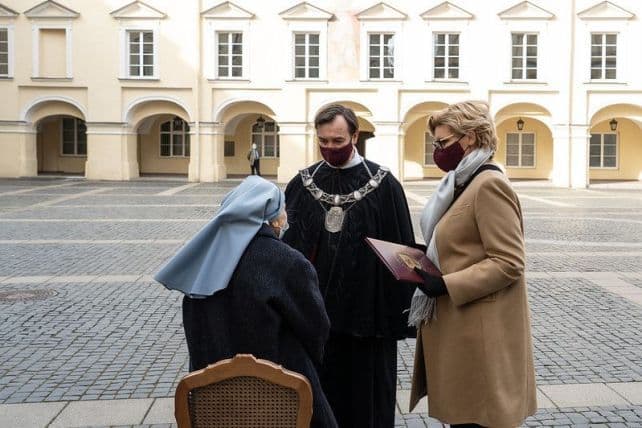
Some of the most memorable experiences for the Museum team involve face-to-face meetings with the nominees themselves or their relatives as they collect the diplomas. Dr Kubeckienė particularly vividly recalls the Memory Diplomas awarded outdoors in the VU Grand Courtyard during the COVID-19 pandemic. These diplomas were received in person by the nominees – 93-year-old nun Laimutė Antanina Vanagaitė and 94-year-old deportee and engineer Alfonsas Bujokas.
Choosing humanity as an antidote
When asked what the University can offer society through this initiative – something neither politicians nor cultural institutions can provide – Prof. Verbickienė emphasises the importance of scholarly research and educational responsibility. The University can rely on verified archival data and systematic research to tell stories that move from the micro to the macro level, i.e. from individual human fates to collective self-understanding. This approach allows reflection on the past and educates society about the future consequences of certain choices.
What began a decade ago as research into those expelled from VU has opened archival records and revealed the complex moral decisions people were forced to make. Initially perceived as an effort to reconstruct history, it gradually became clear that the initiative speaks not only about the past but also about contemporary value choices.
The initiative tells the stories of individuals who, under totalitarian regimes, chose to help, to shelter, and to rescue others, and reminds us that even in the darkest times, people can still choose to stay human.
‘The ‘Recovering Memory’ initiative is about choices... about choosing compassion. It offers a kind of antidote, showing what can happen when we act against human values and fail to help one another. The choices made by people in the past, as well as those made today, are especially important now, as the world once again becomes unstable,’ concluded Prof. Verbickienė.