- 24 April 2026 at 07:23
- Gabrielė Rimkutė
In Lithuania, one in six people experience infertility – what solutions can science offer to address this problem?

According to data from the World Health Organisation, infertility is far more common in modern society than many assume, affecting one in six people. While some can conceive after routine medical examinations and following their doctors’ recommendations, others search for the underlying causes, leading them to consult geneticists. Prof. Laima Ambrozaitytė from the Faculty of Medicine (MF) at Vilnius University (VU) and a senior medical geneticist at the Centre for Medical Genetics at VU Hospital Santaros Klinikos, discusses the latest genetic infertility tests available to couples in Lithuania.
– Global statistics show that infertility is a widespread issue. Does this trend also hold true in Lithuania?
– Yes, according to data from the VU Hospital Santaros Klinikos, fertility challenges in Lithuania affect approximately 30–40% of women, 10–30% of men, and 15–30% of couples. These are indeed significant figures, especially considering that the data reflect only those individuals and couples who intend to have children.
– It seems more couples today are choosing to have children later in life, with some only finding a life partner as they approach their forties. Does this trend affect the statistics?
– This trend certainly has some impact on the statistics. However, I believe that the decision to have children later in life often develops naturally. Usually, people do not have a strict plan for when they will have children. Young people today simply do things differently: they choose to complete their education, build their careers, establish themselves in the labour market, travel, and pursue other goals before considering parenthood.
– The statistics suggest that the prevalence of infertility does not vary significantly based on a country’s level of development or standard of living. The figures are distributed fairly evenly worldwide, and the problem affects both sexes. It may therefore appear that this is a common evolutionary problem of humankind. What causes infertility?
– The causes can be hereditary or congenital, while a significant proportion result from a combination of environmental and genetic factors. These include age, harmful habits and the use of medication. In some cases, the underlying causes remain unclear. The causes of infertility are classified as male or female, although in some instances, both partners may be affected.
– To help a couple have a healthy child, geneticists can offer various tests at different stages of conception and pregnancy. What are the steps for resolving infertility?
– Genetic testing can be carried out for the mother, the father and the embryo. However, the first step towards conception is to try to conceive naturally for one year after the use of contraception has stopped. If this is unsuccessful, the recommendation is to consult a general practitioner or gynaecologist. Based on various indicators, family history and all relevant factors, and following the algorithms and recommendations, the couple might then be referred for genetic testing.
In Lithuania, the initial test is often a karyotype analysis performed on both partners. Blood samples are taken to determine whether the individuals have the common number of chromosomes. Only a limited number of laboratories in Lithuania perform this test, as it is time-consuming and requires specialised expertise for both its analysis and interpretation. Such tests are carried out at the Molecular Genetics and Cytogenetics Laboratory of the Centre for Medical Genetics at VU Hospital Santaros Klinikos, where blood cells are first cultured and then examined for chromosomal changes.
– How many such tests are carried out in Lithuania each year?
– Last year, we carried out more than a thousand karyotype tests, so we tested around 500 couples. For a country the size of Lithuania, this is a considerable number. The vast majority of these (over 90%) are couples who are unable to conceive or have already experienced a miscarriage.

Associative photo.
– What are the possible results of this test?
– A chromosomal abnormality is identified in around 9% of such couples. In some cases, these involve changes in the number of sex chromosomes, but more often they relate to rearrangements in the number or structure of other chromosomes. In these situations, the overall amount of genetic information remains unchanged, and neither partner shows clinical symptoms. However, when cells divide, these chromosomal alterations can be passed on to the embryo, leading to failed embryonic development or a miscarriage.
If no changes are identified, further investigations are carried out. We return to the clinical diagnosis; for example, if changes are observed in the man’s semen analysis, the Y chromosome – present only in males – can be examined. Certain regions of the Y chromosome are associated with infertility, and their absence may lead to a low sperm count or even a complete lack of sperm production. Changes in the Y chromosome account for 10–15% of all male infertility cases; however, in Lithuania, this is below 10%, and we only identify isolated cases. At the same time, the woman’s genome can also be tested, looking for changes in areas associated with a risk of infertility. If, after all the recommended genetic tests based on current knowledge, no changes are found, the couple may receive a diagnosis of so-called “unexplained infertility.”
– What options are available to a couple who have discovered that one of the partners has chromosomal changes that may prevent them from having children?
– Once such changes are identified, we can offer pre-implantation or prenatal diagnosis. One option is to screen embryos before implantation by analysing the entire genome of embryos created through assisted reproduction, to determine whether they carry any genetic changes and are recommended for implantation into the uterus. Pre-implantation genetic testing is carried out at the VU Hospital Santaros Klinikos; it is available only at this laboratory in Lithuania. At the Santaros Fertility Centre an embryo biopsy is typically performed on days 4–5 of development. A small number of cells are taken from each embryo, and the entire genome is analysed in the laboratory. Based on the results, specialists can recommend which embryos to select for implantation.
– Are there cases where it is not possible to test an embryo? What happens in these situations?
– Yes, in exceptional cases, technical limitations may prevent the analysis of an embryo. In such cases, without test results, the couple must decide whether to proceed with the transfer of an untested embryo. An equally difficult decision is made after karyotype analysis, when it must be considered whether to pursue pre-implantation genetic testing. Even if the patient shows no clinical symptoms, chromosomal changes may still affect cell division, and the couple might need to undergo a complex and lengthy assisted reproduction process to create embryos.
– Usually, several embryos are created during assisted reproduction, of which only one or a few will be implanted. What happens to embryos that are not recommended for implantation, or the couple chooses not to use them?
– Unlike in some other countries around the world, this ethical issue is clearly regulated in Lithuania. Embryos may only be used in accordance with the couple’s informed consent, and under no circumstances may they be used for research purposes. Legal regulations governing what happens to embryos not used for implantation have changed several times over the past decade in response to changing circumstances. The aim is to protect both the couples and the created embryos to the greatest extent possible. If several embryos are deemed suitable, one is selected for transfer, and the others are cryopreserved for the future.
On average, after 10–12 oocytes are retrieved and fertilised, about 10 embryos will form. By the time of the embryo biopsy, when a cell can be taken, approximately six embryos will remain. Upon examination, it may turn out that, for example, one cannot be assessed and four show genomic changes, leaving only one or two embryos recommended for transfer to the uterus. However, sometimes we only have three embryos in total, sometimes all of them may show abnormalities, and occasionally up to five may be suitable. In that case, we assess how all the embryos are developing, and the most promising one is selected for transfer, while the remaining embryos are cryopreserved for possible future use.
– In the event a woman does conceive, the couple may opt for another pathway – prenatal genetic testing. What questions do these tests answer?
– These tests are carried out during pregnancy. The woman is referred to a geneticist. First, an ultrasound examination is performed, a family medical history is taken, and the woman’s biochemical blood tests are performed. If the assessment indicates an increased risk of a congenital condition, the fetus can be examined to determine whether any abnormalities are already present. A wide range of tests is available to detect specific and relatively common genetic abnormalities; however, it is not possible to screen for every potential genetic condition.
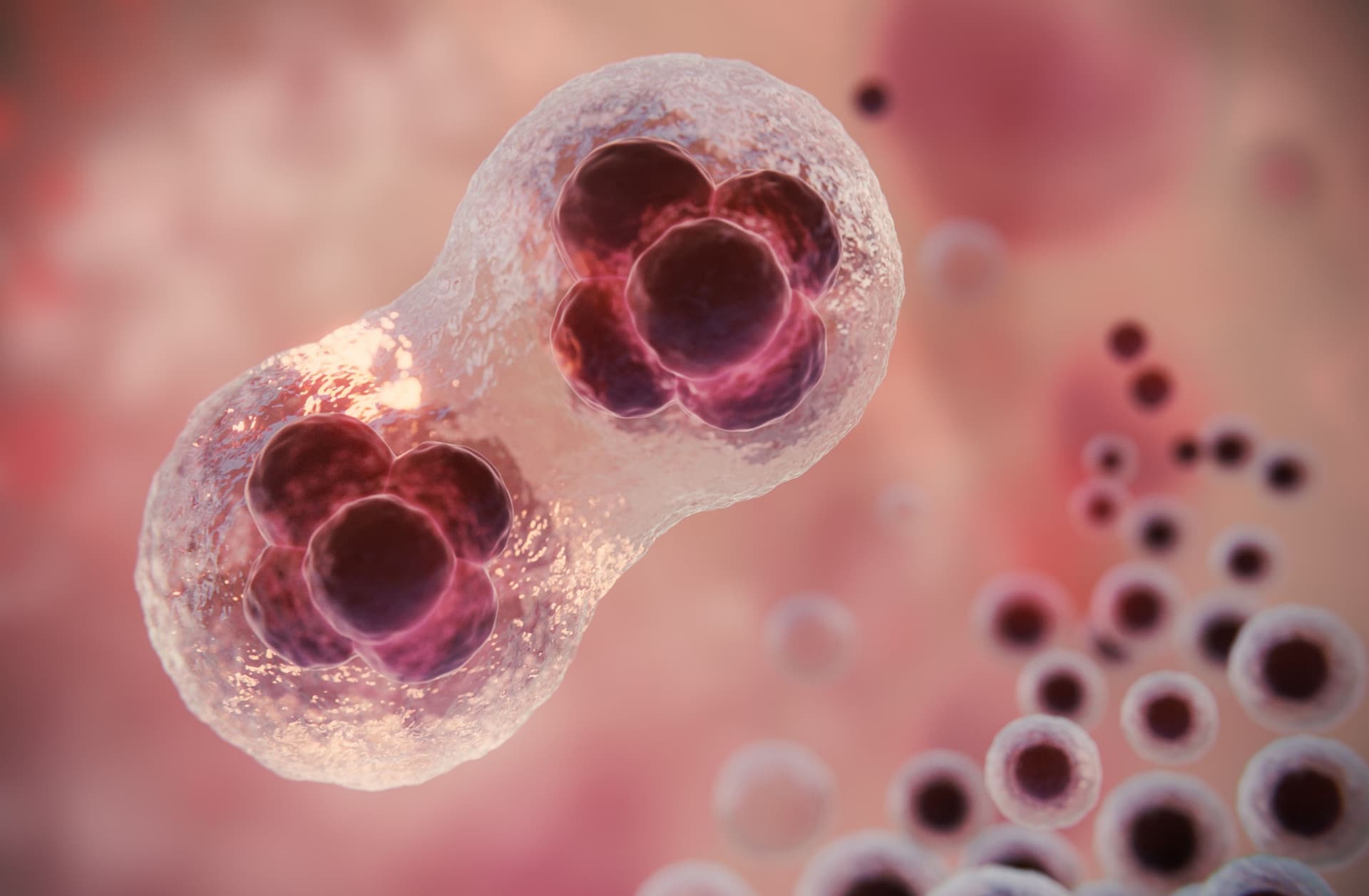
If several embryos are deemed suitable, one is selected for transfer, and the others are cryopreserved for the future. Associative photo.
– Is the geneticist the final specialist to assess a couple’s chances of having children?
– In most cases, couples undergo testing in stages, with genetic testing being the final stage. In some fertility centres around the world, there is direct collaboration with geneticists, and couples are often referred for genetic evaluation so that at least the main genetic causes can be identified or ruled out, enabling further diagnostic procedures. However, it is important to note that in a substantial proportion of cases, the genetic causes remain “unexplained.”
– Do we have the most innovative genetic testing facilities in Lithuania, or should couples seek more advanced technologies at healthcare institutions abroad?
– In my personal opinion, we have excellent healthcare in Lithuania, particularly when it comes to genetic testing. Such testing is available and reimbursed for all patients who need it. While globally there is still insufficient biological understanding of the human genome to identify all genetic causes of infertility, in Lithuania, all currently available and clinically relevant tests are carried out for patients.
– At what pace has genetic testing technology advanced over the past ten years?
– The field has developed quite rapidly and continues to improve. Ten years ago, it seemed to me that there was little room for improvement in diagnostics, and the work appeared clear and routine. However, it soon became apparent that new methods were still under development and needed to be implemented. Research has advanced in technology, testing scope, and the depth of genomic analysis. A particularly pressing issue, however, is the growing number of patients—the number of people seeking assistance increases every year.
– What has caused this increase?
– Greater availability of testing has played a key role. The compulsory health insurance fund now covers more and more tests, and specialists are much more willing to assess the need for such tests to confirm a particular condition in a patient. Consequently, the volume of genetic testing has grown significantly.
– How has the number of couples undergoing testing changed?
– Pre-implantation genetic diagnosis was introduced in Lithuania in 2017. Last year, we tested 17 couples. Some couples take advantage of this opportunity twice a year, if a woman’s physiological condition allows and the required interval between procedures is addressed.
– Are these tests and assisted reproduction covered by the compulsory health insurance in Lithuania?
– In Lithuania, these services are reimbursed a maximum of two times from the Compulsory Health Insurance Fund for married couples.
– What age limits should couples planning to have children later in life be aware of?
– There are several important age limits to consider. Pre-implantation genetic diagnosis is covered by compulsory health insurance until the woman reaches the age of 42. When it comes to prenatal diagnosis, a woman aged 35 or over and a man aged 42 or older are considered to be of advanced maternal and paternal age.
– If the age limit for the entire process is 42, when should a couple apply to ensure they still receive assistance in time, bearing in mind the most complex scenario possible?
– Each situation is individual, but the procedures can take several years. At the same time, there are also cases where, even during the course of testing, couples report a natural conception.

Associative photo.
– If a person begins testing at the age of 35, could the results of their genetic testing be different from what they would have been if they had sought help ten years earlier?
– In principle, a person’s genome does not change over time, but biological circumstances can influence the development of changes later in life. Harmful habits and other environmental factors can cause pathological changes, including cancerous mutations.
– Should we encourage young people to undergo genetic testing earlier if they are travelling, building their careers, and postponing having children until their final fertile years?
– I would strongly encourage taking an interest in one’s health at a young age, but there may not be much point in specifically seeking genetic infertility testing until a person is actually planning to start a family; this is more of a socio-psychological consideration. For example, in populations further east, where consanguineous marriages are common, it is customary to undergo so-called “carrier screening for the most common hereditary diseases” before planning a family. Such testing is also available in Lithuania, but it is not widely practised.
– There are cases where people place too much trust in medical progress and adopt an overly positive attitude, believing that fertility problems will always be solved by medicine. What is your view on this?
– Yes, this attitude is quite common. However, the important message is that we cannot test for everything, and we may not be able to successfully resolve all problems, especially if people seek help too late. The underlying causes of infertility remain undetermined in 28% of couples, or 40% of women who are unable to conceive and have sought help.
– Could you share with us what new genetic testing may soon become available?
– All genetic tests begin with research applications or are used in specific study groups, and only then are they introduced into routine diagnostics. We are currently conducting two or three important studies that are close to completion and implementation. One of them relates to prenatal diagnostics. It involves a non-invasive prenatal test, not yet covered by the Compulsory Health Insurance Fund, but common worldwide. By taking a blood sample from a pregnant woman, we will be able to determine whether the fetus has a genetic abnormality. There is a very high demand for this test, as most pregnant women wish to know the result. We plan to offer this test to pregnant women at VU Hospital Santaros Klinikos in the autumn.
Another major area of research focuses on whole-genome sequencing. We are fully prepared technologically. We have initiated the processes to ensure this is funded from the Compulsory Health Insurance, and all that remains is to secure the political commitment and the decision.
– Will artificial intelligence (AI) impact this field and help interpret research results, given that billions of data points will be analysed in the future?
– AI is already integrated into our work and has been since the 1970s. However, we still do not have access to the complete biological information that we can rely on. Our genome has 3.2 billion nucleotides, of which only 4 differ. There are more than 8 billion people; each genome is unique, and changes can occur at various points in the genome sequence. So we only use AI tools to facilitate processes, and for now, we cannot simply upload a genome into an AI application to get answers.
– Will we ever be able to take a drop of our own blood and use an app to analyse our genetic information?
– In fact, the universal newborn screening programme, which has been running for over 50 years, is precisely heading in this direction. In Lithuania, all newborns are screened at the Centre for Medical Genetics of VU Hospital Santaros Klinikos (www.patikrinkmane.lt). This is a biochemical testing method in which a blood sample is collected from the newborn’s heel on the 2nd or 3rd day of life and sent to a laboratory for analysis. Currently, around 99.3% of newborns are screened. Some newborns die before they can be screened, while, unfortunately, in some cases, parents decline the tests. Continuous efforts are made to expand the range of conditions included in screening. The list of conditions currently screened for includes those that are treatable and can be identified at an early stage. Pilot projects for whole-genome screening have already begun in some countries, but this has yet to be implemented. Screening is currently performed using biochemical tests.

Sequencing the entire human genome. Photo from personal archive.
– Will this be done in our future?
– The idea of sequencing a person’s entire genome immediately after birth emerged over 15 years ago. However, it has been the subject of much debate. It would seem ideal to sequence every newborn's genome so that, in the future, should a person require that information, it would already be available. Nevertheless, this data is voluminous and difficult to store. Furthermore, as whole-genome sequencing technologies gradually improve, data sequenced several decades ago would likely need to be re-sequenced. For these reasons, we cannot yet implement universal whole-genome sequencing tests.
– Meanwhile, ordinary people are also discussing the topics of gene editing, with the idea that if changes are found in the genome, it might be possible to correct them in the future. Is that really the case?
– This is already a reality, though not in the field of infertility. Gene-editing technologies are already being used to treat certain conditions, such as retinal dystrophy and some blood disorders. This requires identifying a very specific change in the genome. If this technology were miraculous, we would have cured all diseases by now. Great efforts are being made to find solutions to correct certain genetic changes, but gene editing is not yet used to eliminate the causes of infertility.