- 8 July 2026
- Greta Zulonaitė
All of Lithuania’s History in a Single Capsule: How Can DNA Technology Make This Possible?
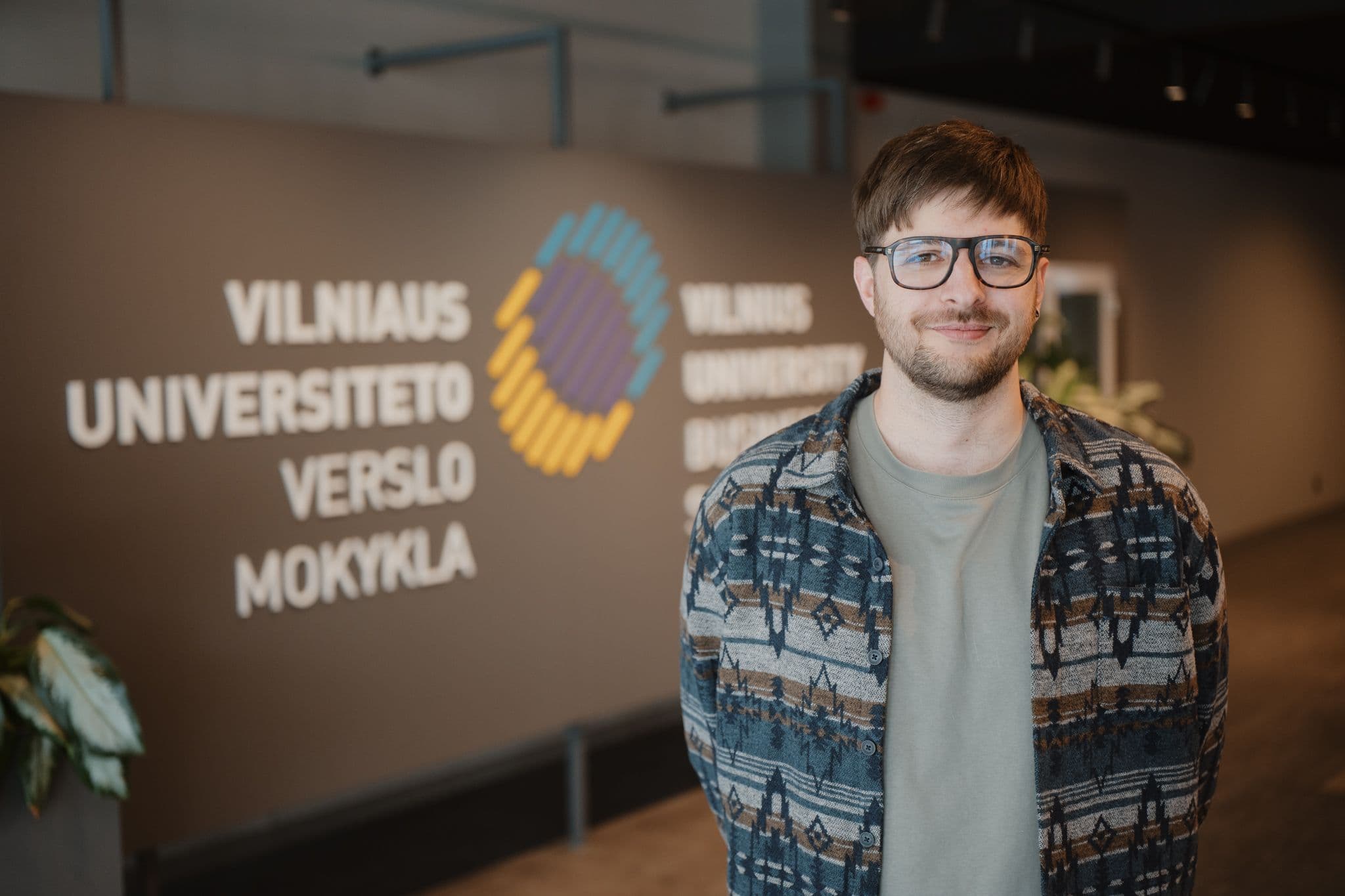
Imagine a capsule the size of a pen cap containing the entire history of Lithuania – from the paintings of Mikalojus Konstantinas Čiurlionis to the Act of the Re-Establishment of the State of Lithuania of 11 March 1990. All of this information, invisible to the naked eye, fits into a tiny part of the capsule’s base, which can store hundreds of billions of book pages. This is possible only because such an enormous amount of information is encoded in DNA molecules. Robertas Skliaustas, a PhD student at the Vilnius University (VU) Business School and co-founder of the startup ‘Dnamic’ believes that biotechnology will eventually become the answer to the world’s rapidly growing data storage challenges.
From scientific curiosity to entrepreneurship
With a background in genetics, Robertas says he first discovered the world of DNA data storage while pursuing his Master’s degree in Deeptech Entrepreneurship at the VU Business School. He adds that the concept itself is not new and dates back to 1869, when DNA was first discovered.
‘If we put aside all the sacred meaning we attach to DNA – life, genes, and so on – its primary function is to store information. Scientists understood this from the very beginning, but at the time, the necessary technologies simply did not exist. That’s why the idea remained confined to laboratories for so long,’ said the PhD student.
Robertas’ growing interest in the field eventually led him to explore the commercial potential of DNA data storage technologies. After completing his studies, he joined the Lithuanian biotechnology company ‘Genomika’, which, among other activities, develops DNA data storage solutions together with other partners. There, he began investigating how the technology could be adapted for practical use.
This year, Robertas and his team established the startup ‘Dnamic’, which aims to further advance and commercialise DNA data storage technology for archives, research institutions, and other sectors that accumulate massive amounts of information.
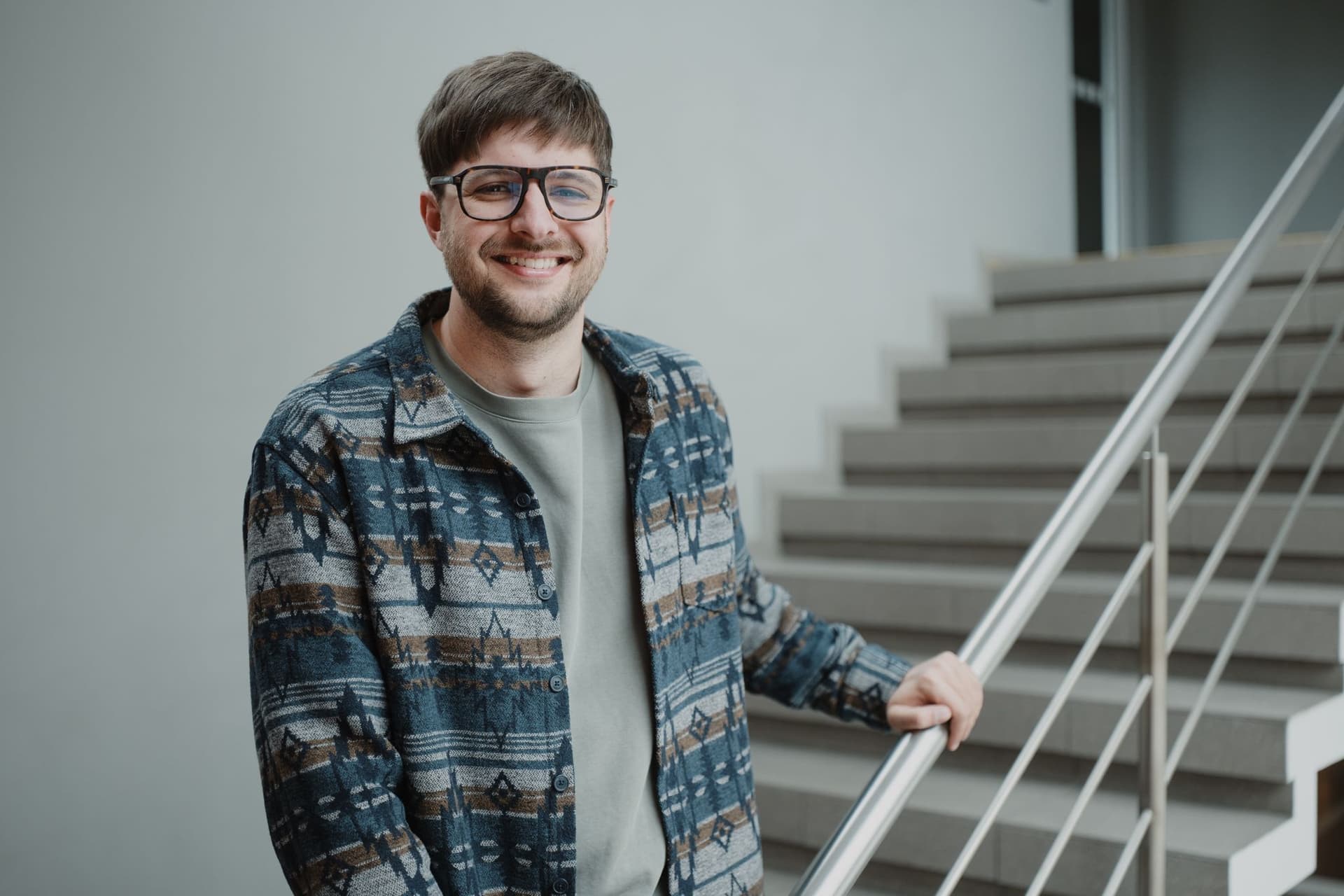
Robertas Skliaustas. Photo by Ugnius Bagdonavičius / Vilnius University.
Why use DNA to store data?
Today, global data storage relies primarily on three technologies: HDD hard drives, SSD drives, and LTO tape. So why has DNA emerged as another solution for data storage?
As Robertas explains, such technologies are developed by only a handful of companies worldwide and have already approached their theoretical limits – they cannot be made smaller or store significantly more information.
‘The only option left is to increase their quantity. That’s why we are now building large numbers of data centres that consume enormous amounts of energy. Data centres in the United States currently account for 6% of total energy consumption. By 2028, this figure is expected to rise to 17%,’ he said.
Moreover, according to Robertas Skliaustas, the amount of data generated globally is growing rapidly every year – last year alone, humanity generated 181 zettabytes of data. If stored on USB flash drives, they could form a chain capable of circling the Earth hundreds of thousands of times.
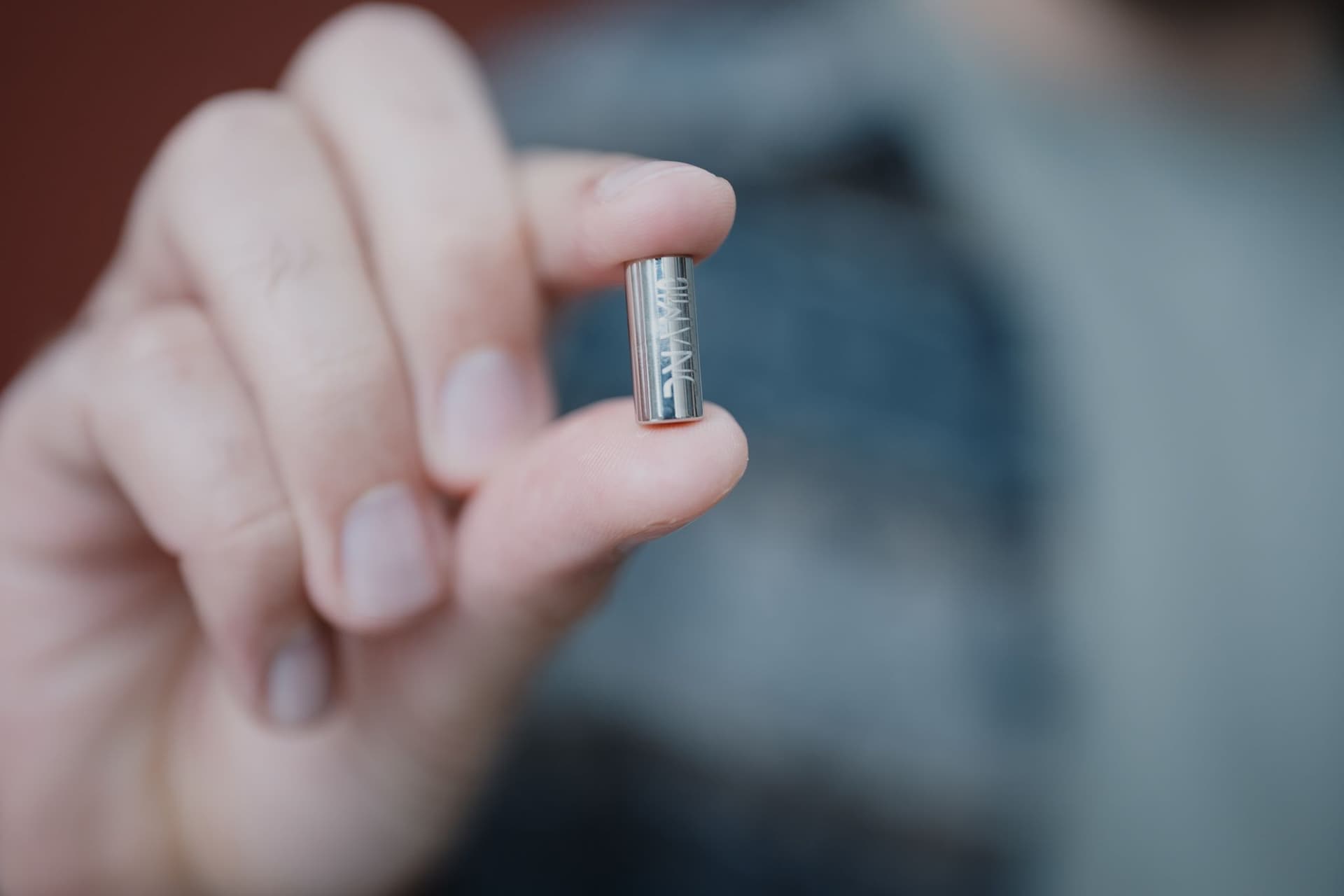
Photo by Ugnius Bagdonavičius / Vilnius University.
‘One zettabyte equals one trillion terabytes. Yet with current technologies, we are only able to store about 10% of the 181 zettabytes of data we generate. And the amount of data continues to grow: it is projected to reach 320 zettabytes by 2028,’ added the PhD student.
According to Robertas, extremely large volumes of data are generated by artificial intelligence, sensors, and scientific research. For instance, the particle accelerator operated by CERN in Switzerland generates around 10 petabytes of data during a single experiment, with its data stored across servers around the world.
DNA can preserve information for up to 10,000 years
Existing data storage technologies also present challenges in terms of long-term sustainability. For example, a hard disk can reliably store information for up to five years, after which the risk of data degradation and loss begins to increase. DNA, by contrast, offers the possibility of storing information for up to 10,000 years. It requires neither special storage conditions nor energy.
The startup ‘Dnamic’, founded by Robertas Skliaustas, is not aiming to completely replace existing technologies used by organisations that generate exceptionally large amounts of data. Instead, the company presents DNA as an alternative method of data storage. At present, the company is offering such an alternative to the Office of the Chief Archivist of Lithuania. In cooperation with the institution, ‘Dnamic’ plans to transcribe all information stored in archives into DNA format.
Recently, the Office of the Chief Archivist of Lithuania received a DNA-encoded version of the Act of 11 March, while the Lithuanian national anthem and 196 paintings by Mikalojus Konstantinas Čiurlionis had already been encoded in this way.
How does this work in practice? According to the PhD student, every digital file on a computer is essentially composed of zeros and ones. This information is first translated into a biological language – the four DNA letters (A, T, C, and G). An algorithm then determines the sequence in which these letters must be arranged in order to correspond precisely to the original data. Based on these instructions, a specialised device ‘prints’ the corresponding DNA sequence in which all the information is encoded.

Robertas Skliaustas. Photo by Ugnius Bagdonavičius / Vilnius University.
As Robertas explains, the process currently takes around six hours; reading the information back from DNA takes a similar amount of time. For this reason, DNA technology is not yet suitable for data that must be accessed instantly. In this context, DNA is most useful for storing information that only needs to be retrieved occasionally – once a month or even less frequently.
Could DNA storage be used in space one day?
According to Robertas Skliaustas, DNA data storage could prove particularly valuable for national archives in situations involving military threats: ‘If a bomb were to hit an archive, conventional documents would burn. Of course, the capsule could also be damaged, but there is a greater likelihood that the information stored inside it would survive. Another major advantage of DNA storage is portability. You could fit the entire history of Lithuania into a tiny capsule, carry it in your pocket, bury it underground, and dig it up ten years later.’
In the future, he says, large media organisations such as LRT, BBC, and CNN could also store information in DNA form. Films and large-scale scientific projects could likewise be preserved in this way. He also sees DNA as a potential data storage solution for space travel.
‘There is radiation in space. In large amounts, it damages virtually all the technologies currently available to us. If information is stored on a hard drive, there is a risk of losing it entirely. Moreover, such storage devices are heavy and take up a lot of space. If all the necessary information were encoded in a DNA capsule that is resistant to radiation and magnetic fields, it could potentially be transported to space, even to Mars,’ explained the VU Business School PhD student.
Lithuania’s entrepreneurial landscape
Robertas Skliaustas says that while writing his Master’s thesis, he discovered a passion for science. The topic of DNA-based data storage inspired him to explore not only DNA itself but also deep technologies more broadly. In his doctoral research, he analyses how deep technologies should be developed in line with the principles of Industry 5.0, which emphasise human-centredness, sustainability, and resilience. His goal is to develop a new innovation framework for those working in the field of deep technologies.
In addition, Robertas is one of the researchers involved in the Global Entrepreneurship Monitor (GEM). According to him, Lithuania ranks first in Europe in terms of conditions conducive to entrepreneurship. Nevertheless, he argues that the country’s greatest challenge is its inability to create deep-tech, high-value-added businesses.
‘If we think in terms of resources, this should be our main objective. Lithuania has neither oil nor fossil fuels – our only real resource is human capital. We experienced a boom in digital business, but the sector has since become somewhat saturated, while fintech has also contracted due to various crises. Of course, we have good examples, yet for some reason we have been unable to replicate them,’ he concluded.
This article is part of the VU campaign ‘More Than You Can Imagine’. More stories about members of the VU community, their research, scientific discoveries, and meaningful initiatives can be found here.