
Central and East European Languages and Cultures (Polish Studies) (conducted in Polish)
Do you enjoy analysing changing discourses or rethinking old truths? Join the renewed Central and East European Languages and Cultures programme. These studies cover a wide range of regional diversity and issues, as well as politics, history and media literacy. You will learn to critically and creatively evaluate increasingly relevant global and regional processes. If you choose to specialise in Polish Studies, you will explore the shared history of Lithuania and Poland, including the languages and cultures of the Grand Duchy of Lithuania and the cultural traditions of Vilnius (1905–1939), as well as the contemporary culture of the Polish–Lithuanian border region. You will also study the Polish language, literature and culture. Your broad-ranging studies will cover topics such as Polish in politics and the media, contemporary Polish art, and elements of Polish feminist discourse in the 19th and early 20th centuries. Studying Central and East European Languages and Cultures will provide you with a multifaceted understanding of regional processes and all the tools you need to examine them from different perspectives. Central and East European Languages and Cultures. Explore a different angle!
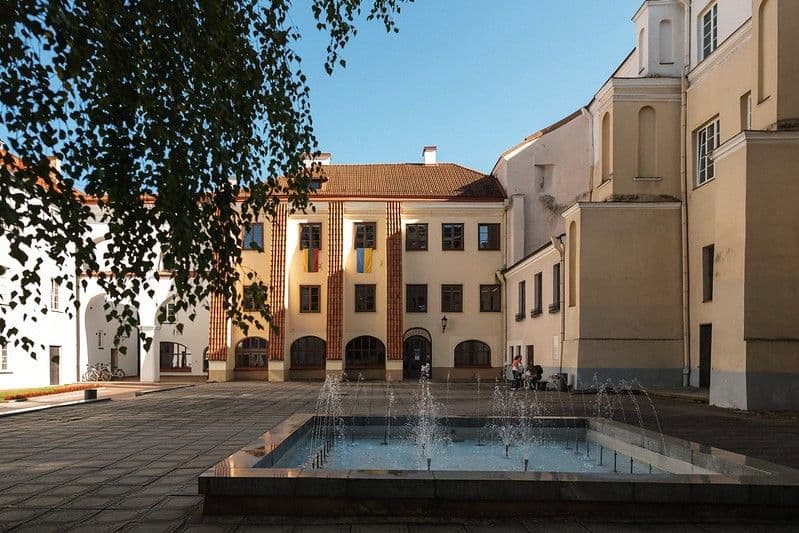
Programme plan
Programme plan
Review and familiarize yourself with the detailed study program plan.
Admission requirements
Entry qualification
High school / secondary education (or higher)
N. B. for non-EU/EFTA applicants: the gap since your completed secondary degree should not exceed five years.
If your qualification meets the requirements, you will receive an invitation for a motivational interview.
Certificate of proficiency in Polish and English corresponding to the common European level B1.
The entry qualification documents are accepted in the following languages: English / Lithuanian.
Often you can get a suitable transcript from your school. If this is not the case, you will need official translations along with verified copies of the original.
Translation is considered to be official when it is bound together with the certified true copy of the original document and is confirmed by the translator’s signature. Documents issued in English, Lithuanian must be certified true copies and do not require translation.
Language requirements
Once you apply for the Central and East European Languages and Cultures (Polish Studies) programme conducted in Polish, you must submit the following certificates of language proficiency:
1.Polish proficiency Certificate: not lower than B1 level according to CEFR.
2.English proficiency Certificate: not lower than B2 level according to CEFR, proven by passing one of the following international exams: IELTS Academic 6+, TOEFL score: 500 (paper based) or 60+ (iBT Internet–based test), Cambridge English exam 173+, Pearson PTE Academic 65+, LanguageCert IESOL B2, Duolingo English Test 105+ or another language proficiency certificate equivalent to B2 CEFR (Common European Framework of Reference for Languages).
If you are a native speaker and/or if the English language was the medium of instruction in your previous studies, you will be exempt from providing an English language test score.
If you are a native speaker and/or if the Polish language was the medium of instruction in your previous studies, you will be exempt from providing a Polish language test score.
Admission steps
1
2
3
4
5
6
Learning outcomes
- You will be able to communicate fluently in Polish in academic, professional, and intercultural contexts, even if you start learning the language from zero.
- You will be able to analyse and evaluate Polish language, literature, and culture within a broader Central and Eastern European context.
- You will be able to apply modern linguistic and literary research methods in academic or professional activities.
- You will be able to work effectively in multicultural environments, demonstrating critical thinking, creativity, and collaboration skills.
- You will be able to use your language and cultural competences in diverse career fields such as diplomacy, education, media, translation, cultural institutions, and international business.
Financing
- 4 437 EUR
Tuition fee
Students who are citizens of the European Union, the European Economic Area countries and of other foreign countries, admitted to non-state-funded places in the first year of first-cycle and second-cycle studies through the University’s foreign student application system, must pay the annual tuition fee within 15 calendar days from the date of the offer to study.
After the student pays the tuition fee, he receives the final acceptance letter. Then our International Relations Office provides the necessary information related to obtaining a temporary residence permit in Lithuania and sends a mediation letter to the student by e-mail (for non-EU citizens).
Scholarships for Bachelor's
Application fee
The application fee is €100 per application. Each applicant can choose up to three programmes within one application.
Online applications will only be processed once the application fee has been paid.
Please note that the application fee is non-refundable. Make sure you read the admission requirements and deadlines carefully before submitting your application, as the fee cannot be refunded if you are found to be ineligible or miss a deadline.
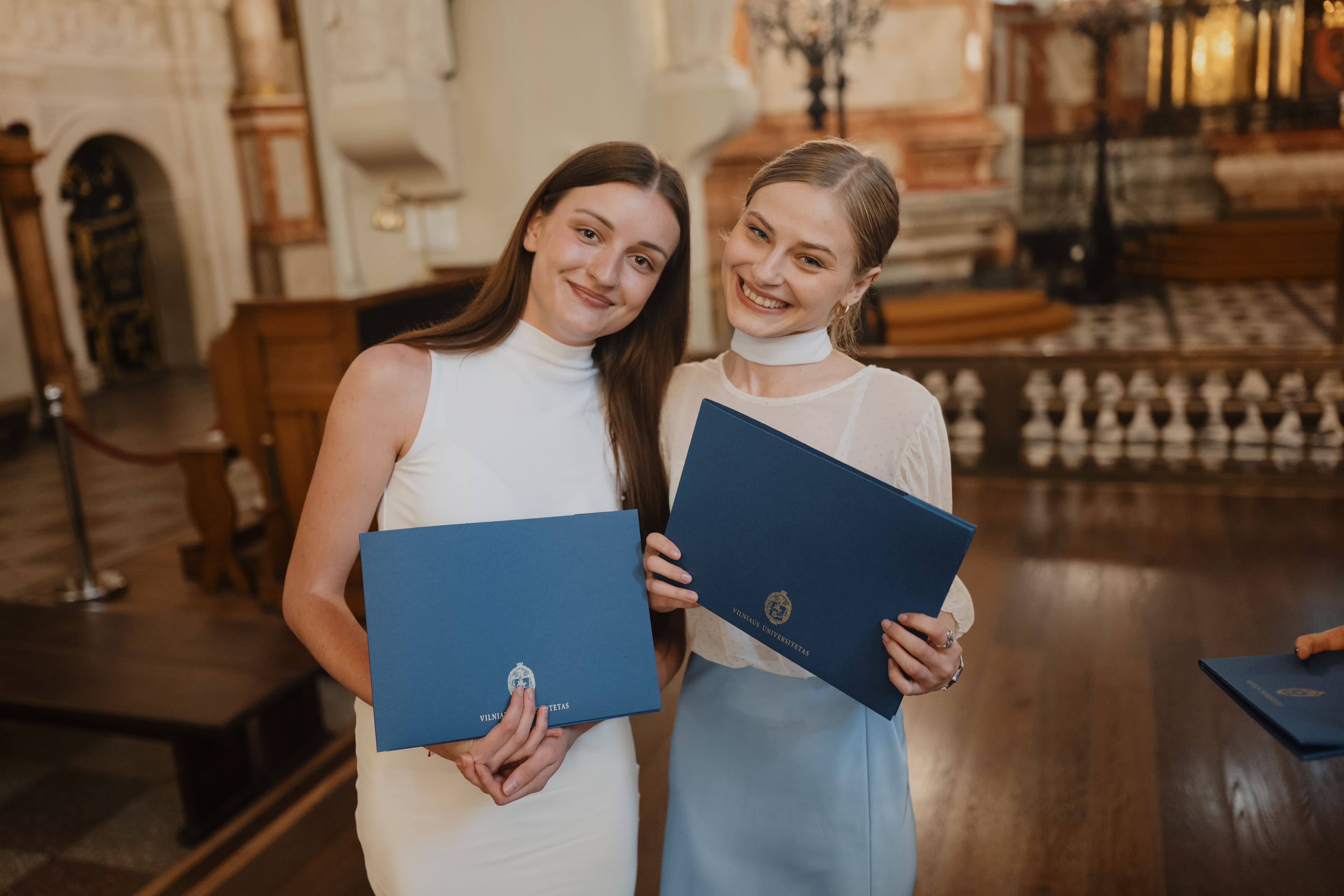
Career prospects
What's next?
Why choose this programme?
Dr. Monika Haber
Professor of Modern Polish, Polish mass media language
Those who believe that philology is a science about nothing are gravely mistaken. There is no field in which language is not essential – from technology to diplomacy, from medicine to marketing. Language creates meaning and shapes the way we think. A philologist can read between the lines, hear what is left unsaid, and build bridges between cultures. And the Polish language? It is rich, expressive, and layered with cultural and historical depth – helping us better understand our regional identity and cultural distinctiveness.

Chat with VU students
If you need more information or personalised advice, choose a VU Ambassador from your home country or the desired study programme and submit your question using the form below. You can expect to hear back from us within 2–3 working days.
