


How Do Studies of Stellar Chemical Composition Change Our Map of the Galaxy?
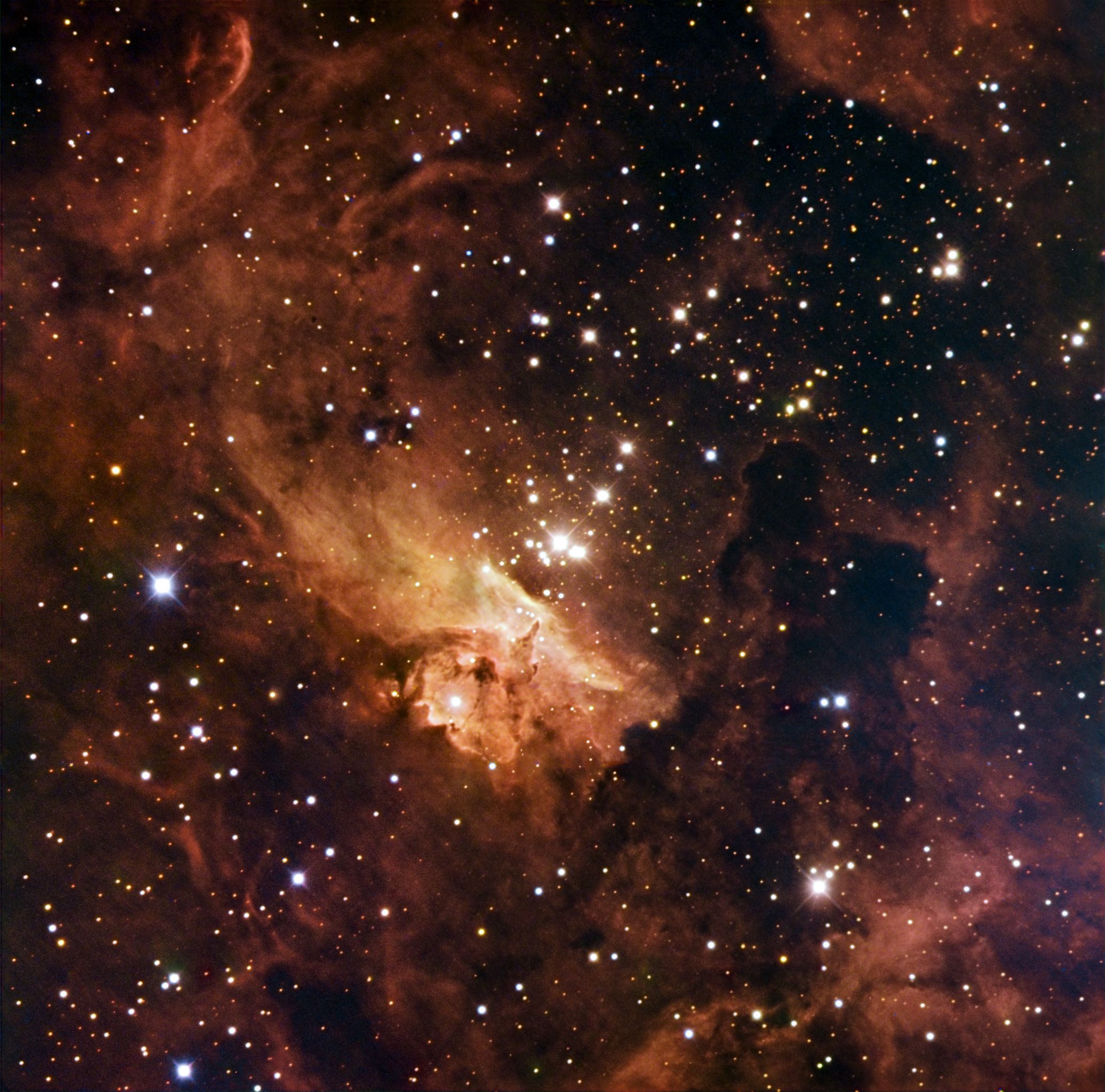 Although astronomers have long been able to observe other galaxies, the structure of our own – the Milky Way – remains not entirely clear. This is largely because we live within the Galaxy itself, making it particularly difficult to observe its central regions, which are obscured by dense clouds of dust.
An international team of scientists led by Dr Carlos Viscasillas Vázquez, an astrophysicist at Vilnius University's Faculty of Physics, has applied an efficient new method to study the inner disc of the Milky Way. Instead of the traditional approach of observing stellar positions or movements, the researchers analysed their chemical composition. This method not only proved effective but also yielded surprising results that challenge our current understanding of the Galaxy’s structural evolution. According to Dr Viscasillas Vázquez, such studies may become a key tool for mapping the Galaxy in the future.
How to Observe a Galaxy from the Inside?
One century after Edwin Hubble confirmed the existence of galaxies beyond the Milky Way by measuring the distance to Barnard's Galaxy, astronomers are still trying to map the structure of our own. Unlike those distant spirals we see from afar, the Milky Way is much harder to view as a whole, simply because we’re inside it.
“Observing the Galaxy is like standing in the middle of a brightly lit city at night. If you look toward the outskirts, the view is clearer – you can make out individual streets, scattered houses, and the distinct glow of streetlights and cars in motion. But when you turn towards the city centre, everything becomes a blur of overlapping lights, dense buildings, and constant movement — making it hard to separate one structure from another. The same happens when we observe the Milky Way: looking outward, we see more clearly; looking inward, toward the Galactic centre, we face a crowded, complex scene”, explains Dr C. Viscasillas Vázquez.
Milky Way is a spiral galaxy, which means that it is characterized by the bright, curved regions rich in gas, dust, and young stars – those are called spiral arms. Since we are inside the Milky Way, it is not easy to determine the number and extent of the spiral arms, but thanks to various methods, scientists now know more about the spiral structure of our Galaxy.
According to co-author Dr. Laura Magrini, an astronomer at the Arcetri Observatory in Italy, we typically use the terms "outer" and "inner Galaxy" in relation to the Sun's position. The inner spiral arms are those that lie between the Sun's position and the galactic center.
Dr C. Viscasillas Vázquez explains that although the outer arms beyond the Sun have been fairly well studied, the inner arms present challenges. “Dense clouds of dust obscure our view of the Galactic centre, and traditional methods such as stellar density or gas distribution provide only part of the picture”, he says.
But what if there’s another way to map the spiral arms? A method that doesn’t look for stars' locations, movements, or quantity, but rather focuses on what they’re made of?
A New Way to Observe Spiral Arms
An international team of scientists has used high-quality spectroscopic data, which reveal the composition of stars by analysing the light they emit, and traced the inner spiral arms of the Milky Way by studying chemical abundance patterns in stars. The study, published in “Astronomy & Astrophysics”, was conducted by scientists from Vilnius University and the Arcetri Astrophysical Observatory in Italy, in close collaboration with teams based in Trieste and Como. This collaboration brought together complementary expertise in stellar spectroscopy, Galactic archaeology, and chemical evolution modelling.
Dr L. Magrini explains that the research was inspired by similar works using data from the “Gaia” mission and the large-scale APOGEE spectroscopic survey, both of which provide detailed information about stellar chemical compositions.
The Gaia-ESO Survey, a public spectroscopic survey carried out with the Very Large Telescope in Paranal (Chile), provided a crucial dataset. Its detailed abundance measurements allowed scientists to go beyond just identifying where stars are – and instead analyze how their chemical compositions vary across space.

Very Large Telescopes at Paranal, Chile. Photo credit: Iztok Boncina, ESO
“There were only very few examples of this type of research before we did it. We didn’t know whether it was going to work with a different data set, but it did. We were even able to see the spirals from another perspective for the first time – in a vertical view”, adds Dr C. Viscasillas Vázquez.
The result was astonishing. Dr Magrini notes that although the number of stars is not very high, therefore the arms are not visible as overdensities of stars. By applying a technique that allows us to see even small differences in chemical abundances, they clearly emerged.
Stars’ “Chemical Fingerprints”
“Stars act as chemical time capsules. Their compositions reflect the gas clouds from which they were born, and those gas clouds were themselves enriched by previous generations of stars. Iron and magnesium, for example, are released into the Galaxy by different types of supernovae – events where stars explode and scatter elements into space. By studying their ratios, astronomers can trace star formation patterns and the chemical evolution of the Milky Way over time”, says VU astrophysicist.
The scientists created spatial maps of chemical abundance variations across the inner disc of the Galaxy. These maps revealed regions with higher iron content and lower magnesium-to-iron ratios – signs that aligned with the known positions of the Scutum and Sagittarius, two major inner spiral arms.
Remarkably, the researchers also detected a “spur” – a chemical bridge between the two arms. This substructure hints at more complex dynamical processes at play in the inner Galaxy than previously thought.
“In other galaxies, we observe the well-defined arms, while others look more intertwined or appear to intersect. The arms may have several branches/tributaries, they branch like rivers into their tributaries or as highways into secondary roads or even bridges connecting them”, compares Dr. C. Viscasillas Vázquez.
More Than Just Maps
According to scientists, the implications go beyond simply redrawing a map of the Milky Way. By comparing their observations with 2D chemical evolution models developed in recent years by Emanuele Spitoni, researcher at Trieste Astronomical Observatory and collaborators, researchers confirmed that the spiral arms are not just structural features – they also influence the chemical makeup of the Galaxy.
“In the model I developed with my colleagues, the arms are split into three parts. They all rotate at different speeds, and as they pass through the disc – the place where most of the stars, gas, and dust are found – they boost star formation, as shown by variations in the distribution of different chemical elements. If the strands and the disc itself are spinning at the same speed, the chemical elements change faster.

Messier 101 – a spiral galaxy in the constellation of the Big Dipper. The photo was taken at the Tenerife Observatory with a 1-meter telescope. Photo credit: Carlos Viscasillas Vázquez and Rytis Babianskas
Recent computer simulations have allowed astrophysicists to reconstruct the chemical evolution of the Galaxy over the past billion years. So far, these are the most accurate models matching the results from the Gaia-ESO survey.
“This result highlights the close connection between the dynamics and chemistry of stellar populations. Spiral arms enhance star formation and leave chemical signatures behind. By detecting these patterns, we can better understand the Milky Way’s structure and evolution. We were particularly inspired by the work of Eloisa Poggio and her collaborators, who traced the spiral structure of the local and outer arms using Gaia GSP-Spec chemical data. Our study complements that effort by using Gaia-ESO Survey data, which allows us to peer deeper into the inner Galaxy – a region that remains challenging to observe due to dust extinction”, explains Dr C. Viscasillas Vázquez.
The future of galactic cartography
The research proves that spiral arms – especially in the inner Galaxy – can be revealed not only by star locations and their movements but by what they contain. This provides new and valuable insight into our understanding of the Milky Way’s structure.
“The method, based on chemical data, allows us to revisit an age-old question from a new perspective. It’s like tracing the invisible architecture of the Galaxy through the elemental fingerprints left behind by stars. As we look ahead to future surveys with even greater coverage and precision, the use of chemical abundances may become an essential part of Galactic cartography”, concludes Dr C. Viscasillas Vázquez.