Nanomedžiagų chemija BA.jpg

Chemistry of Nanomaterials

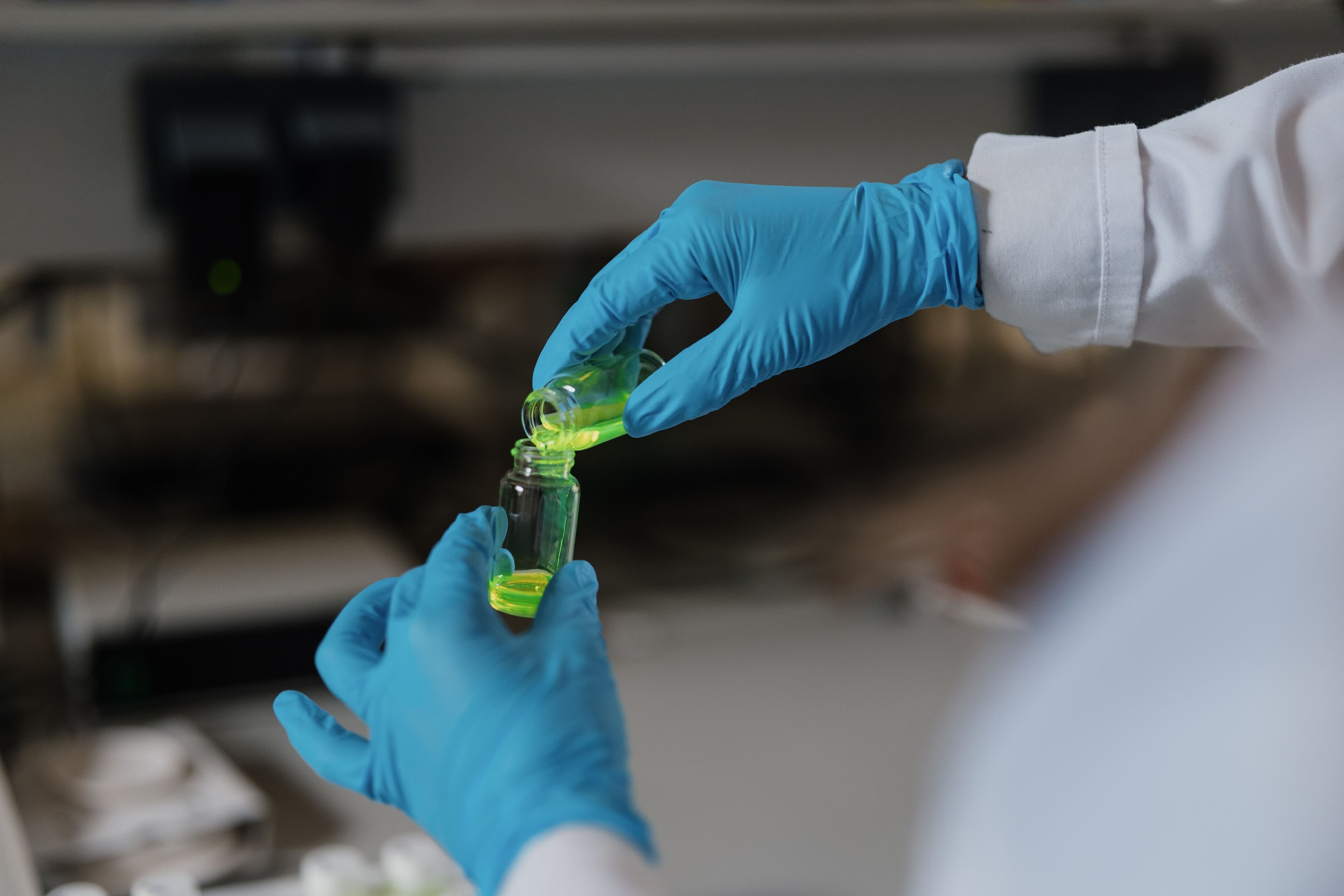
Nanomaterials are chemical substances whose particles are extremely small, giving them unique properties that differ from those of conventional materials. Nanomaterials chemistry allows us to study their creation, properties, and applications. You will deepen your theoretical knowledge and learn to synthesize and study nanostructures. In the laboratories, you will acquire practical skills in creating and analyzing nanomaterials, applying modern research methods, critically evaluating data, and solving new problems. This will help you prepare for a career in science, innovation, and industry.

Chemistry of Nanomaterials

Nanomaterials are chemical substances whose particles are extremely small, giving them unique properties that differ from those of conventional materials. Nanomaterials chemistry allows us to study their creation, properties, and applications. You will deepen your theoretical knowledge and learn to synthesize and study nanostructures. In the laboratories, you will acquire practical skills in creating and analyzing nanomaterials, applying modern research methods, critically evaluating data, and solving new problems. This will help you prepare for a career in science, innovation, and industry.

Nanomedžiagų chemija BA.jpg

You will begin with general chemistry, mathematics, and physics, then proceed to analytical, physical, organic, inorganic, and polymer chemistry to understand the properties and reactions of nanomaterials. You will also study biochemistry, quantum and colloid chemistry, spectroscopy, and specialized subjects in nanochemistry. Lab work and practical training will develop your skills, while elective courses will help you deepen your knowledge in your chosen area.

  • You will learn to investigate and apply knowledge in practice. You will describe chemical substances and nanostructures, apply principles of thermodynamics, quantum chemistry, kinetics, and physics, and conduct experiments.
  • You will be able to analyze and interpret data. You will select appropriate research and instrumental methods, perform measurements, process data, and formulate well-grounded conclusions.
  • You will be able to solve problems creatively. You will address chemical and nanochemistry-related challenges, collaborate in teams, and develop innovative solutions to these challenges.
  • You will develop responsibly and share knowledge. You will work safely in the laboratory, communicate in English, and plan your professional growth.
Entry qualification

Admission for the September 2026 studies will begin on November 1st 2025. 

! Please note, that there is only September intake to Vilnius University. 

The deadlines for applications are: 
1 May (or until the limit of study places is reached) | for applicants from non-EU/EFTA countries;
1 July (or until the limit of study places is reached) |
• for applicants who are citizens of EU/EFTA countries;
• for non-EU/EFTA applicants with a 90-day visa-free period that has not yet been exceeded.

Language requirements

English

The following language certificates are accepted for study programmes taught in English: IELTS Academic 6.5+, TOEFL iBT 81+, Cambridge English Exam 176+, Pearson PTE Academic 59+, LanguageCert IESOL B2, Duolingo English Test 120+, Password Skills Plus 6.5+ or another language proficiency certificate equivalent to B2 CEFR (Common European Framework of Reference for Languages).

If your first language is English and/or if you have a university degree in English, you will be exempt from providing an English language test score.

Other requirements
  • Completed university Bachelor’s degree studies in the Chemistry field of the Physical Sciences study field group, Biochemistry field of the Life Sciences study field group, or Chemical Engineering field of the Engineering Sciences study field group.

  • Course units in the area of Chemistry or Chemical Technologies studied during the Bachelor studies (no less than 50 credits in total). The overall arithmetical average of the learning outcomes in Chemistry may not be lower than 70 per cent of the maximum possible evaluation.
    Motivational interview.

  • One academic recommendation.
Territory requirements

Citizens of the People's Republic of Bangladesh, Nepal, and the Islamic Republic of Pakistan shall be subject to the requirement to pass the OMPT-G exam with an evaluation of no less than 60 per cent.

1

2

3

4

5

6

7

Find your programme

When choosing a study programme, consider whether the subjects match your interests and strengths, as this will keep you motivated. You should also think about career opportunities, costs, and whether the programme fits your long-term goals. 

Keep in mind that each applicant can choose up to three study programmes in one application, but you can only get admitted to one programme. 

Check your application dates

For international applicants: 
1 May | for applicants from non-EU/EFTA countries 
1 July | for applicants who are citizens of EU/EFTA countries and for non-EU/EFTA applicants with a 90-day visa-free period that has not yet been exceeded.
The academic year always begins on 1 September.

Our International admissions have one intake per academic year. You can only submit your application during the application period.  

The application dates may differ if you are applying for a programme taught in Lithuanian or if you are eligible to apply for state-funded places.

Check your eligibility and prepare the necessary documents

In order to apply to Vilnius University, you must meet the general and programme-specific admission requirements, as well as the language proficiency requirements. In certain cases, specific territorial requirements may also apply. You can find all the specific requirements for this programme in the 'Admissions requirements' section.

For applicants from non-EU and non-EFTA countries, the period between obtaining your most recent secondary or higher education qualification and submitting your application may not exceed 5 years.

Pay the application fee and submit your application

The application to the international bachelor's or integrated studies degree programmes must be submitted on apply.vu.lt

The application fee is 100 EUR per application. The invoice is paid after adding the programmes to the application. Application fee payments are accepted only through the Flywire payment platform.

An online application will be processed only after the application fee is collected and the application is submitted with all the required documents. All documents must be submitted before the application submission deadline; otherwise, the application is terminated.

Please note: The application fee is non-refundable. Be sure to read the admission requirements and deadlines carefully before applying, as fees cannot be refunded if you are found ineligible or miss a deadline.

Take the inverview

Candidates who meet the established criteria are invited to a motivational interview. The interview is organised to learn more about the applicant’s motivation for choosing the programme, to assess their knowledge of chemistry, and to evaluate their English language proficiency. If the interview result is negative, the candidate will not be admitted to the study programme.

Confirm your acceptance and pay the tuition fee

Your application will be assessed within 30 calendar days from the date all required documents are submitted (this period may be extended in specific cases).

Acceptance letters or rejection notifications will be sent via the online application system https://apply.vu.lt.

Students are obliged to confirm if they accept the study offer within 7 working days.

Students who are citizens of the European Union, the European Economic Area countries and of other foreign countries, admitted to non-state-funded places in the first year of first-cycle and second-cycle studies through the University’s foreign student application system, must pay the annual tuition fee within 15 calendar days from the date of the offer to study.

Description of the Procedure of Payment, Reimbursement, and Recovery of Tuition Fees at Vilnius University 

The information about the tuition fee refund policy  

After the student pays the tuition fee, he receives the final acceptance letter. Then our International Relations Office provides the necessary information related to obtaining a temporary residence permit in Lithuania and sends a mediation letter to the student by e-mail (for non-EU citizens).

Arrange your arrival

Things to consider:

  • All international students have to apply for a visa, temporary residence permit or certificate of temporary residence in the Republic of Lithuania depending on their citizenship and the length of their studies at Vilnius University. 
  • If you require accommodation, you may apply for a dormitory via the application platform at apply.vu.lt. The task for accommodation appears after the tuition fee is paid and the final acceptance letter is received. 
  • More information about the start of your studies here.
Tuition fee

Students who are citizens of the European Union, the European Economic Area countries and of other foreign countries, admitted to non-state-funded places in the first year of first-cycle and second-cycle studies through the University’s foreign student application system, must pay the annual tuition fee within 15 calendar days from the date of the offer to study.

After the student pays the tuition fee, he receives the final acceptance letter. Then our International Relations Office provides the necessary information related to obtaining a temporary residence permit in Lithuania and sends a mediation letter to the student by e-mail (for non-EU citizens).

Application fee

The application fee is €100 per application. Each applicant can choose up to three programmes within one application. 
Online applications will only be processed once the application fee has been paid. 

Please note that the application fee is non-refundable. Make sure you read the admission requirements and deadlines carefully before submitting your application, as the fee cannot be refunded if you are found to be ineligible or miss a deadline. 

You will begin with general chemistry, mathematics, and physics, then proceed to analytical, physical, organic, inorganic, and polymer chemistry to understand the properties and reactions of nanomaterials. You will also study biochemistry, quantum and colloid chemistry, spectroscopy, and specialized subjects in nanochemistry. Lab work and practical training will develop your skills, while elective courses will help you deepen your knowledge in your chosen area.

  • You will learn to investigate and apply knowledge in practice. You will describe chemical substances and nanostructures, apply principles of thermodynamics, quantum chemistry, kinetics, and physics, and conduct experiments.
  • You will be able to analyze and interpret data. You will select appropriate research and instrumental methods, perform measurements, process data, and formulate well-grounded conclusions.
  • You will be able to solve problems creatively. You will address chemical and nanochemistry-related challenges, collaborate in teams, and develop innovative solutions to these challenges.
  • You will develop responsibly and share knowledge. You will work safely in the laboratory, communicate in English, and plan your professional growth.
Entry qualification

Admission for the September 2026 studies will begin on November 1st 2025. 

! Please note, that there is only September intake to Vilnius University. 

The deadlines for applications are: 
1 May (or until the limit of study places is reached) | for applicants from non-EU/EFTA countries;
1 July (or until the limit of study places is reached) |
• for applicants who are citizens of EU/EFTA countries;
• for non-EU/EFTA applicants with a 90-day visa-free period that has not yet been exceeded.

Language requirements

English

The following language certificates are accepted for study programmes taught in English: IELTS Academic 6.5+, TOEFL iBT 81+, Cambridge English Exam 176+, Pearson PTE Academic 59+, LanguageCert IESOL B2, Duolingo English Test 120+, Password Skills Plus 6.5+ or another language proficiency certificate equivalent to B2 CEFR (Common European Framework of Reference for Languages).

If your first language is English and/or if you have a university degree in English, you will be exempt from providing an English language test score.

Other requirements
  • Completed university Bachelor’s degree studies in the Chemistry field of the Physical Sciences study field group, Biochemistry field of the Life Sciences study field group, or Chemical Engineering field of the Engineering Sciences study field group.

  • Course units in the area of Chemistry or Chemical Technologies studied during the Bachelor studies (no less than 50 credits in total). The overall arithmetical average of the learning outcomes in Chemistry may not be lower than 70 per cent of the maximum possible evaluation.
    Motivational interview.

  • One academic recommendation.
Territory requirements

Citizens of the People's Republic of Bangladesh, Nepal, and the Islamic Republic of Pakistan shall be subject to the requirement to pass the OMPT-G exam with an evaluation of no less than 60 per cent.

1

2

3

4

5

6

7

Find your programme

When choosing a study programme, consider whether the subjects match your interests and strengths, as this will keep you motivated. You should also think about career opportunities, costs, and whether the programme fits your long-term goals. 

Keep in mind that each applicant can choose up to three study programmes in one application, but you can only get admitted to one programme. 

Check your application dates

For international applicants: 
1 May | for applicants from non-EU/EFTA countries 
1 July | for applicants who are citizens of EU/EFTA countries and for non-EU/EFTA applicants with a 90-day visa-free period that has not yet been exceeded.
The academic year always begins on 1 September.

Our International admissions have one intake per academic year. You can only submit your application during the application period.  

The application dates may differ if you are applying for a programme taught in Lithuanian or if you are eligible to apply for state-funded places.

Check your eligibility and prepare the necessary documents

In order to apply to Vilnius University, you must meet the general and programme-specific admission requirements, as well as the language proficiency requirements. In certain cases, specific territorial requirements may also apply. You can find all the specific requirements for this programme in the 'Admissions requirements' section.

For applicants from non-EU and non-EFTA countries, the period between obtaining your most recent secondary or higher education qualification and submitting your application may not exceed 5 years.

Pay the application fee and submit your application

The application to the international bachelor's or integrated studies degree programmes must be submitted on apply.vu.lt

The application fee is 100 EUR per application. The invoice is paid after adding the programmes to the application. Application fee payments are accepted only through the Flywire payment platform.

An online application will be processed only after the application fee is collected and the application is submitted with all the required documents. All documents must be submitted before the application submission deadline; otherwise, the application is terminated.

Please note: The application fee is non-refundable. Be sure to read the admission requirements and deadlines carefully before applying, as fees cannot be refunded if you are found ineligible or miss a deadline.

Take the inverview

Candidates who meet the established criteria are invited to a motivational interview. The interview is organised to learn more about the applicant’s motivation for choosing the programme, to assess their knowledge of chemistry, and to evaluate their English language proficiency. If the interview result is negative, the candidate will not be admitted to the study programme.

Confirm your acceptance and pay the tuition fee

Your application will be assessed within 30 calendar days from the date all required documents are submitted (this period may be extended in specific cases).

Acceptance letters or rejection notifications will be sent via the online application system https://apply.vu.lt.

Students are obliged to confirm if they accept the study offer within 7 working days.

Students who are citizens of the European Union, the European Economic Area countries and of other foreign countries, admitted to non-state-funded places in the first year of first-cycle and second-cycle studies through the University’s foreign student application system, must pay the annual tuition fee within 15 calendar days from the date of the offer to study.

Description of the Procedure of Payment, Reimbursement, and Recovery of Tuition Fees at Vilnius University 

The information about the tuition fee refund policy  

After the student pays the tuition fee, he receives the final acceptance letter. Then our International Relations Office provides the necessary information related to obtaining a temporary residence permit in Lithuania and sends a mediation letter to the student by e-mail (for non-EU citizens).

Arrange your arrival

Things to consider:

  • All international students have to apply for a visa, temporary residence permit or certificate of temporary residence in the Republic of Lithuania depending on their citizenship and the length of their studies at Vilnius University. 
  • If you require accommodation, you may apply for a dormitory via the application platform at apply.vu.lt. The task for accommodation appears after the tuition fee is paid and the final acceptance letter is received. 
  • More information about the start of your studies here.
Tuition fee

Students who are citizens of the European Union, the European Economic Area countries and of other foreign countries, admitted to non-state-funded places in the first year of first-cycle and second-cycle studies through the University’s foreign student application system, must pay the annual tuition fee within 15 calendar days from the date of the offer to study.

After the student pays the tuition fee, he receives the final acceptance letter. Then our International Relations Office provides the necessary information related to obtaining a temporary residence permit in Lithuania and sends a mediation letter to the student by e-mail (for non-EU citizens).

Application fee

The application fee is €100 per application. Each applicant can choose up to three programmes within one application. 
Online applications will only be processed once the application fee has been paid. 

Please note that the application fee is non-refundable. Make sure you read the admission requirements and deadlines carefully before submitting your application, as the fee cannot be refunded if you are found to be ineligible or miss a deadline. 

B_Nanomedžiagų chemija_III.png

Career prospects

Chemistry of nanomaterials studies opens the door to a world of innovation, where new materials and technologies are continually being developed. After graduation, you will be prepared to work in high-tech companies and research centres.

Nanomaterials are widely used in medicine, electronics, energy, and environmental solutions. Your career may involve working with advanced polymers and composites, nanoparticles for drug delivery, sustainable energy, or environmental projects, as well as quality control and research activities.

If you wish to pursue an academic path, you can continue your studies at the master’s or doctoral level and contribute to the development of future technologies in universities, research institutes, or corporate R&D departments.

The knowledge and competencies you gain are also valuable in the public sector, including innovation agencies, ministries, technology parks, and educational institutions.


Materials research and development specialist / Nanomaterials researcher / Pharmaceutical nanotechnology researcher / Biomedical materials production specialist / Nanomaterials chemist / Innovative product developer / Quality control and analysis specialist / Science communication expert in nanomaterials and chemistry

Why choose this programme?

Dr. Greta Inkrataitė

 Assistant Lecturer at the Faculty of Chemistry and Geosciences, Vilnius University

Chemistry of Nanomaterials studies help you understand how nanoscale particles can fundamentally transform everyday products, modern technologies, and even medicine. During your studies, you will explore how extremely small structures determine the properties of materials and learn to develop innovative solutions – from targeted drug delivery systems to smart sensors.

This interdisciplinary study programme provides a strong theoretical foundation, extensive practical experience, and opens up broad career opportunities in high-tech, pharmaceutical, and research-oriented companies. Choose to study at Vilnius University and immerse yourself in the invisible yet future-shaping world of nanotechnology.

chemistry_of_nanomaterials_BA_greta_inkrataite_2025_CHGF.jpeg

Chat with VU students

If you need more information or personalised advice, choose a VU Ambassador from your home country or the desired study programme and submit your question using the form below. You can expect to hear back from us within 2–3 working days.

Nespalvota_James_McLean.png