- 23 September 2026
- Eglė Misiūtė
VU Researchers Develop New Chemical Method That Could Accelerate Drug Discovery
When developing new drugs, chemists often have to design a separate synthetic route for each new molecular variant. This slows down the process and makes it more difficult to explore dozens or even hundreds of potential compounds. Researchers at the Faculty of Chemistry and Geosciences (CHGF) of Vilnius University (VU) have developed a new solution: the first general visible-light photoredox method that enables a versatile one-carbon fragment to be introduced into simple aromatic compounds in a single step. This fragment can then be readily converted into a range of functional groups. The study was published in the Jornal of the American Chemicalu Society (JACS), one of the world’s leading chemistry journals.
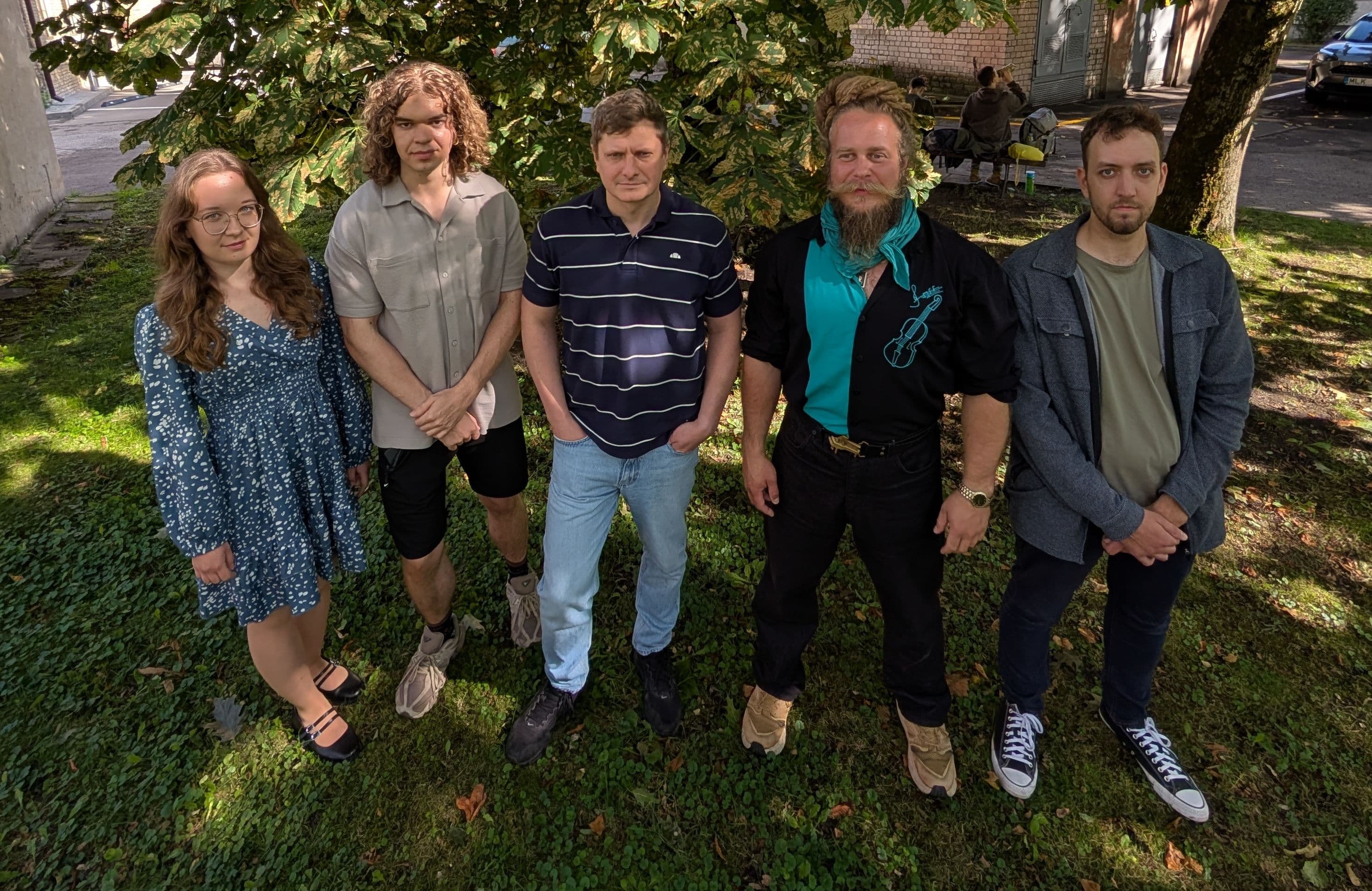
The research was carried out by PhD student Jonas Žurauskas together with Prof. Edvinas Orentas, PhD student Nojus Radzevičius, and master’s students Paulius Vaickūnas and Gabija Sergejevaitė at VU CHGF. The innovation lies in a universal intermediate that functions as a chemical ‘adapter’. Instead of developing a new synthetic route for every compound, chemists can first introduce this intermediate and then rapidly transform it into a variety of different molecules. This is particularly important in medicinal chemistry, where even small changes in molecular structure can determine whether a potential drug is effective, safe and suitable for further development.
A Universal Chemical ‘Adapter’
The key innovation of the method is a universal intermediate compound that functions as a chemical ‘adapter’. ‘Previously, each analogue required its own synthetic route. Now, a single step is enough to introduce the intermediate, and further diversity can be generated from the same compound,’ explains Žurauskas.
He compares the approach to a universal wall bracket: ‘Instead of drilling a new hole and finding a different fastening system every time, you install a single bracket to which different objects can later be attached. Our method works in much the same way: first, we create a universal intermediate, which can then be rapidly converted into many different molecules.’
To demonstrate that the method is practical rather than merely theoretical, the researchers successfully applied it to several well-known pharmaceutical compounds, including ibuprofen, naproxen, a sildenafil analogue, cannabinoids, tadalafil derivatives and estrone. This demonstrated that the method is compatible with functional groups found in real drug molecules, which often pose challenges for more sensitive synthetic approaches.
According to the researchers, the method could also be used to modify other pharmaceutical and biologically active molecules, enabling the creation of new analogues in medicinal chemistry and the targeted modification of their properties.
Visible Light Drives the Reaction
The new method is based on visible-light photoredox catalysis, in which visible light provides the energy needed to drive the reaction. The light excites a photocatalyst, which transfers an electron to a methylenedipyridinium salt (DiPyM). When the reagent fragments, it generates a reactive species that attaches to the aromatic ring. The catalyst then regains the electron, aromaticity is restored, and the final product is formed.
Because the photocatalyst returns to its original state at the end of the cycle, only a very small amount is required (1 mol%), and no additional external oxidants or reductants are needed.
‘It is precisely these mild, visible-light-driven conditions that allow us to achieve selectivity that cannot be obtained using conventional reactions based on high temperatures or acidic conditions,’ says Žurauskas. Importantly, this is the first general method that allows a C1 linking group to be introduced directly into unactivated arenes.
From Medicinal Chemistry to Materials Science
The researchers see at least three areas in which the method could prove useful in the future. The first is the faster development of new medicinal chemistry compounds and their analogues. The second is the development of molecules capable of reaching cell mitochondria, which is important in drug delivery and imaging research. The third is materials science.
In the longer term, the researchers hope that the method could become a standard tool in organic synthesis, enabling new molecules to be rapidly created from simple starting materials.
The team now plans to investigate a wider range of pharmaceutical molecules, apply the method to specific medicinal chemistry and materials science programmes, and study the reaction mechanism in greater depth. This should provide a better understanding of the factors governing selectivity in more complex molecules containing several reactive sites.
From Idea to Publication in Nine Months
Only nine months passed between the initial idea and the paper being accepted for publication. ‘This timeframe is particularly important to me because it best demonstrates how efficiently and effectively our team can work when we know that we have something significant in our hands,’ says Žurauskas.
Interestingly, the principal reagent used in the reaction had been described in the chemistry literature many years ago, but no one had previously used it in this way. For Žurauskas, the publication represents more than a personal achievement. It is also an opportunity to demonstrate that high-level photochemistry research is being carried out in Lithuania.
‘When I came here to pursue my PhD, this field practically did not exist in Lithuania. We had to bring it here and build it up from scratch,’ he says. Žurauskas hopes that the achievement will have a broader impact by encouraging funding bodies to recognise and support high-level research fields of international significance in Lithuania.
Alongside Žurauskas, the research involved PhD student Nojus Radzevičius, master’s students Paulius Vaickūnas and Gabija Sergejevaitė, and Dr Simonas Balčiūnas. The research was supervised by Prof. Edvinas Orentas. All authors of the paper are based at Vilnius University.