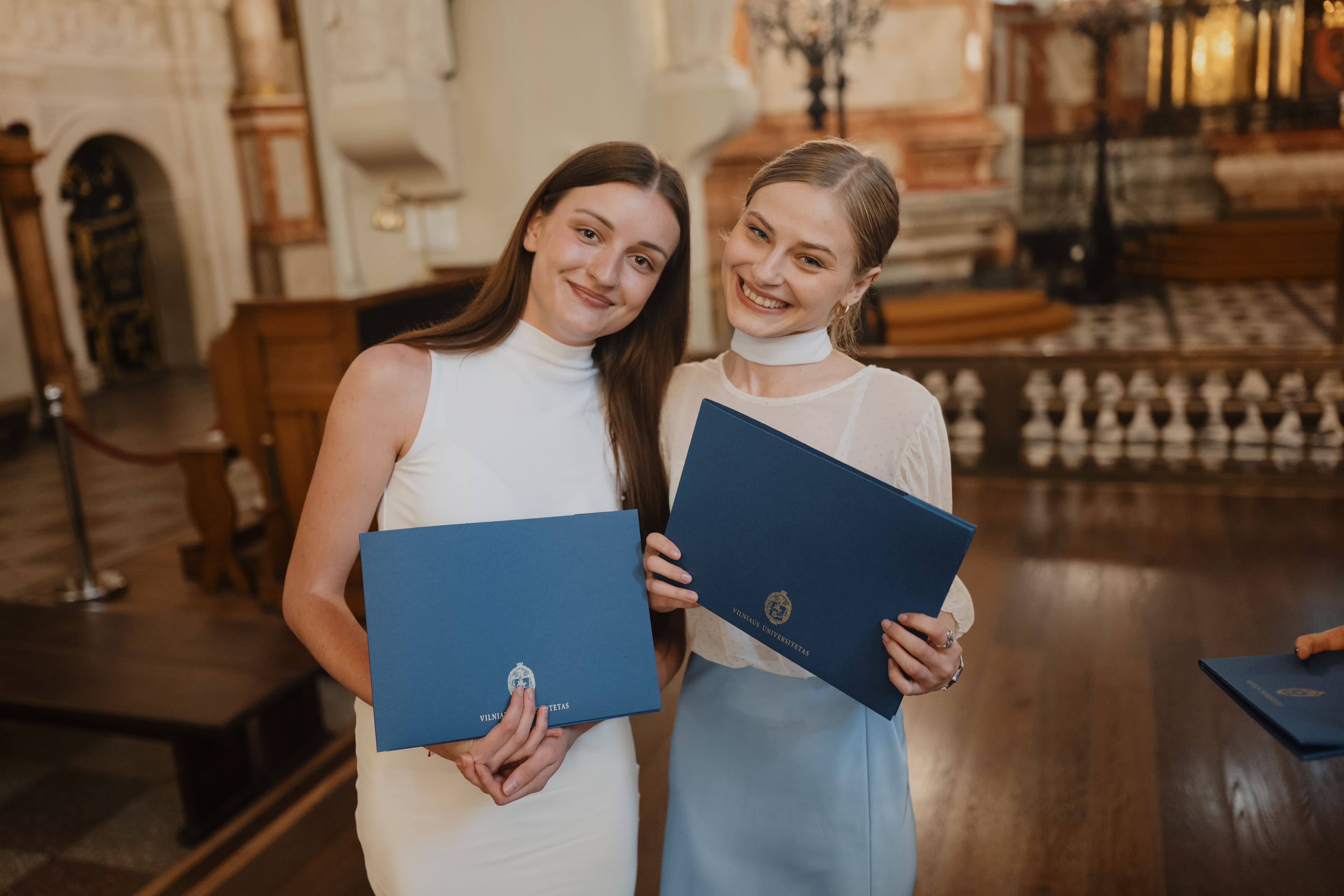
Central and East European Languages and Cultures (Russian Studies) (conducted in English)
B_Vidurio ir Rytų Europos kalbos ir kultūros (polonistika) (vykdoma lietuvių, lenkų arba rusų k.)_II.jpg

Central and East European Languages and Cultures (Russian Studies) (conducted in English)

Do you enjoy analysing changing discourses or rethinking old truths? Join the renewed Central and East European Languages and Cultures programme. These studies cover a wide range of regional diversity and issues, as well as politics, history and media literacy. You will learn to critically and creatively evaluate increasingly relevant global and regional processes. The needs of contemporary students, today's challenges and geopolitical changes have prompted a major renewal of Slavic studies at Vilnius University, so by choosing to specialise in Russian Studies, you will become a Slavic Studies specialist who can critically analyse the region and read between the lines. Lithuania and Europe need such specialists now more than ever. Studying Central and East European Languages and Cultures will provide you with a multifaceted understanding of regional processes and all the tools you need to examine them from different perspectives. It is a flexible study programme that responds to the students' interests. You can study language, literature, and socio-cultural phenomena, freely choose courses from other disciplines (politics, history, management, pedagogy, etc.), or study one of more than 20 languages. Programme is designed for beginners.
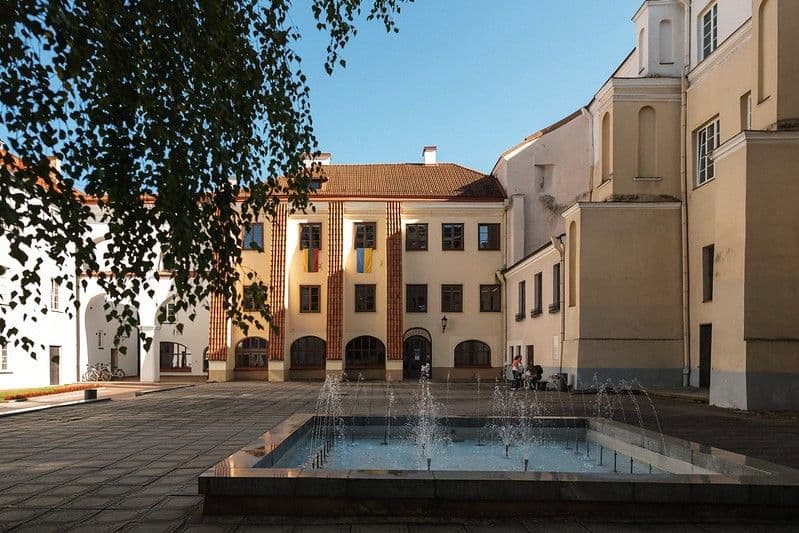
Central and East European Languages and Cultures (Russian Studies) (conducted in English)

Do you enjoy analysing changing discourses or rethinking old truths? Join the renewed Central and East European Languages and Cultures programme. These studies cover a wide range of regional diversity and issues, as well as politics, history and media literacy. You will learn to critically and creatively evaluate increasingly relevant global and regional processes. The needs of contemporary students, today's challenges and geopolitical changes have prompted a major renewal of Slavic studies at Vilnius University, so by choosing to specialise in Russian Studies, you will become a Slavic Studies specialist who can critically analyse the region and read between the lines. Lithuania and Europe need such specialists now more than ever. Studying Central and East European Languages and Cultures will provide you with a multifaceted understanding of regional processes and all the tools you need to examine them from different perspectives. It is a flexible study programme that responds to the students' interests. You can study language, literature, and socio-cultural phenomena, freely choose courses from other disciplines (politics, history, management, pedagogy, etc.), or study one of more than 20 languages. Programme is designed for beginners.

B_Vidurio ir Rytų Europos kalbos ir kultūros (polonistika) (vykdoma lietuvių, lenkų arba rusų k.)_II.jpg

Review and familiarize yourself with the detailed study program plan.

  • You will be able to communicate in Russian at an advanced level (B2–C1) and use Russian for academic and professional purposes.
  • You will be able to analyse, synthesise, summarise, and discuss the main principles of language structure and usage.
  • You will be able to apply literary and cultural theory frameworks to the analysis of Russian and other Slavic texts.
  • You will be able to demonstrate awareness of the diversity of Slavic languages and cultures.
  • You will be able to critically evaluate the role of Russian language and culture in contemporary global contexts.
  • You will be able to carry out linguistic and literary research independently.
  • You will be able to create and analyse texts of various styles and genres.
  • You will be able to integrate knowledge of Central and East European literature and culture into comparative and interdisciplinary studies.
  • You will be able to pursue further studies or professional careers in teaching, translation, media, diplomacy, content creation, and cultural institutions.
Entry qualification

High school / secondary education (or higher)

N. B. for non-EU/EFTA applicants: the gap since your completed secondary degree should not exceed five years.

If your qualification meets the requirements, you will receive an invitation for a motivational interview.

The entry qualification documents are accepted in the following languages: English/Lithuanian.

Often you can get a suitable transcript from your school. If this is not the case, you will need official translations along with verified copies of the original.

Translation is considered to be official when it is bound together with the certified true copy of the original document and is confirmed by the translator’s signature. Documents issued in English or Lithuanian must be certified true copies and do not require translation.

Language requirements

Once you apply for the Central and East European Languages and Cultures (Russian Studies) programme conducted in English, you must submit one of the following English language proficiency certificates: IELTS Academic 6.5+, TOEFL iBT 81+, Cambridge English Exam 176+, Pearson PTE Academic 59+, LanguageCert IESOL B2, Duolingo English Test 120+, Password Skills Plus 6.5+ or another language proficiency certificate equivalent to B2 CEFR (Common European Framework of Reference for Languages).

If you are a native speaker and/or if the English language was the medium of instruction in your previous studies, you will be exempt from providing an English language test score.

If you are a native speaker and/or if the Polish language was the medium of instruction in your previous studies, you will be exempt from providing a Polish language test score.

1

2

3

4

5

6

Find your programme

When choosing a study programme, consider whether the subjects match your interests and strengths, as this will keep you motivated. You should also think about career opportunities, costs, and whether the programme fits your long-term goals. 

Keep in mind that each applicant can choose up to three study programmes in one application, but you can only get admitted to one programme. 

Check the application dates

For international applicants: 
1 May | for applicants from non-EU/EFTA countries 
1 July | for applicants who are citizens of EU/EFTA countries and for non-EU/EFTA applicants with a 90-day visa-free period that has not yet been exceeded.
The academic year always begins on 1 September.

Our International admissions have one intake per academic year. You can only submit your application during the application period.  

The application dates may differ if you are applying for a programme taught in Lithuanian or if you are eligible to apply for state-funded places.

Check your eligibility and prepare the necessary documents

In order to apply to Vilnius University, you must meet the general and programme-specific admission requirements, as well as the language proficiency requirements. In certain cases, specific territorial requirements may also apply. You can find all the specific requirements for this programme in the 'Admissions requirements' section.

For applicants from non-EU and non-EFTA countries, the period between obtaining your most recent secondary or higher education qualification and submitting your application may not exceed 5 years.

Pay the application fee and submit your application

The application to the international bachelor's or integrated studies degree programmes must be submitted on apply.vu.lt

The application fee is 100 EUR per application. The invoice is paid after adding the programmes to the application. Application fee payments are accepted only through the Flywire payment platform.

An online application will be processed only after the application fee is collected and the application is submitted with all the required documents. All documents must be submitted before the application submission deadline; otherwise, the application is terminated.

Please note: The application fee is non-refundable. Be sure to read the admission requirements and deadlines carefully before applying, as fees cannot be refunded if you are found ineligible or miss a deadline.

Confirm your acceptance and pay the tuition fee

Your application will be assessed within 30 calendar days from the date all required documents are submitted (this period may be extended in specific cases).

Acceptance letters or rejection notifications will be sent via the online application system https://apply.vu.lt.

Students are obliged to confirm if they accept the study offer within 7 working days.

Students who are citizens of the European Union, the European Economic Area countries and of other foreign countries, admitted to non-state-funded places in the first year of first-cycle and second-cycle studies through the University’s foreign student application system, must pay the annual tuition fee within 15 calendar days from the date of the offer to study.

Description of the Procedure of Payment, Reimbursement, and Recovery of Tuition Fees at Vilnius University 

The information about the tuition fee refund policy  

After the student pays the tuition fee, he receives the final acceptance letter. Then our International Relations Office provides the necessary information related to obtaining a temporary residence permit in Lithuania and sends a mediation letter to the student by e-mail (for non-EU citizens).

Arrange your arrival

Things to consider:

  • All international students have to apply for a visa, temporary residence permit or certificate of temporary residence in the Republic of Lithuania depending on their citizenship and the length of their studies at Vilnius University. 
  • If you require accommodation, you may apply for a dormitory via the application platform at apply.vu.lt. The task for accommodation appears after the tuition fee is paid and the final acceptance letter is received. 
  • More information about the start of your studies here.
Tuition fee

Students who are citizens of the European Union, the European Economic Area countries and of other foreign countries, admitted to non-state-funded places in the first year of first-cycle and second-cycle studies through the University’s foreign student application system, must pay the annual tuition fee within 15 calendar days from the date of the offer to study.

After the student pays the tuition fee, he receives the final acceptance letter. Then our International Relations Office provides the necessary information related to obtaining a temporary residence permit in Lithuania and sends a mediation letter to the student by e-mail (for non-EU citizens).

Application fee

The application fee is €100 per application. Each applicant can choose up to three programmes within one application. 
Online applications will only be processed once the application fee has been paid. 

Please note that the application fee is non-refundable. Make sure you read the admission requirements and deadlines carefully before submitting your application, as the fee cannot be refunded if you are found to be ineligible or miss a deadline. 

Review and familiarize yourself with the detailed study program plan.

  • You will be able to communicate in Russian at an advanced level (B2–C1) and use Russian for academic and professional purposes.
  • You will be able to analyse, synthesise, summarise, and discuss the main principles of language structure and usage.
  • You will be able to apply literary and cultural theory frameworks to the analysis of Russian and other Slavic texts.
  • You will be able to demonstrate awareness of the diversity of Slavic languages and cultures.
  • You will be able to critically evaluate the role of Russian language and culture in contemporary global contexts.
  • You will be able to carry out linguistic and literary research independently.
  • You will be able to create and analyse texts of various styles and genres.
  • You will be able to integrate knowledge of Central and East European literature and culture into comparative and interdisciplinary studies.
  • You will be able to pursue further studies or professional careers in teaching, translation, media, diplomacy, content creation, and cultural institutions.
Entry qualification

High school / secondary education (or higher)

N. B. for non-EU/EFTA applicants: the gap since your completed secondary degree should not exceed five years.

If your qualification meets the requirements, you will receive an invitation for a motivational interview.

The entry qualification documents are accepted in the following languages: English/Lithuanian.

Often you can get a suitable transcript from your school. If this is not the case, you will need official translations along with verified copies of the original.

Translation is considered to be official when it is bound together with the certified true copy of the original document and is confirmed by the translator’s signature. Documents issued in English or Lithuanian must be certified true copies and do not require translation.

Language requirements

Once you apply for the Central and East European Languages and Cultures (Russian Studies) programme conducted in English, you must submit one of the following English language proficiency certificates: IELTS Academic 6.5+, TOEFL iBT 81+, Cambridge English Exam 176+, Pearson PTE Academic 59+, LanguageCert IESOL B2, Duolingo English Test 120+, Password Skills Plus 6.5+ or another language proficiency certificate equivalent to B2 CEFR (Common European Framework of Reference for Languages).

If you are a native speaker and/or if the English language was the medium of instruction in your previous studies, you will be exempt from providing an English language test score.

If you are a native speaker and/or if the Polish language was the medium of instruction in your previous studies, you will be exempt from providing a Polish language test score.

1

2

3

4

5

6

Find your programme

When choosing a study programme, consider whether the subjects match your interests and strengths, as this will keep you motivated. You should also think about career opportunities, costs, and whether the programme fits your long-term goals. 

Keep in mind that each applicant can choose up to three study programmes in one application, but you can only get admitted to one programme. 

Check the application dates

For international applicants: 
1 May | for applicants from non-EU/EFTA countries 
1 July | for applicants who are citizens of EU/EFTA countries and for non-EU/EFTA applicants with a 90-day visa-free period that has not yet been exceeded.
The academic year always begins on 1 September.

Our International admissions have one intake per academic year. You can only submit your application during the application period.  

The application dates may differ if you are applying for a programme taught in Lithuanian or if you are eligible to apply for state-funded places.

Check your eligibility and prepare the necessary documents

In order to apply to Vilnius University, you must meet the general and programme-specific admission requirements, as well as the language proficiency requirements. In certain cases, specific territorial requirements may also apply. You can find all the specific requirements for this programme in the 'Admissions requirements' section.

For applicants from non-EU and non-EFTA countries, the period between obtaining your most recent secondary or higher education qualification and submitting your application may not exceed 5 years.

Pay the application fee and submit your application

The application to the international bachelor's or integrated studies degree programmes must be submitted on apply.vu.lt

The application fee is 100 EUR per application. The invoice is paid after adding the programmes to the application. Application fee payments are accepted only through the Flywire payment platform.

An online application will be processed only after the application fee is collected and the application is submitted with all the required documents. All documents must be submitted before the application submission deadline; otherwise, the application is terminated.

Please note: The application fee is non-refundable. Be sure to read the admission requirements and deadlines carefully before applying, as fees cannot be refunded if you are found ineligible or miss a deadline.

Confirm your acceptance and pay the tuition fee

Your application will be assessed within 30 calendar days from the date all required documents are submitted (this period may be extended in specific cases).

Acceptance letters or rejection notifications will be sent via the online application system https://apply.vu.lt.

Students are obliged to confirm if they accept the study offer within 7 working days.

Students who are citizens of the European Union, the European Economic Area countries and of other foreign countries, admitted to non-state-funded places in the first year of first-cycle and second-cycle studies through the University’s foreign student application system, must pay the annual tuition fee within 15 calendar days from the date of the offer to study.

Description of the Procedure of Payment, Reimbursement, and Recovery of Tuition Fees at Vilnius University 

The information about the tuition fee refund policy  

After the student pays the tuition fee, he receives the final acceptance letter. Then our International Relations Office provides the necessary information related to obtaining a temporary residence permit in Lithuania and sends a mediation letter to the student by e-mail (for non-EU citizens).

Arrange your arrival

Things to consider:

  • All international students have to apply for a visa, temporary residence permit or certificate of temporary residence in the Republic of Lithuania depending on their citizenship and the length of their studies at Vilnius University. 
  • If you require accommodation, you may apply for a dormitory via the application platform at apply.vu.lt. The task for accommodation appears after the tuition fee is paid and the final acceptance letter is received. 
  • More information about the start of your studies here.
Tuition fee

Students who are citizens of the European Union, the European Economic Area countries and of other foreign countries, admitted to non-state-funded places in the first year of first-cycle and second-cycle studies through the University’s foreign student application system, must pay the annual tuition fee within 15 calendar days from the date of the offer to study.

After the student pays the tuition fee, he receives the final acceptance letter. Then our International Relations Office provides the necessary information related to obtaining a temporary residence permit in Lithuania and sends a mediation letter to the student by e-mail (for non-EU citizens).

Application fee

The application fee is €100 per application. Each applicant can choose up to three programmes within one application. 
Online applications will only be processed once the application fee has been paid. 

Please note that the application fee is non-refundable. Make sure you read the admission requirements and deadlines carefully before submitting your application, as the fee cannot be refunded if you are found to be ineligible or miss a deadline. 

B_Vidurio ir Rytų Europos kalbos ir kultūros_III (Ne tie studentai).jpg

Career prospects

Graduates of the Central and East European Languages and Cultures (Russian Studies) programme gain advanced Russian language skills and deep cultural knowledge, opening doors to diverse career opportunities.

They are well-prepared for translation, interpretation, and content creation roles, as well as careers in media, publishing, and cultural project management. Graduates can also pursue positions in diplomacy, government, and international organizations, where language proficiency and intercultural understanding are highly valued.

The programme also equips students for teaching, research, and further academic studies, while flexible study options prepare them for roles in tourism, marketing, public relations, and other international fields.

With practical skills and a broad humanities education, graduates are ready to succeed in both local and global professional environments.

International relations specialist / Lecturer or education specialist / Polish language teacher or language instructor / Editor, proofreader, or publishing specialist / Cultural project manager or cultural coordinator / Researcher in linguistics, literature, or cultural studies / Freelance translator, editor, or creative communicator

Chat with VU students

If you need more information or personalised advice, choose a VU Ambassador from your home country or the desired study programme and submit your question using the form below. You can expect to hear back from us within 2–3 working days.

Nespalvota_James_McLean.png