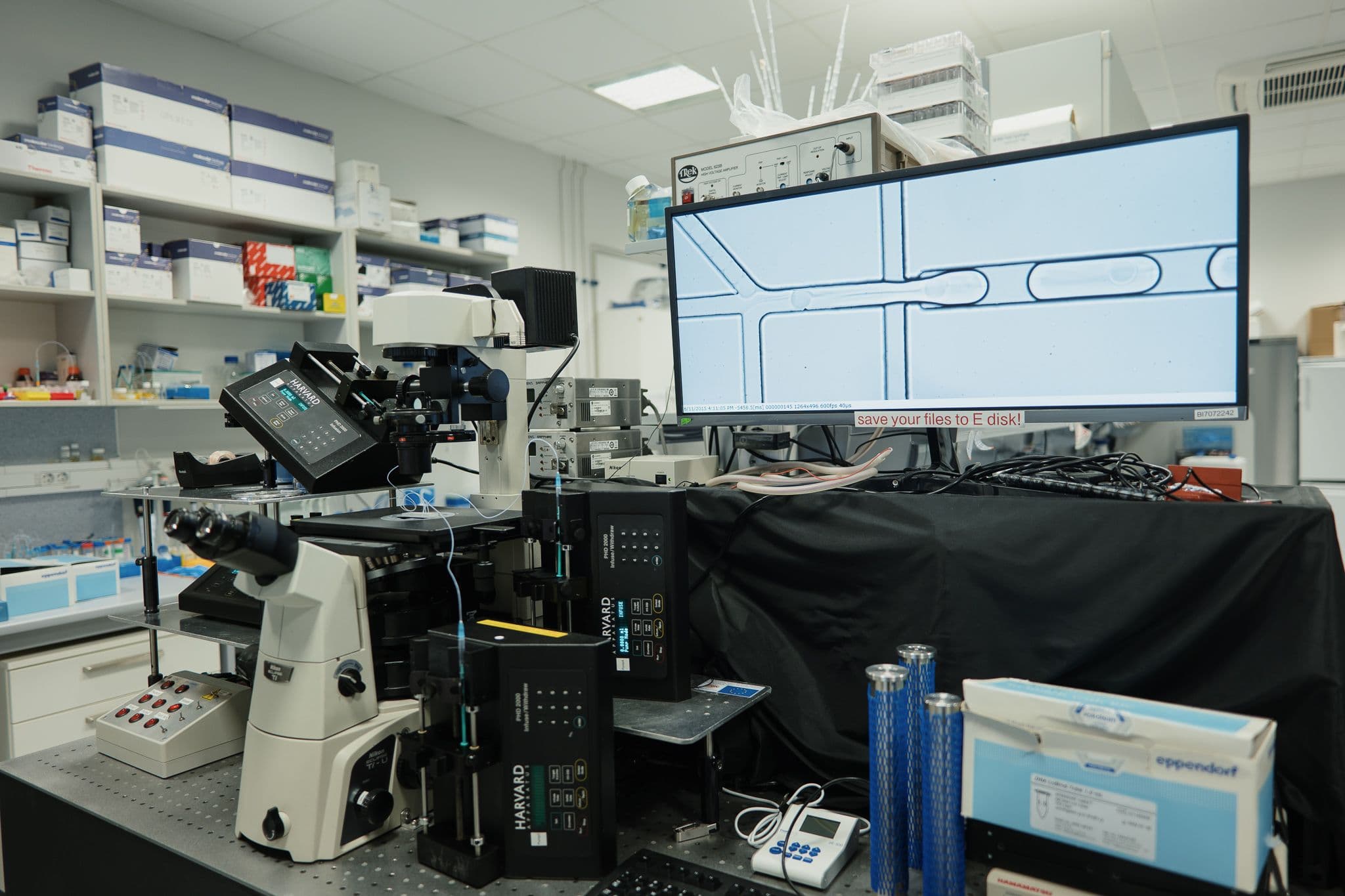
Bioinformatics: Biology
The Master’s programme in Bioinformatics is designed to train highly qualified specialists capable of integrating knowledge from computer science and life sciences. Students learn to analyse biological data using computational methods, develop software tools, and solve complex biological problems using bioinformatics, machine learning, and artificial intelligence approaches. The programme is delivered in English by the Vilnius University Life Sciences Center in collaboration with the Vilnius University Faculty of Mathematics and Informatics. As Lithuania’s life sciences sector continues to expand rapidly, the demand for highly skilled bioinformatics professionals is steadily increasing.

Programme plan
Programme plan
The Bioinformatics programme combines hands-on research experience with advanced theoretical training in life sciences and computer science. During the first semester, students strengthen their background in either biology or computer science, depending on their previous studies. The second semester focuses on machine learning, omics data analysis, and a practical research project carried out in a research group or company. In the third semester, students study phylogenetics and structural bioinformatics while completing a second practical project. The fourth semester is dedicated to the preparation and defence of the Master’s thesis. To accommodate individual interests, students may choose from more than 30 elective courses offered by the Life Sciences Center and the Faculties of Mathematics and Informatics, Medicine, and Chemistry and Geosciences.
Admission requirements
Entry qualification
Undergraduate diploma (or higher)
N. B. for non-EU/EFTA applicants: the gap since your completed Bachelor degree should not exceed five years.
Applicants for Bioinformatics master programme should have a Bachelor or equivalent degree in one of these fields: Molecular biology, Biochemistry, Computer Science, Bioinformatics, Biology, Cell biology, Genetics, Biotechnology, Data science, Mathematics
Applicants must have carried-out an experimental research work for a bachelor’s thesis in Bioinformatics or related sciences.
During the bachelor’s studies, all of the following subjects must have been studied:
Applicants with an overall grade average of at least 70% are eligible for admission.
Eligible applicants will be invited to take an entrance examination in biochemistry.
The entry qualification documents are accepted in the following languages: English / Lithuanian.
Often you can get a suitable transcript from your school. If this is not the case, you will need official translations along with verified copies of the original.
Translation is considered to be official when it is bound together with the certified true copy of the original document and is confirmed by the translator’s signature. Documents issued in English, Lithuanian must be certified true copies and do not require translation.
Language requirements
English
The following language certificates are accepted for study programmes taught in English: IELTS Academic 6.5+, TOEFL iBT 81+, Cambridge English Exam 176+, Pearson PTE Academic 59+, LanguageCert IESOL B2, Duolingo English Test 120+, Password Skills Plus 6.5+ or another language proficiency certificate equivalent to B2 CEFR (Common European Framework of Reference for Languages).
If your first language is English and/or if you have a university degree in English, you will be exempt from providing an English language test score.
Other requirements
A motivation letter must be added to your application.
Admission steps
1
2
3
4
5
6
7
Learning outcomes
- Apply bioinformatics methods to solve biological problems and analyse biological processes.
- Analyse and interpret large-scale biological datasets using modern bioinformatics approaches.
- Develop innovative algorithms and software tools for biological data analysis.
- Apply machine learning, artificial intelligence, and statistical methods in life sciences research.
- Integrate knowledge from computer science and life sciences to address complex interdisciplinary challenges.
- Independently plan, organise, and critically evaluate scientific research in a responsible and reproducible manner.
- Communicate scientific results effectively to both specialist and non-specialist audiences.
Financing
- 5 538 EUR
Application fee
The application fee is €100 per application. Each applicant can choose up to three programmes within one application.
Online applications will only be processed once the application fee has been paid.
Please note that the application fee is non-refundable. Make sure you read the admission requirements and deadlines carefully before submitting your application, as the fee cannot be refunded if you are found to be ineligible or miss a deadline.
Scholarships for Master's
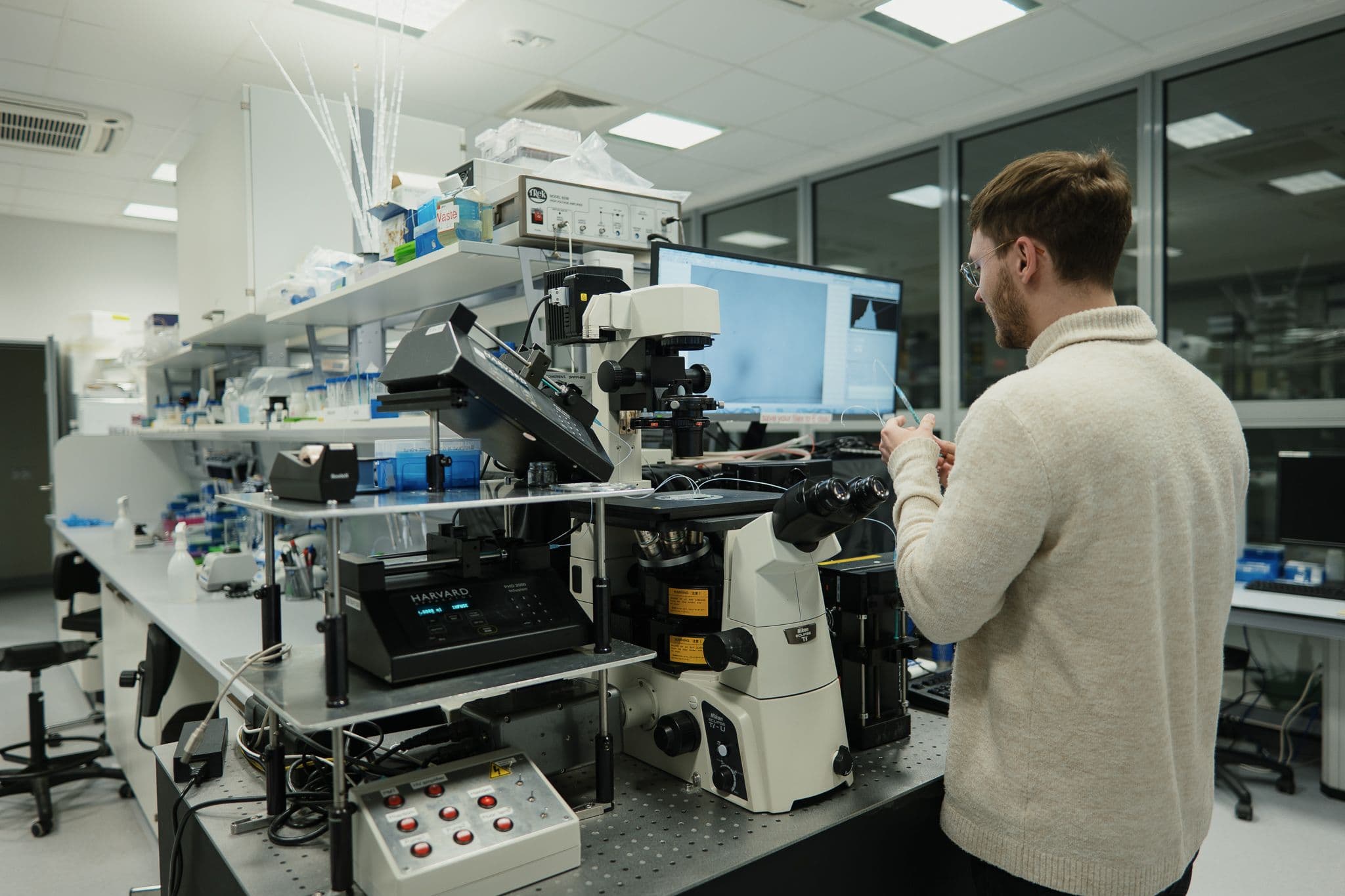
Career prospects
What's next?
Frequently asked questions
What Bachelor’s degree is required?
Applicants must hold a university Bachelor’s degree in any field. Basic knowledge of mathematical analysis, probability theory, statistics, and either computer science or life sciences is required.
Applicants who have completed Bachelor’s studies outside the fields of Mathematics (A), Informatics (B), Physical Sciences (C), Life Sciences (D), Engineering (E), Technology (F), or Health Sciences (G) will be invited to a motivation interview as part of the admissions process.
How many students are admitted each year?
Approximately 15 students are admitted annually, ensuring a high-quality learning experience and individual attention for each student.
Chat with VU students
If you need more information or personalised advice, choose a VU Ambassador from your home country or the desired study programme and submit your question using the form below. You can expect to hear back from us within 2–3 working days.
