Electronics and Telecommunication Technologies
M_Fizika_Elektronika_II.jpg

Electronics and Telecommunication Technologies

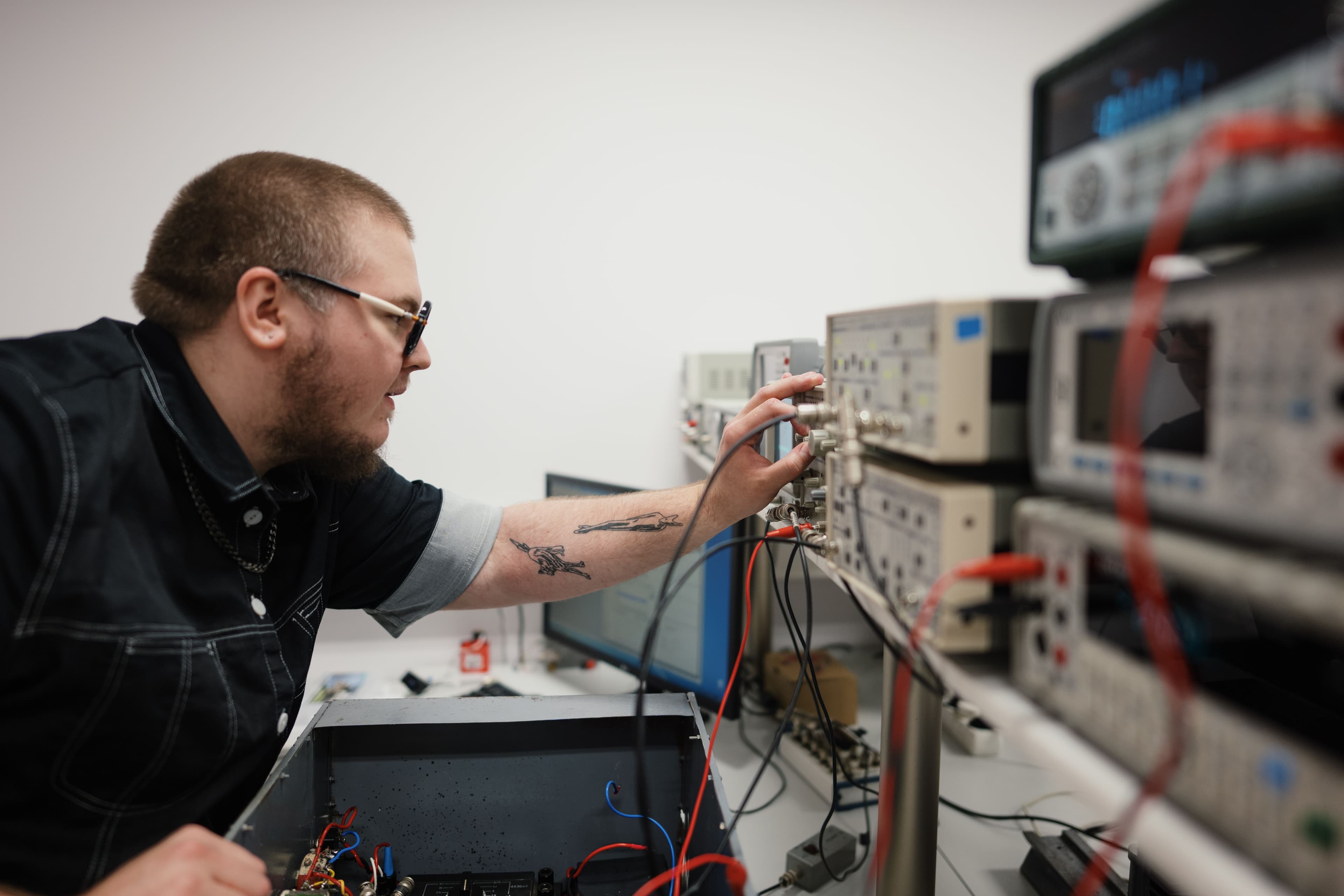
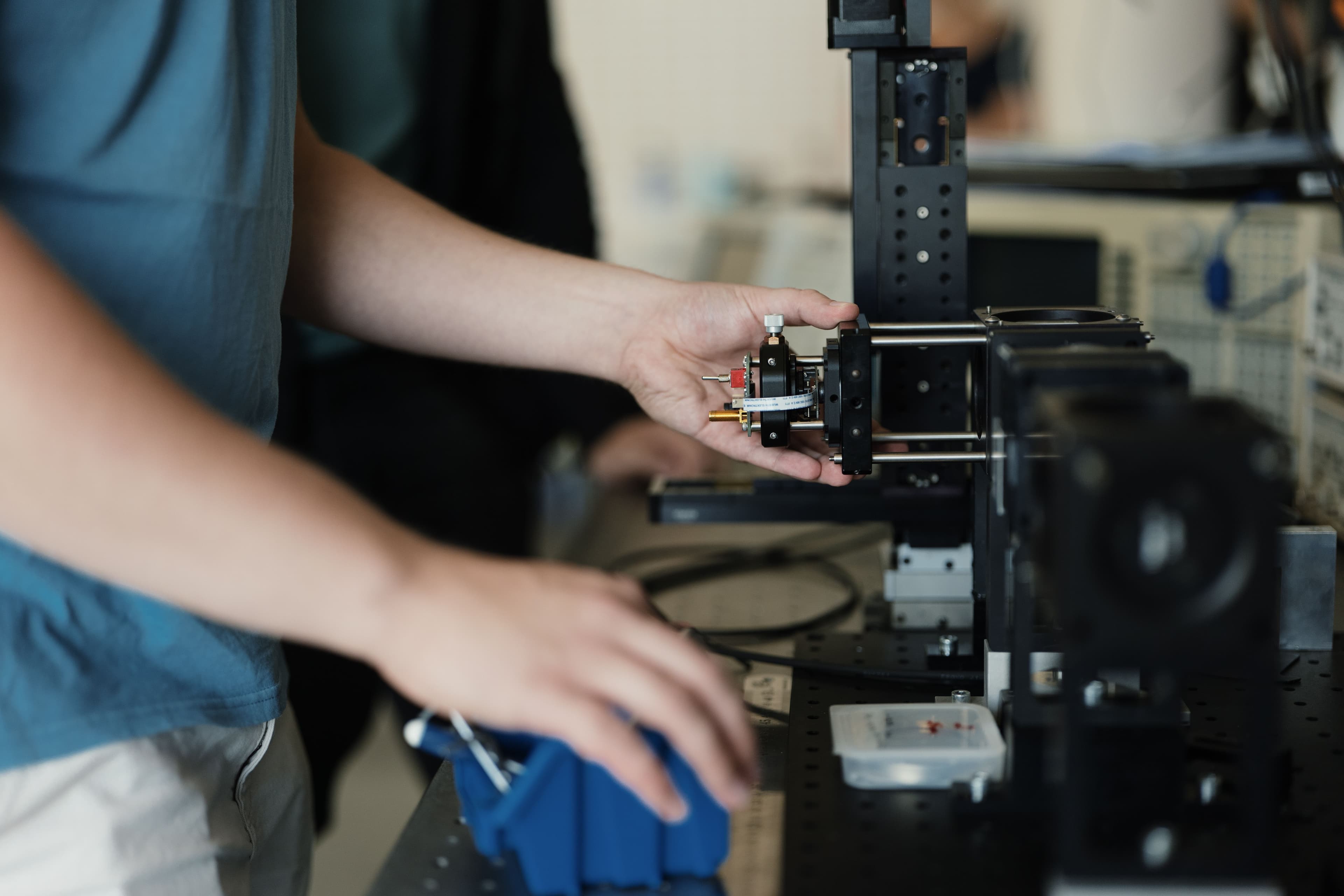
Our programme prepares you to become a highly qualified specialist who meets international standards. You will be able to understand, develop, and integrate the latest technologies in modern electronics and telecommunications, as well as plan and organise their maintenance and renewal.
Electronics and Telecommunication Technologies

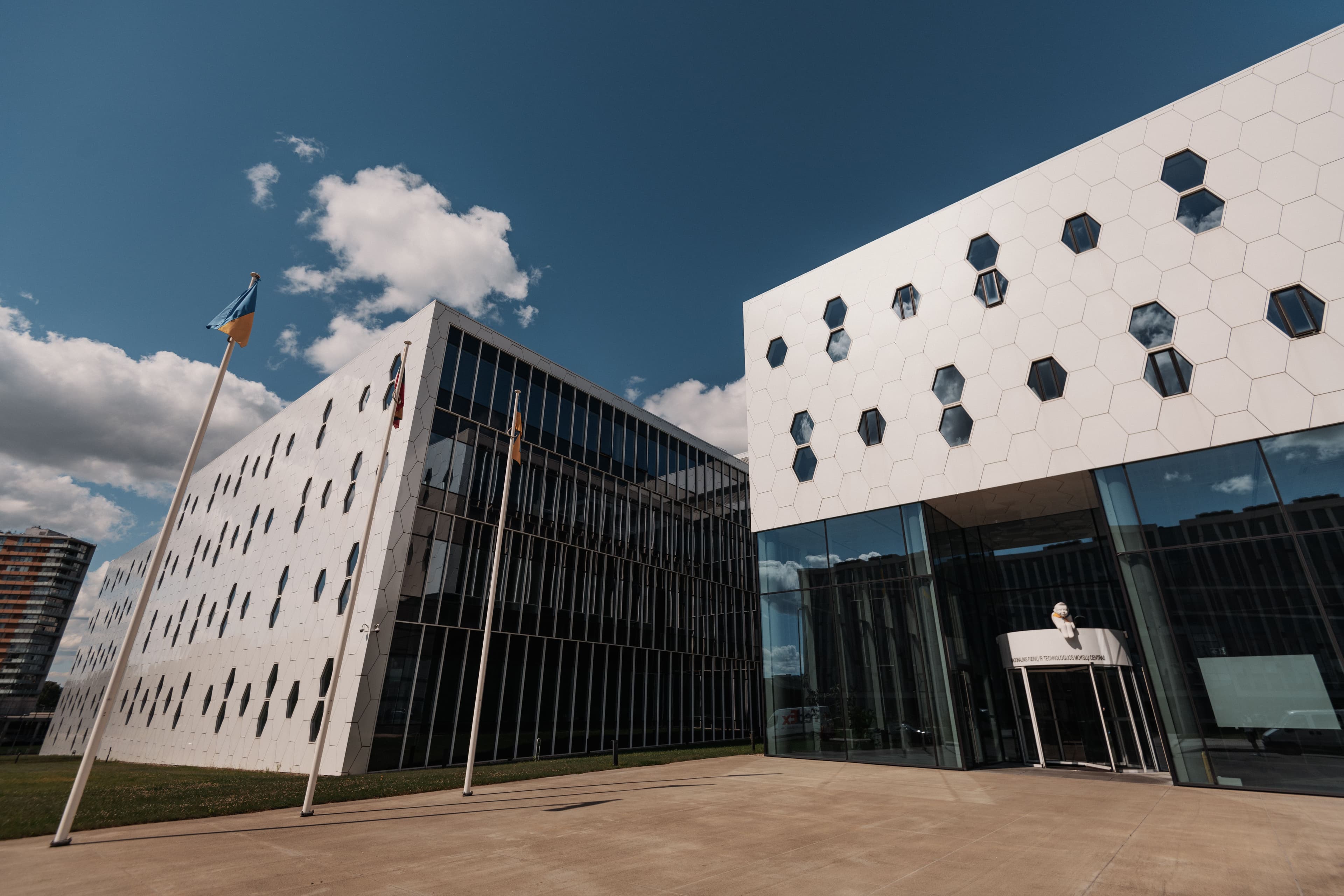
Our programme prepares you to become a highly qualified specialist who meets international standards. You will be able to understand, develop, and integrate the latest technologies in modern electronics and telecommunications, as well as plan and organise their maintenance and renewal.

M_Fizika_Elektronika_II.jpg

Learn about the structure of the study programme.

  • Strong foundations in electronics, physics, mathematics, programming, and telecommunications, with a focus on microelectronics and solid-state electronics.
  • Telecommunication systems skills: modelling, testing, and integrating systems, and operating network equipment in the ultra-high frequency domain.
  • Wireless networks and infrastructure: designing and optimising wireless networks, and developing embedded microcontroller systems integrated into electronic infrastructures.
  • Data and industry tools in practice: systems programming, big data analysis, and hands-on use of industry-standard software for network and circuit design.
  • Flexible study model that supports independence and professional growth.
Entry qualification

Undergraduate diploma (or higher)

N. B. for non-EU/EFTA applicants: The gap since your completed Bachelor degree should not exceed five years.

Completed university bachelor’s degree studies in the physics field of the physical sciences study field group or the materials technology field of the technological sciences study field group or electronics engineering field of the engineering sciences study field group or other studies closely related to the aforementioned fields.

In the diploma supplement: No less than 60 per cent of the volume of course units taken shall be in the fields of physics, mathematics, electronics, telecommunications, engineering, technological sciences; the cumulative grade point average of these course units shall be no less than 60 per cent of the maximum possible grade.

All course units must be passed (positively assessed); additional points shall be awarded for scientific publications supported by bibliographic links and presentations in scientific conferences in the fields related with the study programme.

The entry qualification documents are accepted in the following languages: English / Lithuanian.

Often you can get a suitable transcript from your school. If this is not the case, you will need official translations along with verified copies of the original.

Translation is considered to be official when it is bound together with the certified true copy of the original document and is confirmed by the translator’s signature. Documents issued in English, Lithuanian must be certified true copies and do not require translation.

Language requirements
Other requirements

A motivation letter must be added to your application.

Applicants from Bangladesh, Nepal and Pakistan must submit OMPT-D (Online Mathematics Placement Test) Certificate (minimum passing grade – 60%). 

Territory requirements

Applications are NOT accepted from the following territories (based on citizenship): Russia.

The programme has reached its limit of applications from Russia.


1

2

3

4

5

6

7

Find your programme

When choosing a study programme, consider whether the subjects match your interests and strengths, as this will keep you motivated. You should also think about career opportunities, costs, and whether the programme fits your long-term goals.

Keep in mind that each applicant can choose up to three study programmes in one application, but you can only get admitted to one programme.

Check the application dates

For international applicants: 
1 May | for applicants from non-EU/EFTA countries 
1 July | for applicants who are citizens of EU/EFTA countries and for non-EU/EFTA applicants with a 90-day visa-free period that has not yet been exceeded.
The academic year always begins on 1 September.

Our International admissions have one intake per academic year. You can only submit your application during the application period.  

The application dates may differ if you are applying for a programme taught in Lithuanian or if you are eligible to apply for state-funded places.

Check your eligibility and prepare the necessary documents

In order to apply to Vilnius University, you must meet the general and programme-specific admission requirements, as well as the language proficiency requirements. In certain cases, specific territorial requirements may also apply. You can find all the specific requirements for this programme in the 'Admissions requirements' section.

For applicants from non-EU and non-EFTA countries, the period between obtaining your most recent secondary or higher education qualification and submitting your application may not exceed 5 years.


Pay the application fee and submit your application

The application to the international bachelor's or integrated studies degree programmes must be submitted on apply.vu.lt

The application fee is 100 EUR per application. The invoice is paid after adding the programmes to the application. Application fee payments are accepted only through the Flywire payment platform.

An online application will be processed only after the application fee is collected and the application is submitted with all the required documents. All documents must be submitted before the application submission deadline; otherwise, the application is terminated.

Please note: The application fee is non-refundable. Be sure to read the admission requirements and deadlines carefully before applying, as fees cannot be refunded if you are found ineligible or miss a deadline.

Take the interview

The candidates meeting the aforementioned criteria are invited to the remote motivational interview. During the interview, the candidate’s determination to study in a master’s degree programme based on science is evaluated. If the interview is evaluated negatively, the candidate is not admitted to the study programme.

Confirm the acceptance and pay the tuition fee

Your application will be assessed within 30 calendar days from the date all required documents are submitted (this period may be extended in specific cases).

Acceptance letters or rejection notifications will be sent via the online application system https://apply.vu.lt.

Students are obliged to confirm if they accept the study offer within 7 working days.

Students who are citizens of the European Union, the European Economic Area countries and of other foreign countries, admitted to non-state-funded places in the first year of first-cycle and second-cycle studies through the University’s foreign student application system, must pay the annual tuition fee within 15 calendar days from the date of the offer to study.

Description of the Procedure of Payment, Reimbursement, and Recovery of Tuition Fees at Vilnius University 

The information about the tuition fee refund policy  

After the student pays the tuition fee, he receives the final acceptance letter. Then our International Relations Office provides the necessary information related to obtaining a temporary residence permit in Lithuania and sends a mediation letter to the student by e-mail (for non-EU citizens).

Arrange you arrival

Things to consider:

  • All international students have to apply for a visa, temporary residence permit or certificate of temporary residence in the Republic of Lithuania depending on their citizenship and the length of their studies at Vilnius University. 
  • If you require accommodation, you may apply for a dormitory via the application platform at apply.vu.lt. The task for accommodation appears after the tuition fee is paid and the final acceptance letter is received. 
  • More information about the start of your studies here.
Tuition fee

Students who are citizens of the European Union, the European Economic Area countries and of other foreign countries, admitted to non-state-funded places in the first year of first-cycle and second-cycle studies through the University’s foreign student application system, must pay the annual tuition fee within 15 calendar days from the date of the offer to study.

After the student pays the tuition fee, he receives the final acceptance letter. Then our International Relations Office provides the necessary information related to obtaining a temporary residence permit in Lithuania and sends a mediation letter to the student by e-mail (for non-EU citizens).

Application fee

The application fee is €100 per application. Each applicant can choose up to three programmes within one application. 
Online applications will only be processed once the application fee has been paid. 

Please note that the application fee is non-refundable. Make sure you read the admission requirements and deadlines carefully before submitting your application, as the fee cannot be refunded if you are found to be ineligible or miss a deadline. 

Learn about the structure of the study programme.

  • Strong foundations in electronics, physics, mathematics, programming, and telecommunications, with a focus on microelectronics and solid-state electronics.
  • Telecommunication systems skills: modelling, testing, and integrating systems, and operating network equipment in the ultra-high frequency domain.
  • Wireless networks and infrastructure: designing and optimising wireless networks, and developing embedded microcontroller systems integrated into electronic infrastructures.
  • Data and industry tools in practice: systems programming, big data analysis, and hands-on use of industry-standard software for network and circuit design.
  • Flexible study model that supports independence and professional growth.
Entry qualification

Undergraduate diploma (or higher)

N. B. for non-EU/EFTA applicants: The gap since your completed Bachelor degree should not exceed five years.

Completed university bachelor’s degree studies in the physics field of the physical sciences study field group or the materials technology field of the technological sciences study field group or electronics engineering field of the engineering sciences study field group or other studies closely related to the aforementioned fields.

In the diploma supplement: No less than 60 per cent of the volume of course units taken shall be in the fields of physics, mathematics, electronics, telecommunications, engineering, technological sciences; the cumulative grade point average of these course units shall be no less than 60 per cent of the maximum possible grade.

All course units must be passed (positively assessed); additional points shall be awarded for scientific publications supported by bibliographic links and presentations in scientific conferences in the fields related with the study programme.

The entry qualification documents are accepted in the following languages: English / Lithuanian.

Often you can get a suitable transcript from your school. If this is not the case, you will need official translations along with verified copies of the original.

Translation is considered to be official when it is bound together with the certified true copy of the original document and is confirmed by the translator’s signature. Documents issued in English, Lithuanian must be certified true copies and do not require translation.

Language requirements
Other requirements

A motivation letter must be added to your application.

Applicants from Bangladesh, Nepal and Pakistan must submit OMPT-D (Online Mathematics Placement Test) Certificate (minimum passing grade – 60%). 

Territory requirements

Applications are NOT accepted from the following territories (based on citizenship): Russia.

The programme has reached its limit of applications from Russia.


1

2

3

4

5

6

7

Find your programme

When choosing a study programme, consider whether the subjects match your interests and strengths, as this will keep you motivated. You should also think about career opportunities, costs, and whether the programme fits your long-term goals.

Keep in mind that each applicant can choose up to three study programmes in one application, but you can only get admitted to one programme.

Check the application dates

For international applicants: 
1 May | for applicants from non-EU/EFTA countries 
1 July | for applicants who are citizens of EU/EFTA countries and for non-EU/EFTA applicants with a 90-day visa-free period that has not yet been exceeded.
The academic year always begins on 1 September.

Our International admissions have one intake per academic year. You can only submit your application during the application period.  

The application dates may differ if you are applying for a programme taught in Lithuanian or if you are eligible to apply for state-funded places.

Check your eligibility and prepare the necessary documents

In order to apply to Vilnius University, you must meet the general and programme-specific admission requirements, as well as the language proficiency requirements. In certain cases, specific territorial requirements may also apply. You can find all the specific requirements for this programme in the 'Admissions requirements' section.

For applicants from non-EU and non-EFTA countries, the period between obtaining your most recent secondary or higher education qualification and submitting your application may not exceed 5 years.


Pay the application fee and submit your application

The application to the international bachelor's or integrated studies degree programmes must be submitted on apply.vu.lt

The application fee is 100 EUR per application. The invoice is paid after adding the programmes to the application. Application fee payments are accepted only through the Flywire payment platform.

An online application will be processed only after the application fee is collected and the application is submitted with all the required documents. All documents must be submitted before the application submission deadline; otherwise, the application is terminated.

Please note: The application fee is non-refundable. Be sure to read the admission requirements and deadlines carefully before applying, as fees cannot be refunded if you are found ineligible or miss a deadline.

Take the interview

The candidates meeting the aforementioned criteria are invited to the remote motivational interview. During the interview, the candidate’s determination to study in a master’s degree programme based on science is evaluated. If the interview is evaluated negatively, the candidate is not admitted to the study programme.

Confirm the acceptance and pay the tuition fee

Your application will be assessed within 30 calendar days from the date all required documents are submitted (this period may be extended in specific cases).

Acceptance letters or rejection notifications will be sent via the online application system https://apply.vu.lt.

Students are obliged to confirm if they accept the study offer within 7 working days.

Students who are citizens of the European Union, the European Economic Area countries and of other foreign countries, admitted to non-state-funded places in the first year of first-cycle and second-cycle studies through the University’s foreign student application system, must pay the annual tuition fee within 15 calendar days from the date of the offer to study.

Description of the Procedure of Payment, Reimbursement, and Recovery of Tuition Fees at Vilnius University 

The information about the tuition fee refund policy  

After the student pays the tuition fee, he receives the final acceptance letter. Then our International Relations Office provides the necessary information related to obtaining a temporary residence permit in Lithuania and sends a mediation letter to the student by e-mail (for non-EU citizens).

Arrange you arrival

Things to consider:

  • All international students have to apply for a visa, temporary residence permit or certificate of temporary residence in the Republic of Lithuania depending on their citizenship and the length of their studies at Vilnius University. 
  • If you require accommodation, you may apply for a dormitory via the application platform at apply.vu.lt. The task for accommodation appears after the tuition fee is paid and the final acceptance letter is received. 
  • More information about the start of your studies here.
Tuition fee

Students who are citizens of the European Union, the European Economic Area countries and of other foreign countries, admitted to non-state-funded places in the first year of first-cycle and second-cycle studies through the University’s foreign student application system, must pay the annual tuition fee within 15 calendar days from the date of the offer to study.

After the student pays the tuition fee, he receives the final acceptance letter. Then our International Relations Office provides the necessary information related to obtaining a temporary residence permit in Lithuania and sends a mediation letter to the student by e-mail (for non-EU citizens).

Application fee

The application fee is €100 per application. Each applicant can choose up to three programmes within one application. 
Online applications will only be processed once the application fee has been paid. 

Please note that the application fee is non-refundable. Make sure you read the admission requirements and deadlines carefully before submitting your application, as the fee cannot be refunded if you are found to be ineligible or miss a deadline. 

M_Fizika_Elektronika_III.jpg

Career prospects

Graduates may work in electronics, telecommunications, and other high-tech companies or state institutions specializing in the licensing, supervision, and regulation of telecommunications.  

They may also pursue scientific research careers at universities or other research institutions. 

Telecommunications engineer / telecommunications network specialist / network operations engineer / telecommunications infrastructure manager / embedded systems engineer / embedded systems engineer / electronic systems developer / systems integration engineer / technical solutions engineer / IT/telecom service manager

From scientific labs to high-tech companies

Assoc. Prof. Dr Sandra Pralgauskaitė  

Electronics and Telecommunications Technology Master's studies is a research-based program that provides engineering education in electronics. The study program is continually improved, taking into account the latest innovations, to ensure that graduates can successfully work in leading electronics and telecommunications companies. 

Almost half of the study time is devoted to research projects and the Final thesis, which can be carried out in both scientific laboratories and high-tech companies. A flexible study schedule allows for development not only in the academic but also in the professional field. 

Small groups, more access to expert lecturers

Domantas Vizbaras

This course is strongly focused on telecommunications technologies, engineering, and microwave physics. Compared to Bachelor’s studies, the student groups are much smaller, so students have more time to interact with the course lecturers – experts in their fields – and to learn from their experience. During the studies, excellent conditions are provided in research laboratories to delve into your chosen topic, become familiar with scientific methodology, and enjoy spending time carrying out experiments.


Electronics and Telecommunications Technologies_EN_MA_Sandra Pralgauskaite_2025_FF.jpg
Elektronika ir telekomunikacijų technologijos (anglų k)_MA_Domantas Vizbaras_2025_FF.jpg

Chat with VU students

If you need more information or personalised advice, choose a VU Ambassador from your home country or the desired study programme and submit your question using the form below. You can expect to hear back from us within 2–3 working days.

Kipras Gudeliauskas

It was an excellent choice. The programme provided not only deep theoretical knowledge but also practical applications of it. In addition, the research groups operating at the university offer wonderful opportunities to engage in science and expand your scientific experience.

Nespalvota_James_McLean.png
Elektronika ir telekomunikacijų technologijos_MA_Kipras Gudeliauskas_2025_FF.jpeg
Nespalvota_James_McLean.png
Elektronika ir telekomunikacijų technologijos_MA_Kipras Gudeliauskas_2025_FF.jpeg