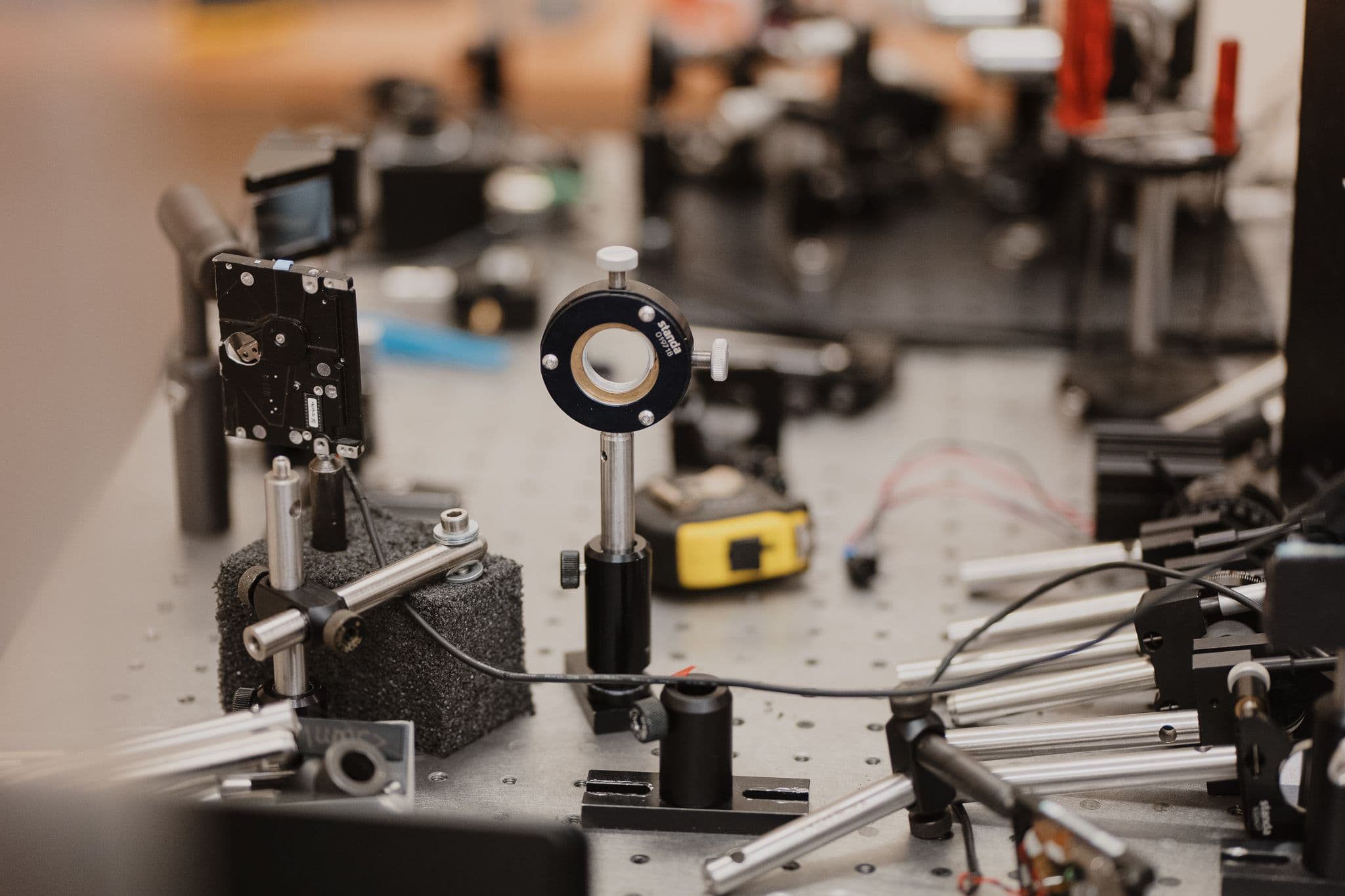
Laser Physics and Optical Technologies
This programme equips you with the expertise to analyse and solve complex scientific, technological, and industrial challenges. You’ll learn to identify key issues, evaluate innovative solutions, and lead research teams, gaining skills that open career opportunities in scientific laboratories and optical technology companies. By graduating with up‑to‑date knowledge in science and technology, you’ll be ready to drive innovation and contribute to the advancement of laser physics and optical technologies.
Programme plan
Programme plan
Get acquainted with the detailed study plan.
Admission requirements
Entry qualification
Undergraduate diploma (or higher)
N. B. for non-EU/EFTA applicants: The gap since your completed Bachelor degree should not exceed five years.
Completed university bachelor’s degree studies in the fields of physics of the physical sciences study field group, the field materials technology of the technological sciences study field group, the field of engineering or other studies closely related to the aforementioned fields; In the diploma supplement: No less than 60 per cent of the volume of course units taken shall be in the fields of physics, mathematics, electricity, electronics, optical engineering, materials technology, nanotechnologies.
The cumulative grade point average of these course units shall be no lower than 60 per cent of the maximum possible grade.
All course units must be passed (positively assessed); additional points shall be awarded for scientific publications supported by bibliographic links and presentations in scientific conferences in the fields related with the study programme.
Additionally, at least one academic recommendation should be provided.
The candidates who meet the above-listed criteria will be invited to a remote motivational interview. During the interview, the candidate’s determination to study in a science-based Master’s degree programme is assessed. If the interview is deemed unsatisfactory, the candidate will not be invited to study.
The entry qualification documents are accepted in the following languages: English / Lithuanian.
Often you can get a suitable transcript from your school. If this is not the case, you will need official translations along with verified copies of the original.
Translation is considered to be official when it is bound together with the certified true copy of the original document and is confirmed by the translator’s signature. Documents issued in English, Lithuanian must be certified true copies and do not require translation.
You must take the original entry qualification documents along with you when you finally go to the university.
Language requirements
English
The following language certificates are accepted for study programmes taught in English: IELTS Academic 6.5+, TOEFL iBT 81+, Cambridge English Exam 176+, Pearson PTE Academic 59+, LanguageCert IESOL B2, Duolingo English Test 120+, Password Skills Plus 6.5+ or another language proficiency certificate equivalent to B2 CEFR (Common European Framework of Reference for Languages).
If your first language is English and/or if you have a university degree in English, you will be exempt from providing an English language test score.
Other requirements
At least 1 reference(s) must be provided.
A motivation letter must be added to your application.
Admission steps
1
2
3
4
5
6
7
Learning outcomes
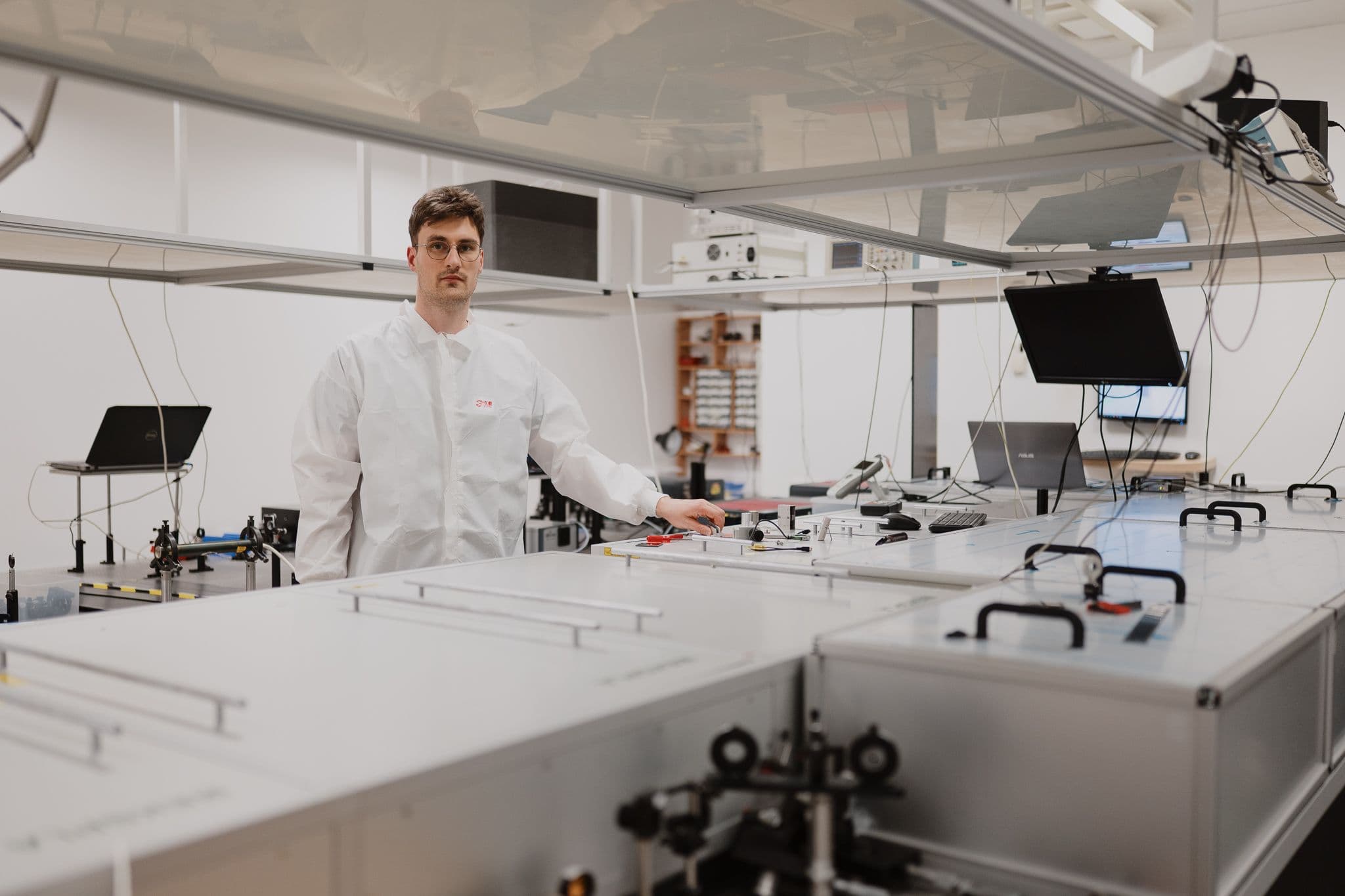
- Upon completion of this study programme, graduates will able to plan, set-up and perform experiments using modern technological and scientific laser equipment, analyse the data using modern scientific concepts, theoretical models and tools, summarize the results in the context of the state of the art of a particular subject and further improve professional competences on their own. The graduates will acquire all the necessary fundamental and practical knowledge, required for elaboration and development of novel lasers and laser-based systems and for their applications in various fields of fundamental and applied science and laser industry.
Financing
- 6 500 EUR for non-EU students / 5 641 EUR for EU students
Tuition fee
Students who are citizens of the European Union, the European Economic Area countries and of other foreign countries, admitted to non-state-funded places in the first year of first-cycle and second-cycle studies through the University’s foreign student application system, must pay the annual tuition fee within 15 calendar days from the date of the offer to study.
After the student pays the tuition fee, he receives the final acceptance letter. Then our International Relations Office provides the necessary information related to obtaining a temporary residence permit in Lithuania and sends a mediation letter to the student by e-mail (for non-EU citizens).
Application fee
The application fee is €100 per application. Each applicant can choose up to three programmes within one application.
Online applications will only be processed once the application fee has been paid.
Please note that the application fee is non-refundable. Make sure you read the admission requirements and deadlines carefully before submitting your application, as the fee cannot be refunded if you are found to be ineligible or miss a deadline.
Scholarships for Master's
Career prospects
What's next?