- 9 November 2026
- Audronė Čepkauskaitė
A Good ‘Wolf’: VU Team ‘SL LAB’ Wins the ‘Hack4Vilnius’ Hackathon
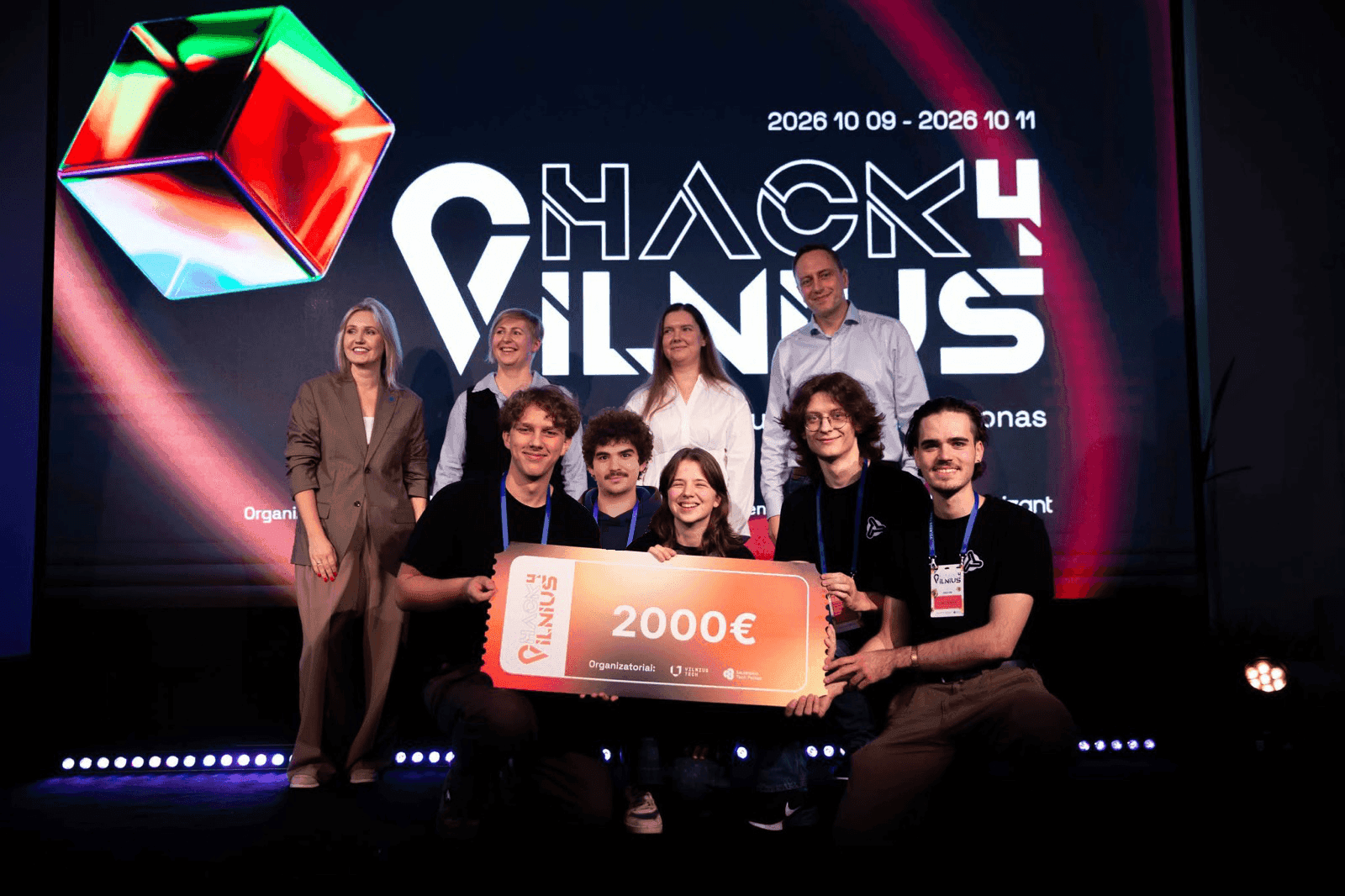
How can Vilnius identify problems in the city more quickly and determine which ones need to be tackled first? A team of Vilnius University (VU) students, ‘SL LAB’, proposed a solution – a prototype of the ‘Vilkas’ app (Lithuanian for ‘Wolf’), which combines artificial intelligence (AI) with resident engagement and gamification elements. The result: first place at the ‘Hack4Vilnius’ city hackathon held on 9–11 October.
‘SL LAB’ member Aaron Gandžumian, a third-year student of ‘Information Systems Engineering’ at the VU Faculty of Mathematics and Informatics (VU MIF), welcomes the opportunities that taking part in hackathons provides, allowing students not only to test their technical knowledge but also to create solutions to real problems. The team hopes that in the future ‘Vilkas’ could help reduce the workload of municipality staff and improve the process of resolving city problems.
Hackathons make you grow
The ‘SL LAB’ team (‘Synthetic Logic Lab’) came together in March 2026 at the ‘Tech_Champ’ hackathon in Kaunas, where it won second place. At that time, it consisted of four students: VU MIF third-year students Aaron Gandžumian and Marijus Kuprys (‘Information Systems Engineering’), Lukas Stavaris (‘Software Engineering’), and Augustas Rinkevičius, a student at the VU Faculty of Chemistry and Geosciences (VU CHGF), who this year began minor studies in ‘Bioinformatics’ at MIF.
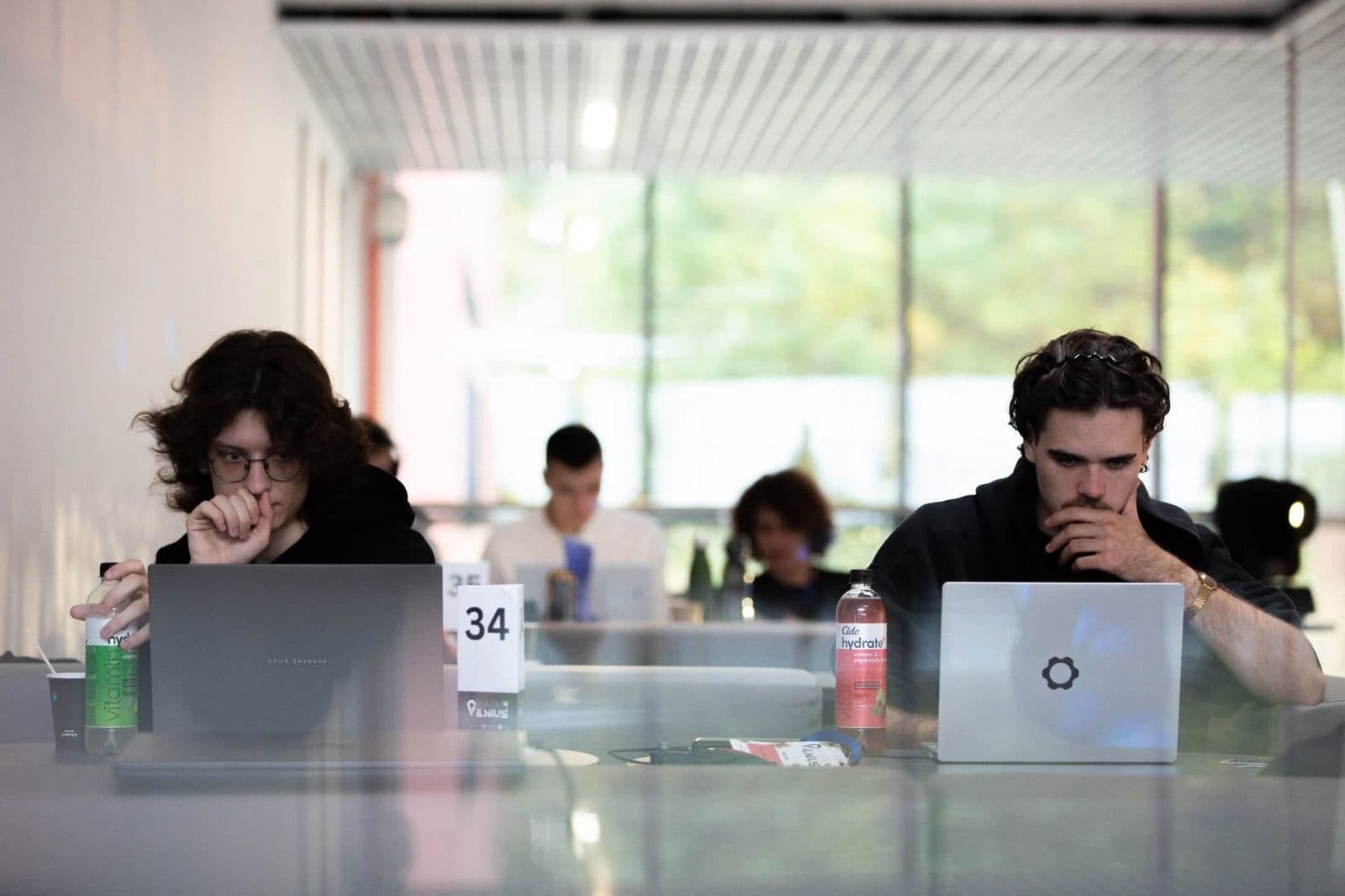
‘A fifth member joined us for the Vilnius hackathon – Augustė Tumaitė, also a third-year ‘Information Systems Engineering’ student at VU MIF,’ said Gandžumian.
In Vilnius, on Naugarduko Street, corridors connect the VU MIF and VU CHGF buildings, and what unites the students of the two faculties in the ‘SL LAB’ team is an interest in technology and a wish to test their knowledge in practice. ‘We try to take part in as many hackathons as possible – the only limit is our health,’ the student joked.
Analysing the problem before creating a solution
At ‘Hack4Vilnius’, the team had to tackle a challenge: how to help Vilnius notice city problems more quickly and understand which ones need to be solved first. In creating the solution, the students drew on open data from the city of Vilnius and consulted mentors. They also contacted the developers of the ‘Tvarkau miestą’ (‘Fix the City’) platform to better understand the difficulties faced by the current system.
According to Gandžumian, one of the main challenges in Vilnius today is the high volume of reports from residents, which may include duplicate or sometimes irrelevant information. Processing these reports takes staff time, and this can hinder timely and effective responses.
The team had about 36 hours to create an app prototype and prepare a presentation. Three members focused mainly on the technical implementation of the solution, while the other two worked on presenting the idea and its visual design.
‘Vilkas’ – more than a platform for reporting problems
Sceptics might ask: why do we need yet another system for reporting potholes, fallen trees, or badly parked cars? Would it not be better to devote the time to actually solving the problems themselves?
The hackathon winners are convinced that a more efficient reporting system would free up time to do just that.
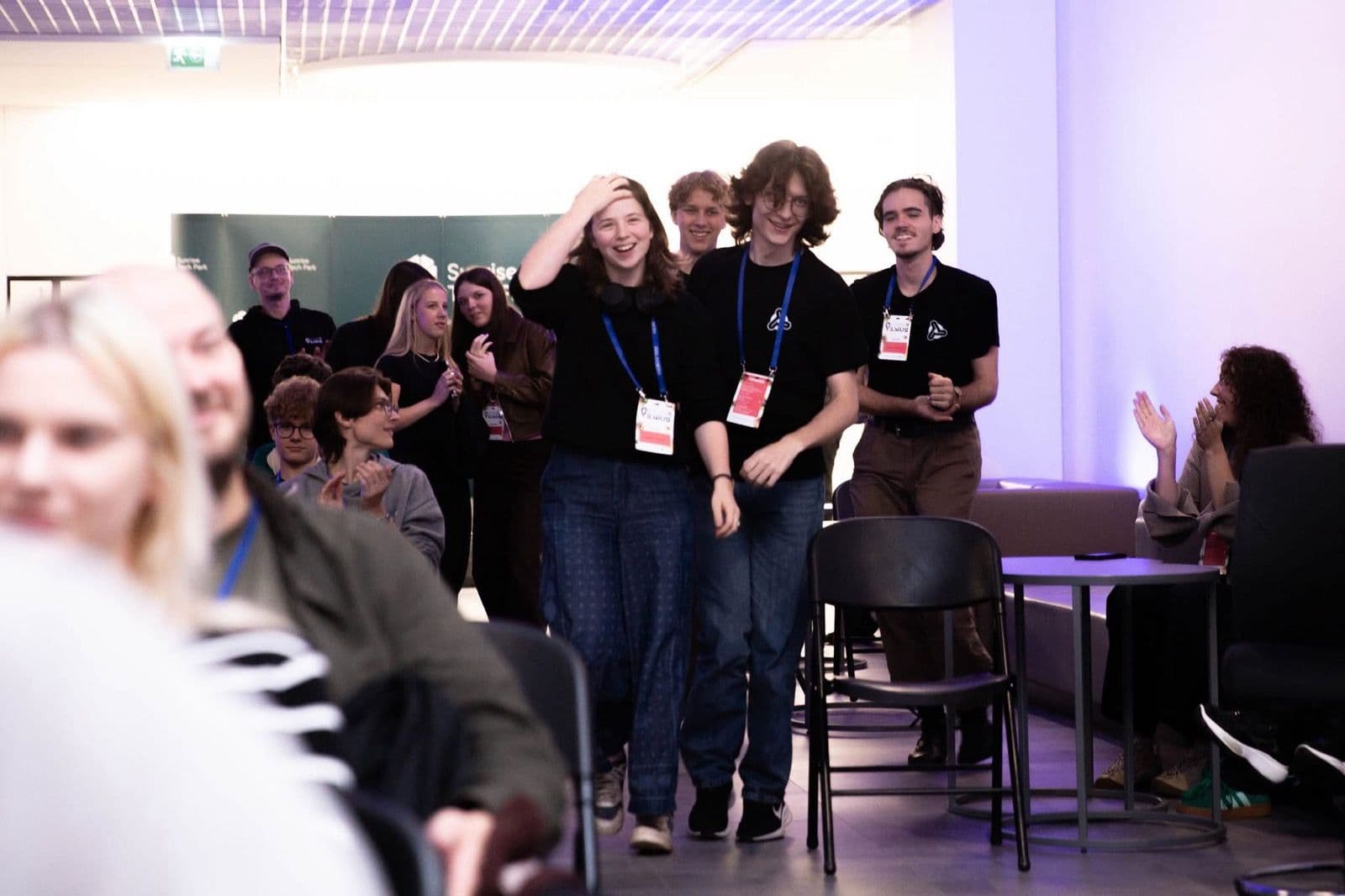
Residents could report the problems they notice, and other users could confirm them, as they do in the ‘Waze’ navigation app. The system would identify duplicate reports, and a reliability index for each user would help assess the quality of the information.
‘For useful actions, residents would collect points and badges and receive discounts from partners, and city districts could compete with one another. This would encourage residents to become more engaged in improving their surroundings,’ said Gandžumian.
The app proposed by the students would also use AI – to analyse residents’ reports, suggest categories for them, assess urgency and reliability, look for possible duplicates, and filter out offensive or inappropriate content.
‘On their dashboard, municipality staff would see a list of already verified problems sorted by priority, could follow trends in different districts, and, with one click, pass a problem on to the responsible institution,’ explained the VU MIF third-year student.
How do you win a hackathon?
According to Gandžumian, a member of ‘SL LAB’, the student team that has won prizes at two hackathons, technical knowledge is important, but so is the ability to define a problem clearly and justify the chosen solution. ‘The team benefited from the mentors’ insights, the productive environment created by the organisers, and the friends and coursemates who helped us test the platform and took part in a quantitative market survey,’ he said.
For VU MIF students, hackathons are a chance to learn to work as a team, make decisions under time pressure, and apply the knowledge acquired during their studies in practice. At the same time, they are a chance to test whether a technological idea can be useful outside the university.
‘We gain very useful technical and soft skills that will help us contribute to Lithuania’s well-being,’ said Gandžumian about the benefits of taking part in such events.
Will ‘Vilkas’ howl?
For now, ‘Vilkas’ is an app prototype, but the team hopes that the idea can grow into a fully-fledged product.
‘We hope that we will be able to cooperate with Vilnius City Municipality and develop ‘Vilkas’ into a fully functional app,’ said the VU MIF student.