- 20 October 2026
- Vytas Navickas
An Invisible Enemy: Plague in the Grand Duchy of Lithuania
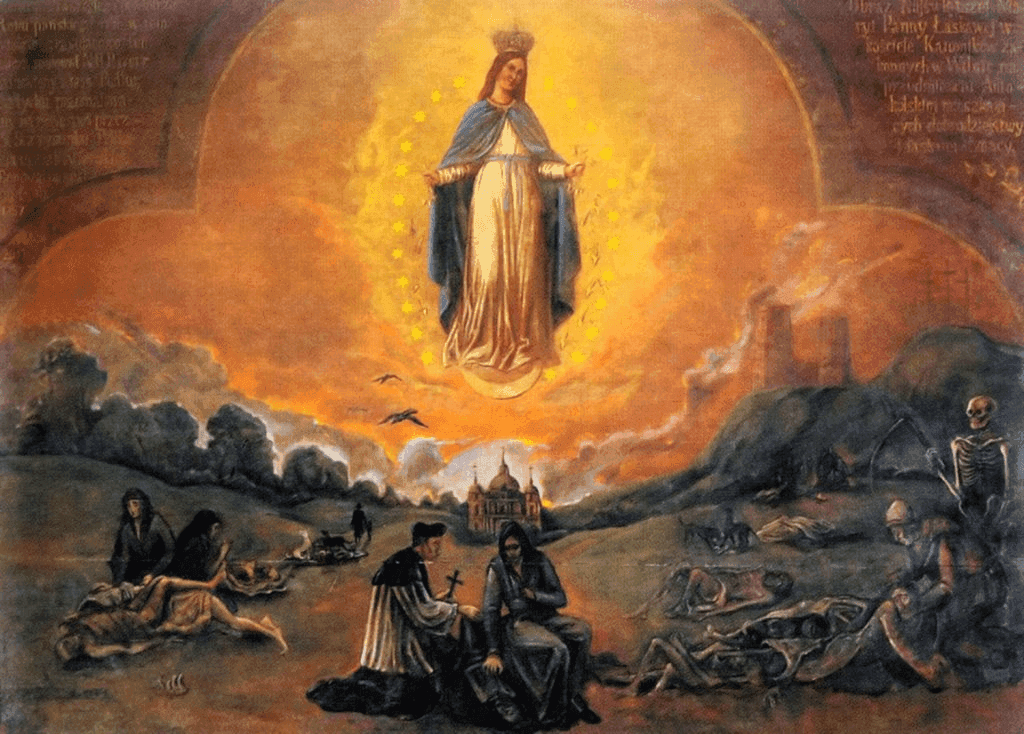
The case of a Russian laboratory worker whose death was reported in the Lithuanian and international media as suspected pneumonic plague, has sparked renewed interest in this disease, whose last major outbreak in Lithuania occurred in the early 18th century. Associate Professor Martynas Jakulis, a lecturer at the Faculty of History of Vilnius University (VU), is currently conducting research on the last plague epidemic in Vilnius. He discusses the concept, nature, and impact of plague epidemics, as well as how the inhabitants of the Grand Duchy of Lithuania (GDL) responded to the disease.
Plague epidemics in the GDL
The historian first notes that there were three global plague pandemics between the 6th and 20th centuries: the so-called Plague of Justinian (6th–8th centuries), the Black Death (14th–18th centuries) and the Third Plague Pandemic (mid-19th to mid-20th century), which did the most damage in Asia.
‘The plague outbreaks in the GDL are associated precisely with the second pandemic. Over almost four centuries, the outbreaks gradually became ever more localised, as states took preventive measures, and mechanisms for containing the spread of plague began to take shape. Yet the contagion did not weaken during this period; plague did not become a simple endemic disease, and the last outbreaks, including the epidemic that ravaged Lithuania in 1709–1710, were particularly devastating,’ said the scholar.
The VU Faculty of History lecturer says that, according to different estimates, there were almost 20 plague outbreaks in the GDL from the 16th to the early 18th century. Many of them were local and did not spread across much of the state, yet the major epidemics of the 17th and 18th centuries had long-term consequences. A key, though not the sole, catalyst of plague epidemics was warfare, which was often accompanied by famine.
‘Plague outbreaks were more frequent during the Livonian War (1558–1583), while two especially large-scale epidemics broke out: one during the mid-17th-century wars with the Muscovites and the Swedes, and the other during the Great Northern War (1700–1721). These latter two epidemics, which affected a significant part of the country, disrupted its development for many decades, and even the long decades of relative peace in the 18th century were not enough for the full recovery of society and the economy,’ said the historian.
The concept of plague in the early modern period
Three main forms of plague are now known: bubonic, pneumonic, and septicaemic. However, the historian notes that people in the early modern period perceived plague as a single disease: ‘In the sources of the time, plague is designated by several terms: the Latin pestis or pestilentia, the Lithuanian maras, and the Polish powietrze morowe, or simply powietrze. The term powietrze morowe, which translates literally as ‘contagious air’, is especially relevant to understanding how plague was perceived. The use of this term in the sources of the period clearly reflects the belief that plague spread through the air and helps to explain why so much effort was put into ‘cleansing’ or ‘purifying’ the air during an epidemic.’
According to Assoc. Prof. Jakulis, this theory, which was not the only one, remained influential for a long time, and the mechanism by which plague spreads was understood only in the late 19th century, through observation of a plague outbreak in Hong Kong. During this outbreak, the Swiss scientist Alexandre Yersin discovered the main causative agent of plague – the bacillus Pasteurella pestis, later renamed in his honour as Yersinia pestis. Only then did it become clear that plague outbreaks would not have occurred without rats and fleas, which medieval and early modern cities were never short of.
‘When confronted with plague, people of the time sought an explanation not only in their surroundings or in supposedly polluted air. Like essentially any other serious illness, plague was perceived as God’s punishment. It is no coincidence that contemporaries’ testimonies speak of a ‘punishment’, ‘calamity’, or ‘scourge’ sent by God, and that, alongside the various measures expected to help prevent plague, specific religious practices were of great importance. Great hopes were also placed in the so-called plague saints – St Roch, St Sebastian, and St Rosalia. Their protection was sought, and it was precisely in plague years that their names were given to newborns somewhat more often, in the hope that the saints’ protection would help the child avoid the disease and almost inevitable death,’ said the historian.
Pray, burn wormwood, or simply flee
The VU Faculty of History lecturer adds that, besides seeking heavenly protection, other measures were taken in times of plague in the hope of escaping death: ‘The book Bezoar of Human Tears by Walenty Bartoszewski, published in Vilnius in 1630, recalls a plague that had raged in the city more than five years earlier. The book offers advice, “tested and documented by many famous doctors”, on how to protect oneself from this disease. Given the conception of plague that prevailed at the time, it is unsurprising that the author urged those facing plague not only to pray but also to keep their homes and surroundings clean, to burn wormwood, juniper, and other strongly scented plants and, finally, even to “buy old billy goats to roam around the house, because their smell drives away the plague”.’
The historian has also found sources whose data show that, to prevent the further spread of contagion, people did not hesitate to destroy belongings or even houses associated with the infected. This is what the Vilnius Jesuits did on 25 August 1710, burning the dwelling places in the Lukiškės suburb that had belonged to their subjects who had died of plague.
‘Still, the most common way of avoiding plague was simply to flee. That was precisely the strategy chosen by Maciej Vorbek-Lettow, physician to Władysław IV Vasa and administrator of the Vilnius Mint. In July 1653, seeing that plague was beginning in Vilnius, he moved with his family to his manor near Sudervė and, as the plague did not retreat from the city, in late autumn, he withdrew to another of his manors beyond Slonim, where he waited out the epidemic,’ the scholar said of plague prevention in the GDL.
People in times of plague: from self-sacrifice to looting
The historian stresses that while some fled to avoid plague, others consciously chose to remain and care for those who had no means of escape – nursing the infected and burying the victims. Such work was often undertaken by monks and priests, who, in caring for the souls and bodies of the sick, most often sacrificed their own lives. This was precisely the fate that befell the communities of the Bonifratres (Brothers Hospitallers of St John of God) and of the Franciscan tertiaries in Vilnius in 1710.
At the same time, Assoc. Prof. Jakulis draws attention to other choices people made: ‘During plague epidemics, we see not only self-sacrificing service to the infected but also an urge to exploit the situation for malicious ends. Houses abandoned during an outbreak or left vacant after the death of their residents often became targets for looters. This is well attested by the complaints submitted by survivors of the 1630–1631 epidemic in Slonim about neighbours appropriating belongings, grain, and livestock, and even dismantling the homes of plague victims. To prevent such acts, city security was strengthened during outbreaks; greater powers were granted to representatives appointed by the city authorities, and special rules of conduct adapted to times of plague were introduced for the people remaining in the city.’
The consequences of plague and the constant threat
Discussing the consequences of plagues, Assoc. Prof. Jakulis notes that the number of plague victims is what arouses perhaps the greatest interest among many.
‘However, it must be borne in mind that during plague outbreaks many institutions did not function in the usual way, and death registers began to be kept systematically in the GDL much later, so we have no consistent body of data on the number of plague victims. The impact of plague can be judged from indirect evidence, such as estate inventories compiled after an epidemic, which would at least sometimes record how many farmsteads were abandoned as a result. The impact of plague is also evidenced by baptismal and marriage registers, whose records give an impression of roughly when life began to return to normal. In any case, historians generally agree that, at least in the case of the last plague epidemic, the consequences were such that society did not recover until the end of the 18th century. It is conjectured that in different regions between a quarter and a third of the population may have died,’ he said.
Although the consequences of the epidemic were felt for a long time, plague itself simply disappeared from the GDL and the rest of Europe in the first half of the 18th century. As Assoc. Prof. Jakulis notes, it is still debated what causes may have brought this about, especially given that the disease itself did not change significantly. Even though plague never returned, its threat was felt constantly. It is unsurprising that, after the last major epidemic, preparations began for another one, which, it was never doubted, would come again someday. As early as 1713, on the initiative of the then Bishop of Vilnius, Konstanty Kazimierz Brzostowski, the religious order of the Merciful Brothers of St Roch was founded, whose members took an exceptional fourth vow – to help those infected with plague.
‘Although more than half a century had passed since the last plague epidemic, even the slightest signs foreshadowing a possible new epidemic were viewed with anxiety. In January 1771, when news spread of plague breaking out in Moscow, other cities, and part of Ukraine, the Bishop of Vilnius, Ignacy Jakub Massalski, immediately issued a pastoral letter warning the faithful of the impending danger and urging them to pray, fast, and try to avert “this scourge of God” by other means. Although many people living at the time knew about plague only from recollections, both their understanding of the disease and their reaction to the threat of it were almost the same as several decades earlier,’ said Assoc. Prof. Martynas Jakulis, lecturer at the VU Faculty of History, speaking about plague in the GDL.