- 3 November 2026
- Vilnius University information
Presidents Aleksander Kwaśniewski and Viktor Yushchenko Remember Valdas Adamkus: He Was Never Indifferent
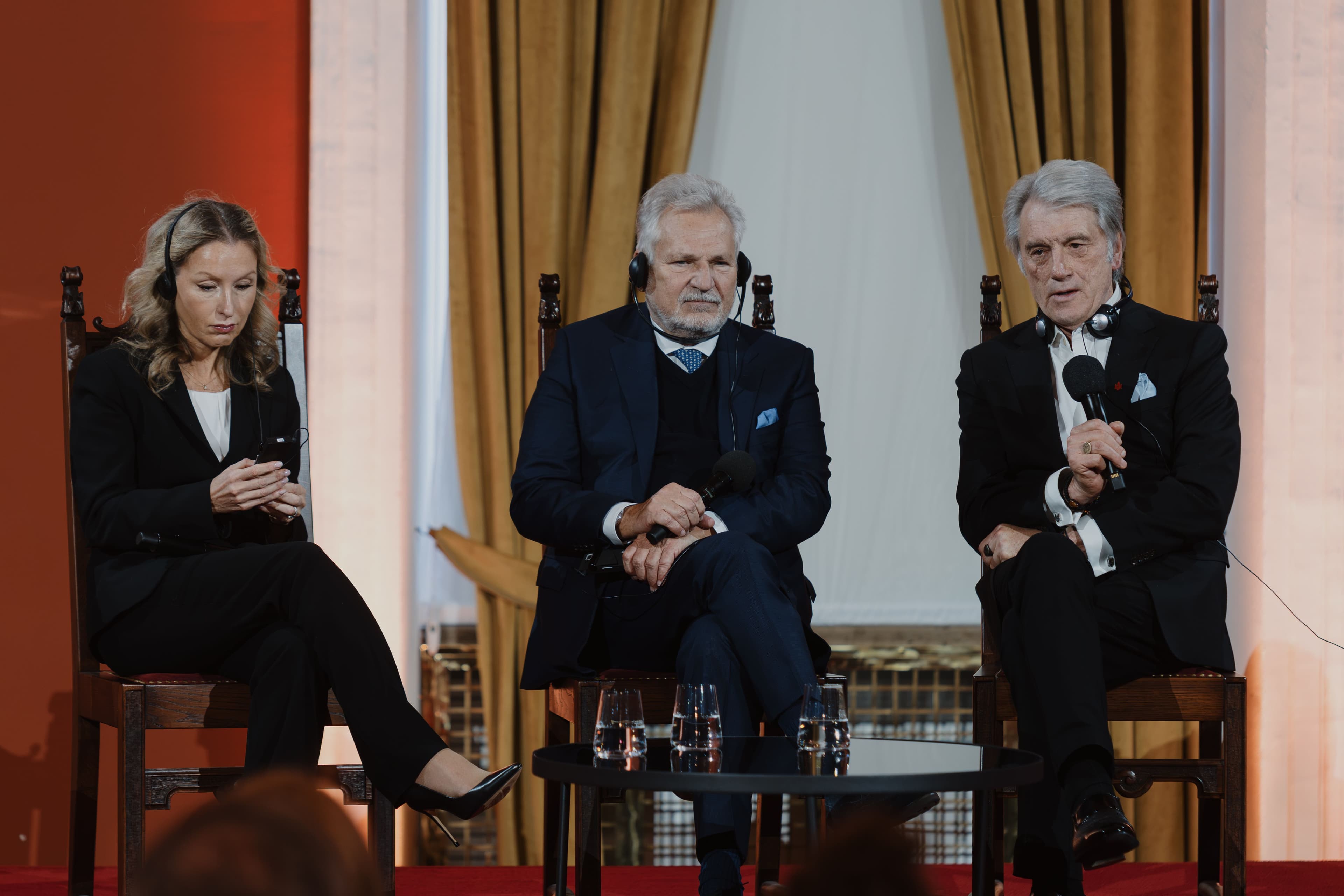
At a conference organised by Vilnius University and Vilnius City Municipality at Vilnius Town Hall on 3 November, the former Presidents of Poland and Ukraine, Aleksander Kwaśniewski and Viktor Yushchenko, reflected on the political legacy of President Valdas Adamkus, who is marking his 100th birthday. They discussed his role in international politics and Lithuania’s integration into Western structures. The former heads of state did not spare their criticism of present-day politics and acknowledged that ‘times are worse now’.
Former Polish President Kwaśniewski recalled his close relationship with Adamkus. According to him, the two Presidents often spoke by telephone and were united by similar values, political goals, and a determination to secure their countries’ place in the Western world.
‘Lithuania was very fortunate to be led by Adamkus, who combined different experiences – those of the independent Lithuania in which he grew up, of the later occupied and Sovietised Lithuania, and of the diaspora. In the end, he was able to pursue his aims in a Lithuania that had restored its independence. He was a very important figure on Lithuania’s road to NATO and the European Union. The two of us got on very well. I think we have similar temperaments, and we also had clear goals – we sought to integrate our countries into the Western world, to ensure their security through NATO membership, and to take advantage of the historic opportunity that opened up after the collapse of the Soviet Union,’ said Kwaśniewski.
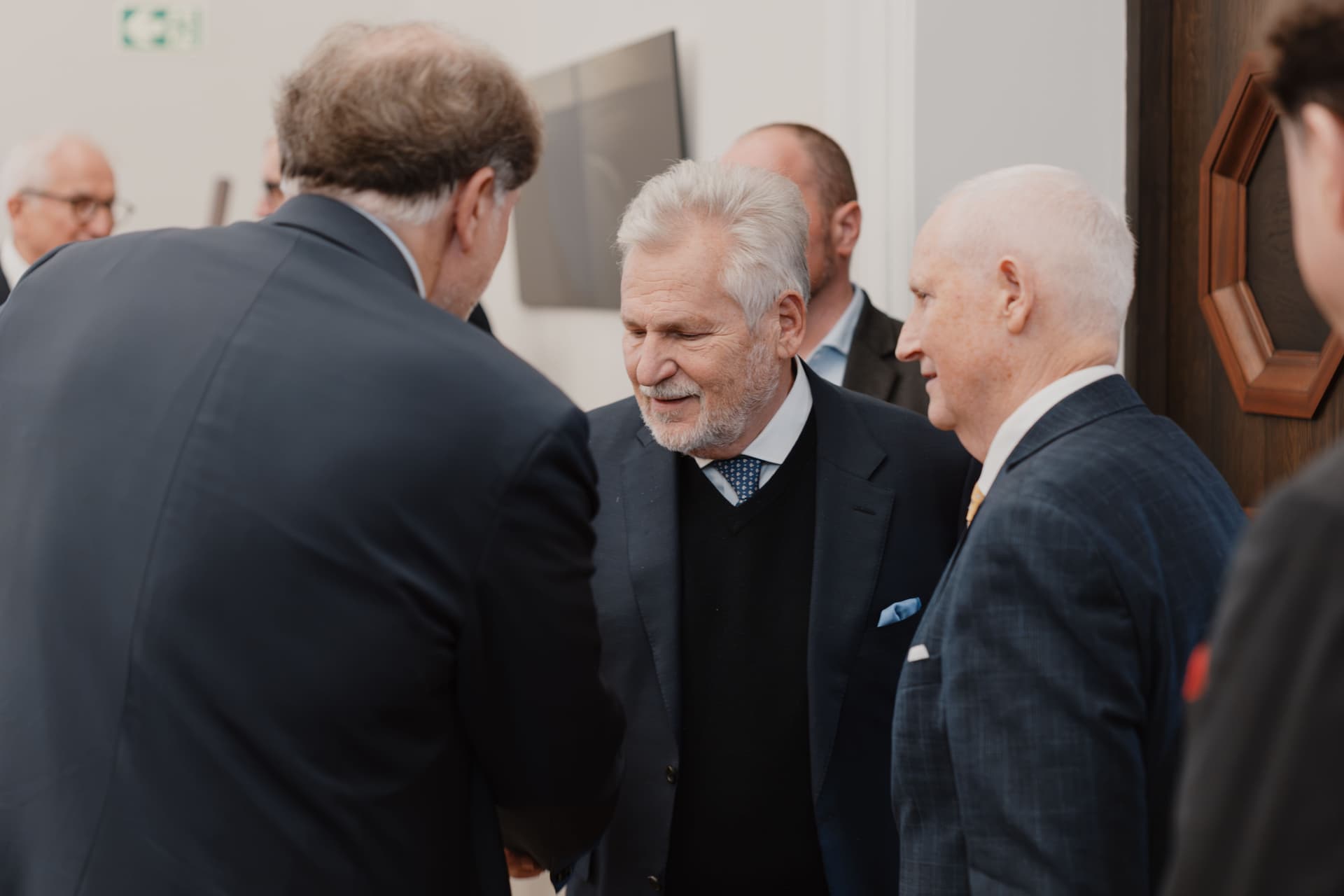
Yushchenko: ‘We love him’
Prof. Margarita Šešelgytė, Director of the VU Institute of International Relations and Political Science (IIRPS), who moderated the discussion, recalled that Adamkus and Yushchenko were brought closer by the Orange Revolution in Ukraine in 2004 and the political crisis that followed the presidential election. At that time, Adamkus, together with other international mediators, contributed to negotiations between Ukraine’s conflicting political forces.
‘When it became possible to involve international partners in Ukraine’s internal discussions, I proposed that President Adamkus and President Kwaśniewski represent Europe. They became important mediators in the discussions with the government of the time. Later, a request was made to involve Russia in these negotiations as well. You can imagine how great the polarisation between us and the authorities was at that time,’ recalled former Ukrainian President Yushchenko.
According to Yushchenko, Adamkus was distinguished by tact, diplomatic skill, and an exceptional ability to find ways out of complicated situations. But what impressed him most were the Lithuanian President’s decisions and the fact that he was always willing to help and never indifferent.
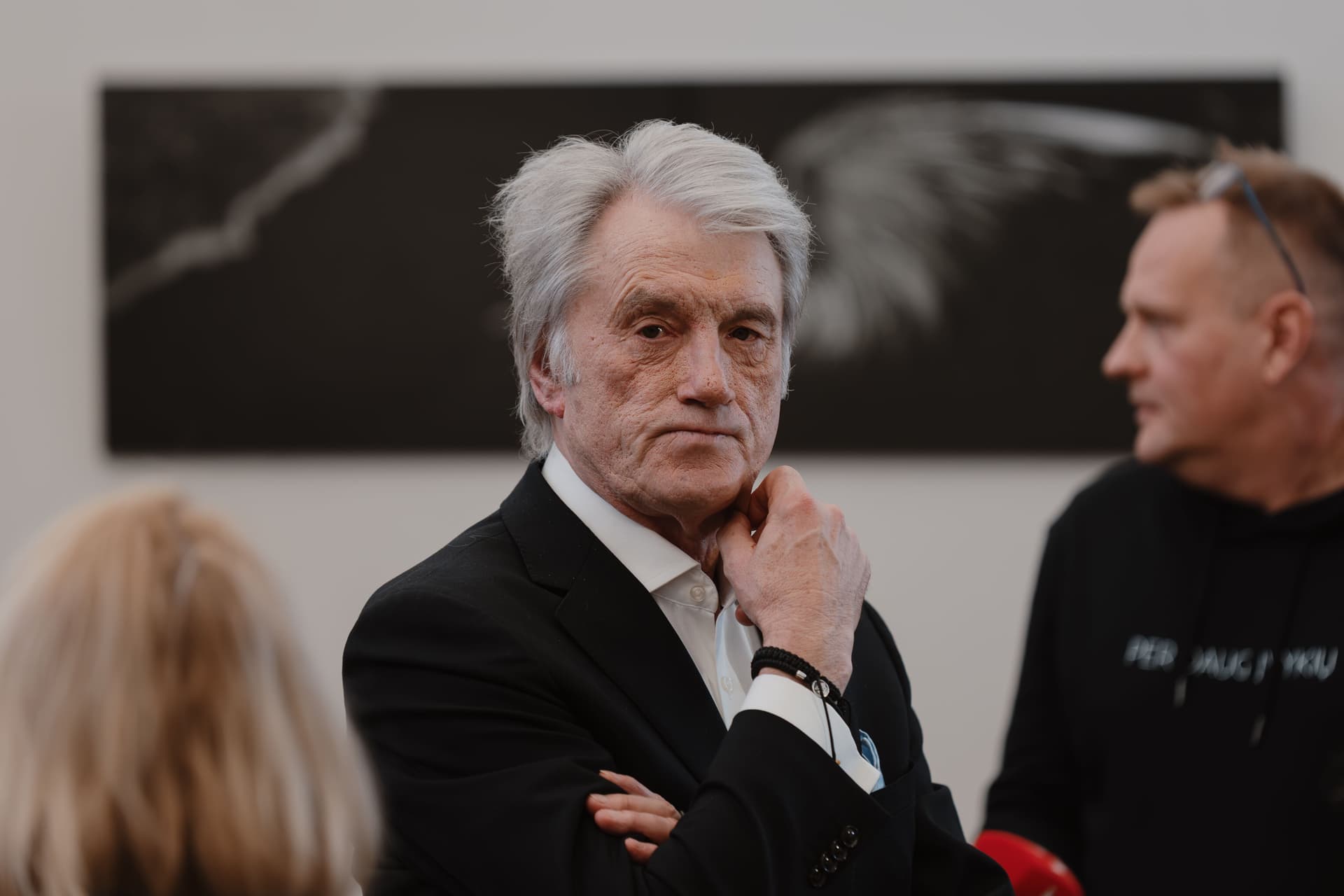
‘If you are experiencing troubles, he will be the first to come to you,’ the former Ukrainian leader said of Adamkus.
Yushchenko also recalled Russia’s military aggression in Georgia in 2008 and stressed that politicians such as Adamkus responded unequivocally to Moscow’s actions.
‘Adamkus’s role was enormous. We love him very much, and we love Lithuanians for their consistent position on both a human and a political level,’ said Yushchenko.
‘Times are worse now’
Speaking about today’s political situation, former Polish President Kwaśniewski acknowledged that the present times are more difficult than when he and Adamkus led their countries. According to him, three important elements of political life have fundamentally changed.
‘It is time to admit that times are worse now. Three elements have changed compared with the period when we were Presidents. First, the political paradigm that determined the success story of our time has gone. It was about seeking consensus, not radicalisation. From the Polish perspective, I can say that we would not have achieved NATO and European Union membership through the efforts of a single party alone. It had to be a cross-party goal that united society and different political forces. Through his character and readiness to engage, Adamkus sought consensus, harmony, and a sense of common purpose,’ said Kwaśniewski.
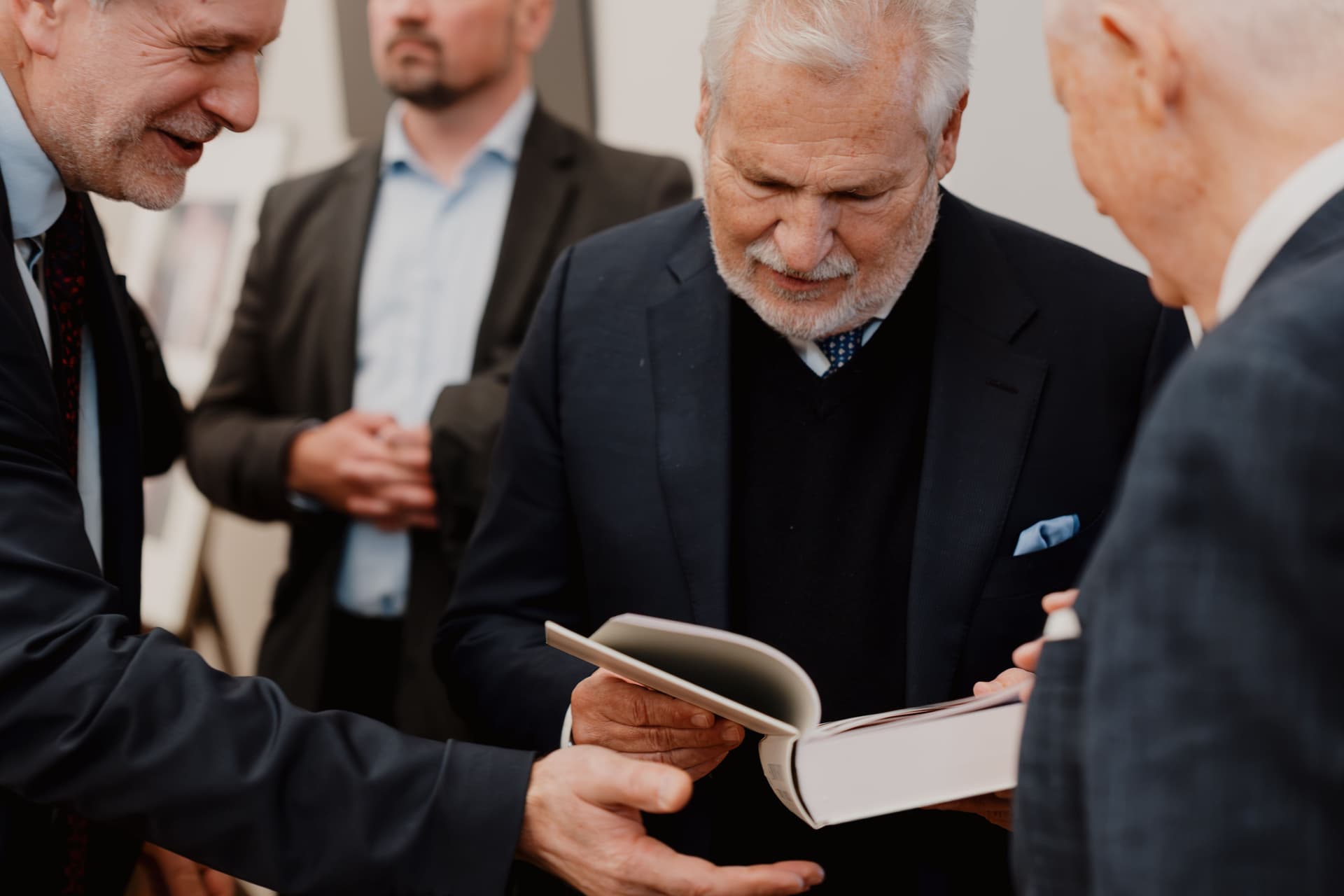
According to Kwaśniewski, politics today is marked by a growing inability to seek compromise and engage in dialogue. Treating political opponents as enemies makes compromise impossible – a development the former President described as dangerous. He also noted that the spirit of cooperation that emerged after the Second World War has been lost.
‘Russia never liked the international order that took shape after the Second World War. We saw this at the 2007 Munich Security Conference, and in Georgia and Ukraine. It would have been hard to imagine that a return to domination by the great powers would be encouraged by Washington. And yet Donald Trump’s presidency is contributing to the dismantling of this order,’ said the former Polish leader.
He identified information chaos and a crisis of trust in communication as the third threat. According to Kwaśniewski, it is increasingly difficult today to distinguish accurate information from falsehoods.
‘If I had to offer a recipe for good politics today to, say, the Polish President, he would not listen to me, so it would make no difference. But if I could advise the Lithuanian President, I would suggest this: politics cannot be merely a struggle for power or the pursuit of one’s goals at any cost. It must be rooted in values – freedom, care for people, progress, and peace throughout the world,’ said the former Polish President.
You can watch a recording of the conference here.