- 22 July 2026
- Gabija Strumylaitė
International Multidisciplinary Doctoral Summer School on AI Held at VU
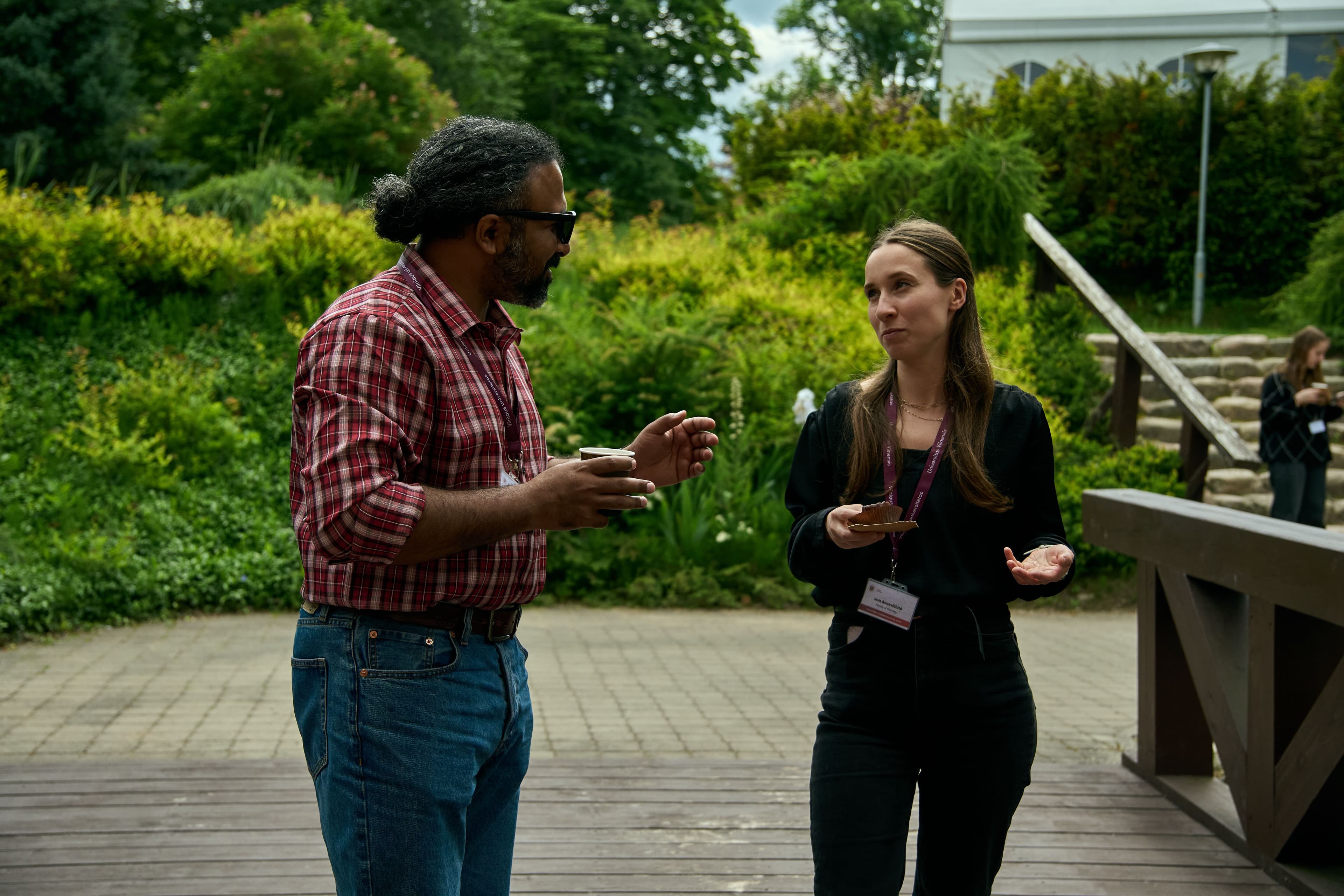
From 15 to 19 June, Vilnius University (VU) hosted its fourth International Multidisciplinary Doctoral Summer School at the VU Botanical Garden in Kairėnai. This year’s programme, “The Only Constant Is Change: AI in Research, Innovations and Careers”, brought together doctoral researchers from across the world to explore how artificial intelligence (AI) is transforming research, academia, and future career opportunities.
“We are delighted that the circle of our project partners expanded this year. In organising the summer school, we collaborated not only with colleagues from the Arqus Alliance but also with members of the Nordic AI Hub university network. We are especially grateful to Professor Virginijus Marcinkevičius, who introduced us to the network and helped establish this meaningful partnership,” said Gabija Strumylaitė, Doctoral Studies Coordinator and one of the organisers of the summer school.
Throughout the five-day programme, participants explored the role of artificial intelligence in research, innovation, and career development. During the first part of the project, experts from the VU Innovation Office – Juliana Schotte, Dr Kristina Babelytė-Labanauskė, Aistė Žvirblienė and Žiedūnė Kiznytė – introduced participants to the innovation journey, covering topics from developing research ideas and protecting intellectual property to market analysis, research commercialisation, startup development, and financial planning. During practical workshops, participants worked in interdisciplinary teams to develop their own ideas, then presented them to lecturers and fellow participants for feedback.
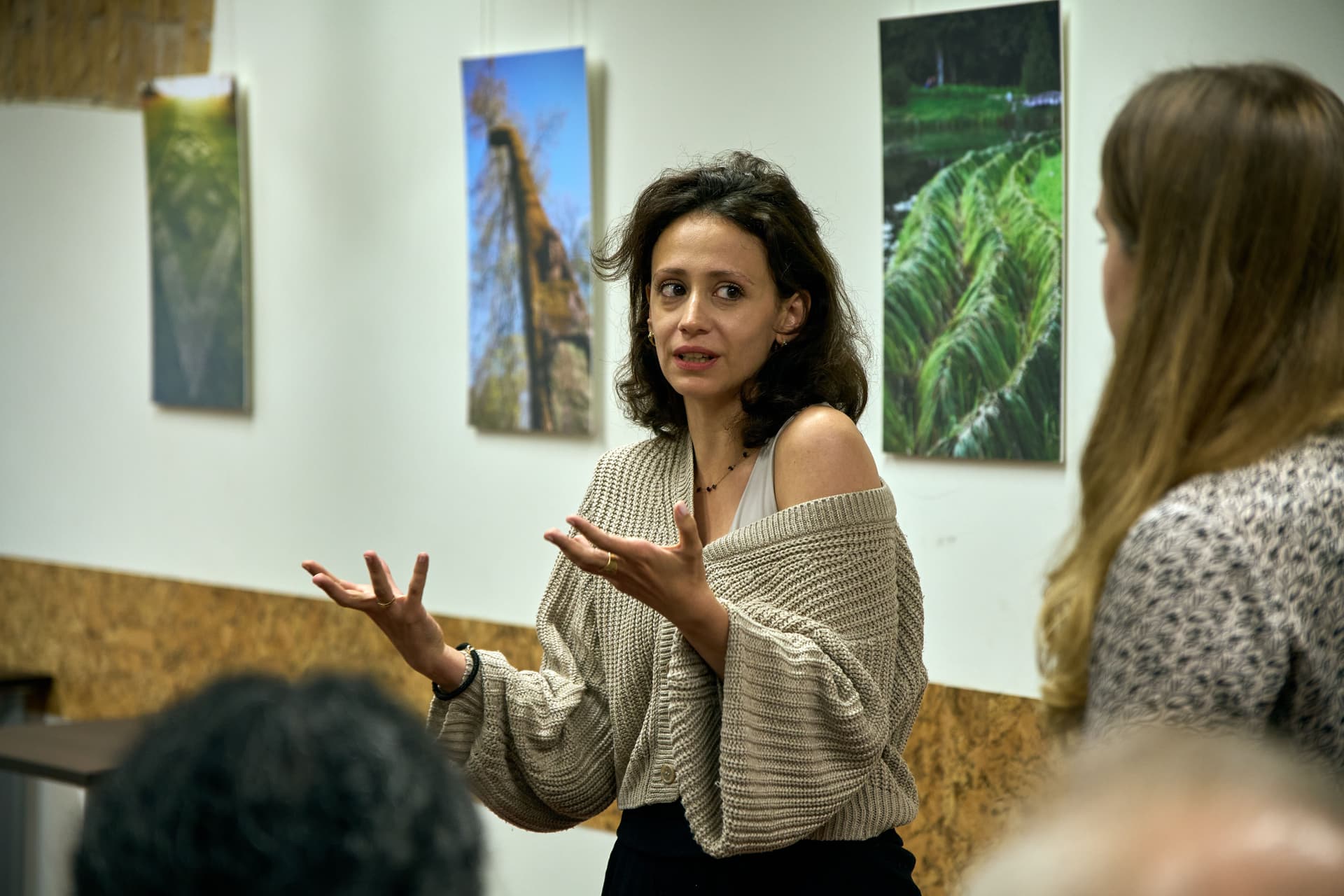
International Multidisciplinary Doctoral Summer School. Photo by Ignas Stankus.
The second part of the programme focused on artificial intelligence methods and their applications in research. Dr Tadas Žvirblis, researcher at the Faculty of Mathematics and Informatics, Vilnius University, introduced AI applications in engineering systems and unstructured medical data analysis, while Dr Arnoldas Budžys discussed the practical implementation of AI solutions and the fundamentals of cybersecurity. Leadership and organisational behaviour expert Dr Alisa Miniotaitė explored modern leadership in the age of artificial intelligence. International lecturers from the Nordic AI Hub network – Dr Andres Karjus (Tallinn University, Estonian Business School and University of Tartu), Dr Gorka Abad (University of Bergen), and Dr Andreas Møgelmose (Aalborg University) – presented AI applications in research, the challenges of model reliability, and best practices for working with AI and machine learning systems.
The summer school brought together 33 doctoral students from a wide range of academic disciplines. Among them were five early-career researchers from international higher education institutions: four from the University of Wrocław and Maynooth University, both partners of the Arqus Alliance, as well as one doctoral student from Østfold University of Applied Sciences, a member of the Nordic AI Hub. All participants who successfully completed the programme were awarded 3 ECTS credits in transferable skills.
From valuable connections to new opportunities
VU second-year PhD student in Political Science, Berta Jasiukėnaitė, joined the summer school with an open mind. Having never taken part in an event like this before, she was curious to see what the experience would be like:
“The week passed instantly, and it was really engaging, first of all because of the amazing people. The summer school attracted PhD students from various European universities and very different disciplines. I believe such formats are important for any PhD student because they allow you to understand a broader academic context, see that everyone’s in the same boat, and get some motivation.”
For Alejandro Mosquera Botello, a first-year PhD researcher in Information Systems at Maynooth University, one of the greatest strengths of the programme was its interdisciplinary approach:
“We discussed not only the opportunities it offers for research and innovation, but also its history, technical foundations, limitations, and the importance of using it responsibly rather than relying on it uncritically. I particularly enjoyed the sessions on research commercialisation, the connection between academia and industry, and the discussions around intellectual property.”
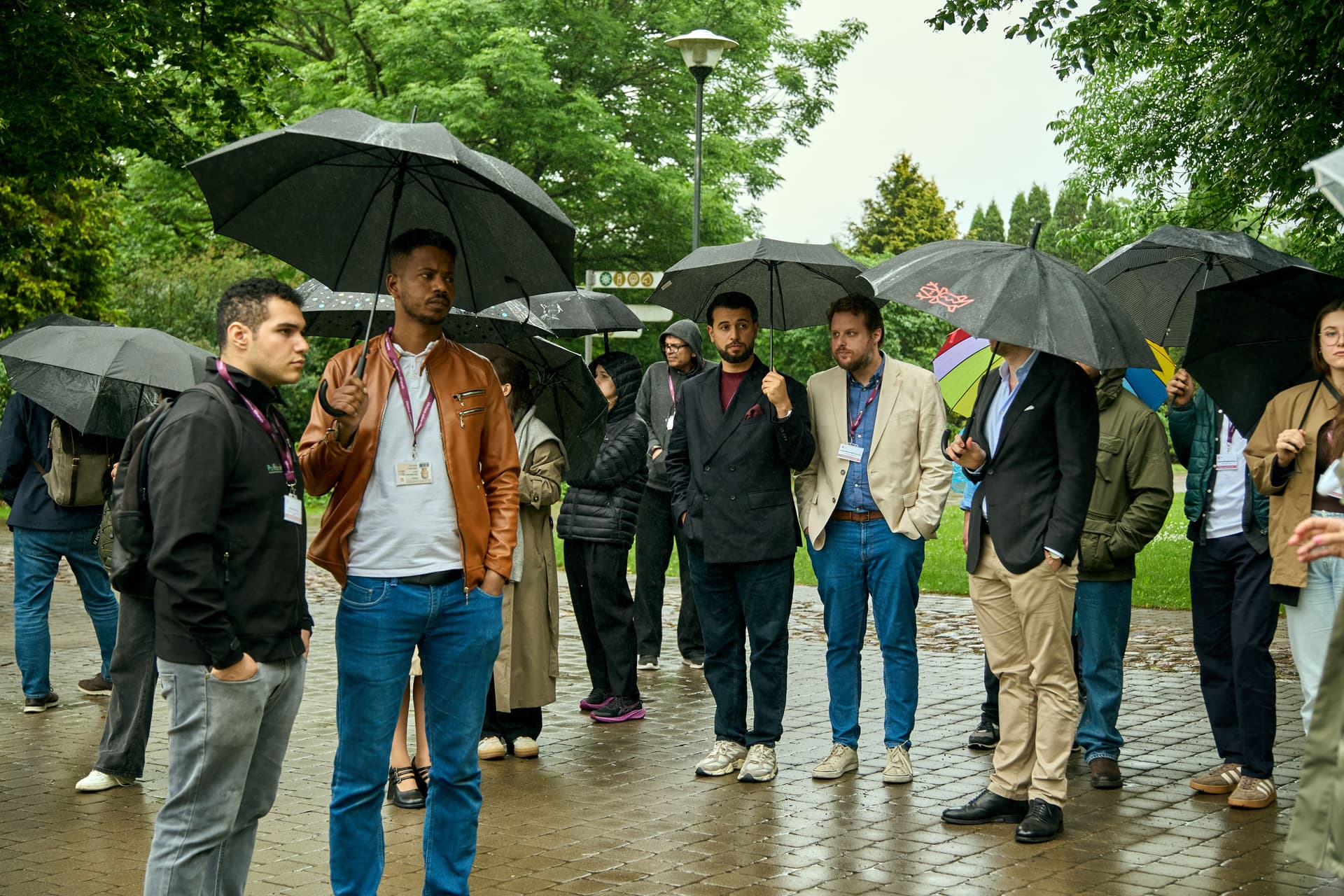
International Multidisciplinary Doctoral Summer School. Photo by Ignas Stankus.
Aung Khant Min, a first-year PhD student in Political and Administrative Sciences at the University of Wrocław, shared a similar view:
“The workshops were engaging, and the specialists, technicians, and professors were highly professional and inspiring. I also really enjoyed the city. Everyone was very warm and welcoming, and the Botanical Garden was especially beautiful. Overall, the summer school was an enriching experience, both academically and personally, and I am very grateful to have had the opportunity to participate.”
The summer school also welcomed Farhan Khalique Awan, a third-year PhD researcher in Engineering at Østfold University of Applied Sciences, a member of the Nordic AI Hub network. He particularly appreciated the collaborative nature of the programme:
“One of the highlights for me was how welcoming and approachable everyone was. I left not only with new professional connections but also with new friends and opportunities. I really enjoyed the way the course encouraged us to work together to solve problems and present our ideas as a team. And of course, spending a week in Vilnius was a bonus in itself. It’s a beautiful city, especially the Old Town, and I genuinely can’t wait to come back.”
The activities of the doctoral school are partially funded under the project: “Strengthening the Competences of Innovation and Technology Transfer Centers.” Nr. 10-031-P-000