- 17 November 2026
- Benita Kaselytė
What Can Your Smartwatch Tell Doctors About Your Health?
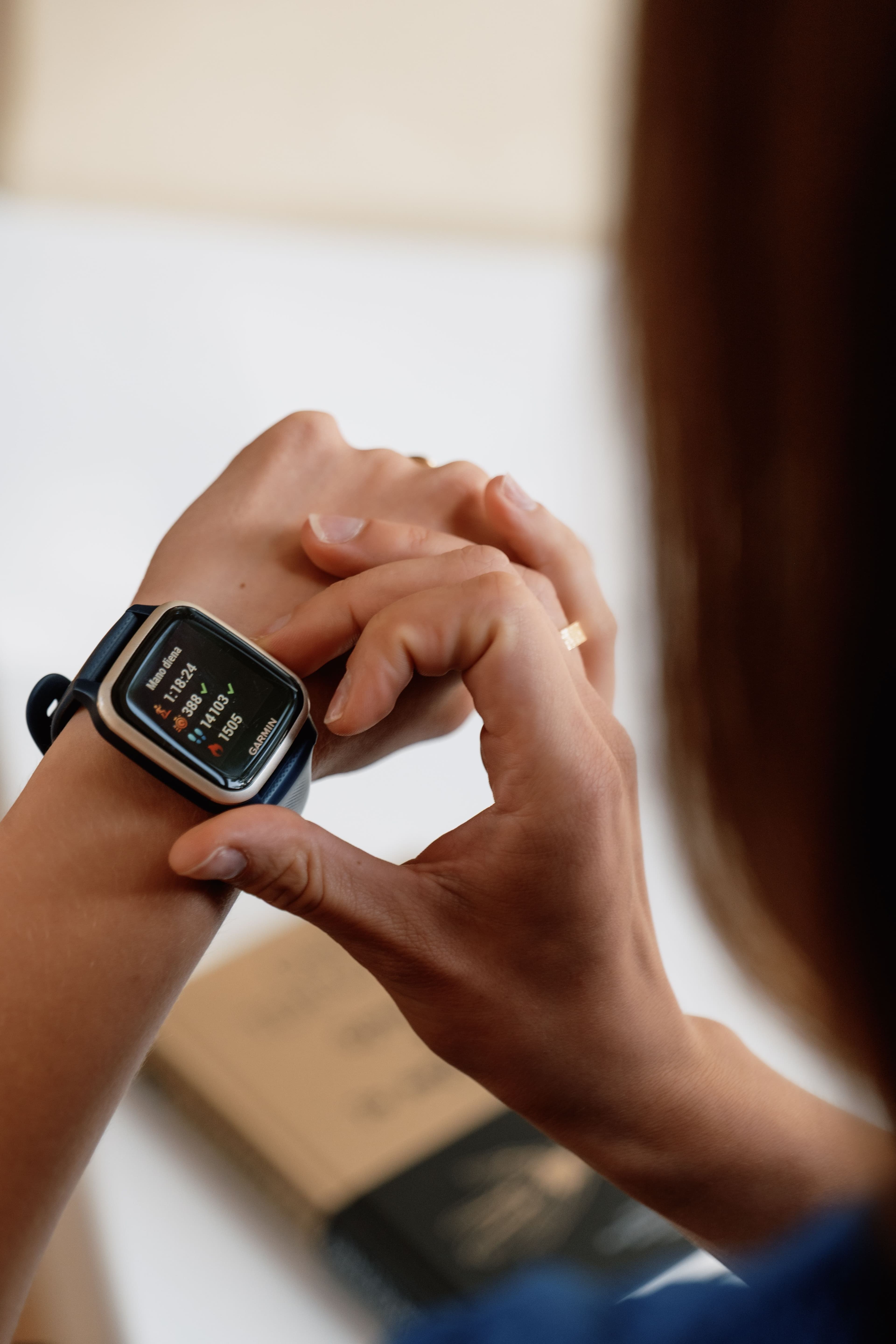
For many people, a smartwatch has become an integral part of daily life. It tracks steps and heart rate, reminds users to get moving, shows how long they have slept, and sometimes alerts them when their activity levels decline. For many, it is a convenient tool for monitoring their well-being and maintaining healthier habits. In medicine, however, such data can offer far more than personal statistics on a smartphone screen.
‘Every minute of every day, a person takes a certain number of breaths, their heart beats at a particular rate, they move, and their body temperature changes. We can track these measurements and respond accordingly. This is particularly important in medicine, as it allows us to act on changes proactively and immediately,’ said Assoc. Prof. Audrius Dulskas of the Faculty of Medicine at Vilnius University.
The ‘virtual ward’: keeping a close eye on the patient’s condition
Surgeon Audrius Dulskas and his team are conducting a clinical study to explore how data collected by wearable smart devices could enable safer monitoring of patients after treatment or surgery. Study participants wear smartwatches and other sensors that transmit the data they collect to a dedicated platform where doctors can track changes in each patient’s condition.
The study is not primarily concerned with the technology itself, but rather with how it could transform patient care once a person is well enough to return home but still requires close monitoring. In surgery, the postoperative period is particularly critical, as this is when fever, infection, sepsis, wound reopening (dehiscence), and other complications may occur. Because of these risks, patients are often hospitalised for longer, even though their stay does not necessarily involve active treatment.
‘Keeping a patient in hospital is not always justified in itself. What matters most is detecting any deterioration in their condition early enough,’ noted Assoc. Prof. Dulskas.
According to him, this is where the concept of the ‘virtual ward’, or ‘hospital-at-home’, comes in. While the patient remains at home, healthcare professionals continue to monitor their vital signs and activity levels. This could allow patients to leave hospital sooner, with doctors still able to detect any significant changes in their condition.
‘The aim of our clinical study is to provide patients with smart devices and discharge them so they can recover at home. They then receive care through what is known as a virtual ward – in other words, a hospital-at-home. We can access the data collected passively by their devices and receive an alert whenever any reading falls outside the normal range,’ explained the Associate Professor.
The study currently involves 110 participants. Their data is helping researchers understand which changes may be clinically significant and which are merely temporary and harmless bodily responses. This is crucial for ensuring that, in future, the system does more than just gather information: it should also help doctors recognise when intervention is necessary.
What is a digital phenotype?
In medicine, profiling all the information reflecting a patient’s condition is known as digital phenotyping. In simple terms, a digital phenotype is a collection of data that provides insight into how a person’s body functions and how they behave in everyday life – not only when they visit a doctor or receive inpatient care.
‘A digital phenotype is first and foremost about data and numbers. Essentially, this data is not all that different from the information we use routinely in medicine. The main difference is that passively collected data can be viewed in real time,’ remarked Assoc. Prof. Dulskas.
This, according to the surgeon, is where the most important shift lies: instead of seeing only an isolated measurement, doctors can observe how a patient’s condition evolves over time.
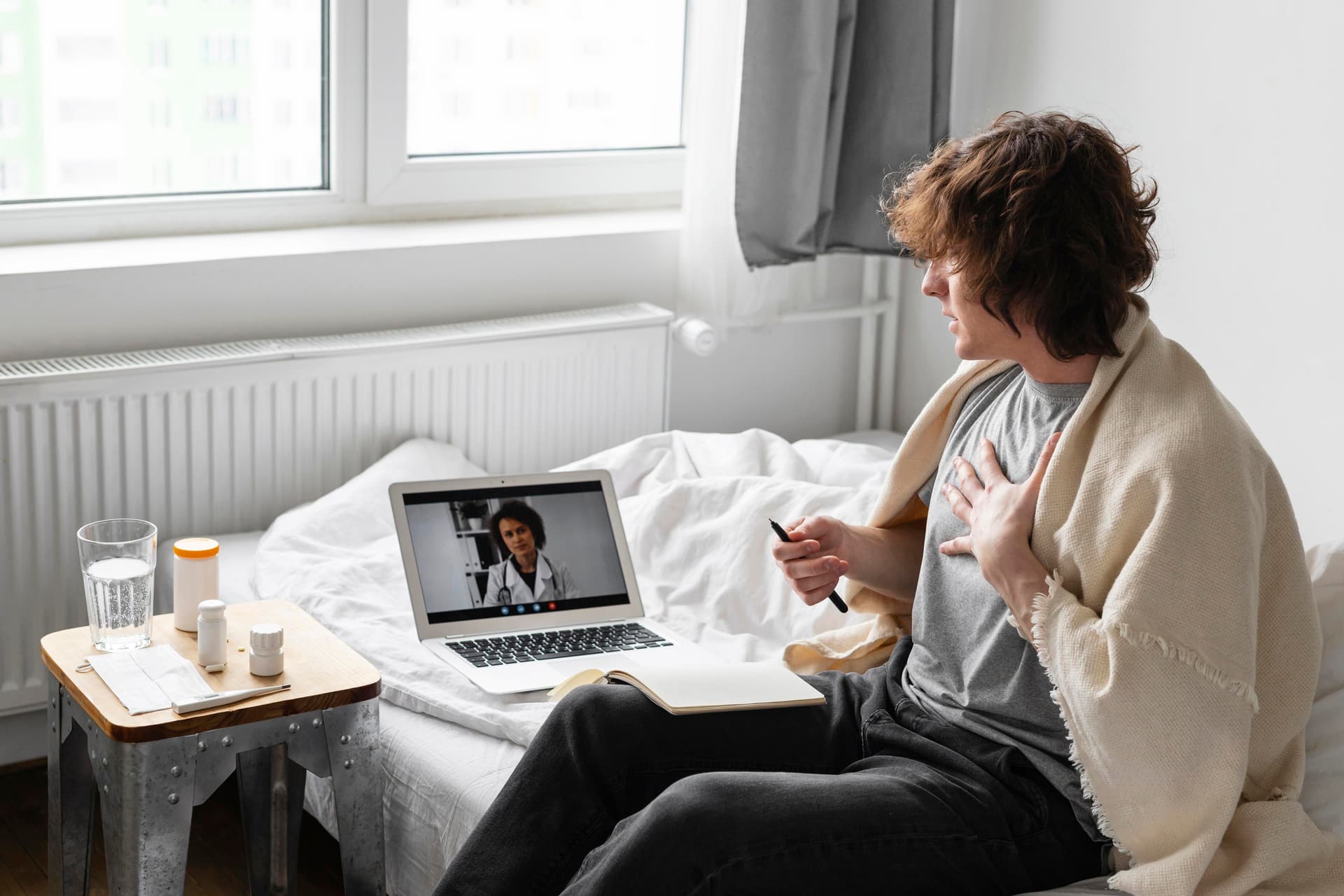
‘Normally, when a patient visits a doctor or is admitted into hospital, unless they are in an intensive care unit, their vital signs and other health indicators are measured only at specific intervals: once a day, once a week, or only during the appointment itself. The central innovation of our clinical study is that we can monitor this passively collected data continuously,’ the researcher explained.
Therefore, the value of a digital phenotype lies not in any single measurement but in the wider context in which it appears. Doctors need to understand whether a change is temporary or persistent and whether it coincides with changes in other indicators. A one-off increase in heart rate may result from physical activity or emotional arousal, whereas a deviation that persists over a longer period may signal that the patient’s condition requires closer attention.
When data warns of a problem before symptoms appear
One of the study’s key goals is to determine when data collected by smart devices goes beyond mere statistics and begins to serve as an early warning. This is particularly important after surgery: complications often develop gradually, and the body may begin to signal a problem before it becomes apparent.
‘For instance, a patient develops a fever, their heart rate increases, and their blood pressure falls. As soon as any reading moves outside the normal range, we receive an alert. We can then check the platform to see whether it was an isolated, very brief change, or whether it has persisted for longer – let’s say, for several hours,’ explained the researcher.
Such alerts are valuable in medicine because they can give doctors more time to respond. The earlier a potential risk is identified, the greater the opportunity to assess the situation, contact the patient, or decide whether additional care is needed.
‘In some cases, the risk of a complication can be noticed around six to twelve hours before it develops. By the time a complication actually occurs, it is, in a sense, already too late – somewhere along the way, we have failed to detect a change in one of the patient’s readings,’ said the surgeon.
However, an alert is not in itself a diagnosis. Assoc. Prof. Dulskas recalls a case in which the system flagged an elevated heart rate in one of his patients. Yet what mattered most was not simply the number displayed on the platform, but how long the increase lasted and what the patient himself reported.
‘I received an alert that one patient’s heart rate had been elevated for about half an hour. I called him, and he said, “I feel fine, I don’t have a fever, and I checked my blood pressure – everything’s fine”. It turned out that he’d had a panic attack. He was actually doing breathing exercises at the time, trying to calm himself, and I could see on our platform that his heart rate was gradually returning to normal.’
This example shows that a digital phenotype cannot replace a doctor’s clinical judgement. Instead, it provides an additional layer of information by helping medical professionals detect a change, assess how long it lasts, compare several indicators, and contact the patient if necessary.
What can your step count reveal?
When we think about health monitoring, the first things that usually come to mind are heart rate, blood pressure, and temperature. However, Assoc. Prof. Dulskas emphasises that a seemingly straightforward measure – the number of steps taken – can also provide valuable insights.
The first phase of the study involved patients undergoing radiotherapy for brain tumours or metastases. The researchers assessed how active each patient was: how much time they spent using their mobile phone, how much they moved, and how many steps they took.
‘We found a very strong correlation between reduced mobile phone use, a lower step count, and the patient’s prognosis. Patients whose activity levels declined tended to have worse outcomes.’

This example shows that changes in health do not necessarily begin with an obvious symptom. Sometimes the first sign may be far more ordinary: a person walks less or is less active, gets tired more quickly, or their daily routine begins to change. The individual may not notice such a subtle shift, but it becomes apparent in the data.
‘This brings us back to the vast amounts of passively collected information and AI models that rely heavily on such data. With sufficient information, we can predict certain changes before they occur,’ noted the surgeon.
According to him, the value of such data is not limited to identifying signs of disease. It can also provide insight into an individual’s personal rhythm – what is normal for a particular patient and what may already indicate a change.
‘A digital phenotype allows us to observe a patient’s usual individual pattern of daily life – how their heart beats, how many steps they take, and their level of physical fitness. That’s why we have also adopted certain practices from professional sport,’ explained Assoc. Prof. Dulskas.
The Vilnius University researchers also intend to incorporate step-count data into patients’ medical records. Doctors would then be able to view both laboratory test results and a report on the patient’s physical activity.
‘We are becoming one of the first teams in Lithuania – and perhaps even worldwide – to incorporate this kind of activity data into medical records. They will contain a step-count report, just as they currently contain laboratory test results.’
Treatment as a marathon
According to the researcher, surgery is not merely an isolated event in the operating theatre – it places considerable demands on the body and requires preparation. The better doctors understand a patient’s physical capacity, the more accurately they can determine what support the patient will need before and after treatment.
‘In some respects, treatment – particularly surgery – is like running a marathon. You need to be ready for it. Once we have established the patient’s baseline – their usual step count, heart rate, blood pressure, and physical capacity – we can tailor physical activity or exercise to their individual needs,’ explained the Associate Professor.
This means that a digital phenotype may be useful not only when a patient’s condition is deteriorating; it can also help patients actively prepare for treatment by building endurance, strengthening cardiovascular and respiratory function, and lowering the risk of complications.
‘In this way, we can increase patients’ endurance and improve their respiratory and cardiovascular capacity, reduce the number of postoperative complications, and prolong survival,’ said the doctor.
Thus, seemingly simple data – how much a person moves, how their heart rate changes, and their level of physical fitness – can become part of both monitoring and clinical decision-making. Rather than presenting doctors with isolated measurements, the data helps them build a fuller picture of the patient as an individual, with their own habits, physical capacity, and specific risks.
Data must be collected – and validated
One question frequently raised about smart devices is whether the data they collect is accurate enough to be used in medicine. Assoc. Prof. Dulskas acknowledges that every device has a margin of error. The study, therefore, combines monitoring with calibration of the measurements.
‘Every device still has some degree of inaccuracy. That’s why we also carry out calibration. Even when measuring blood pressure or temperature, it is important to recognise that temperature readings, in particular, can vary considerably depending on where and under what conditions they are taken,’ the researcher observed.
In the study, readings from patients’ own devices are compared with standardised measurements. This helps the researchers establish how closely each reading reflects the actual physiological parameter.
‘At certain intervals, we sent patients reminders to measure their blood pressure or temperature using a different standardised device. We could then calculate the relevant correction factors. One of the most important aspects of our study was determining coefficients that could be used to calculate the patient’s actual temperature, blood pressure, and other measurements.’
In medicine, the aim is not merely to gather as much data as possible, but to understand what the data actually means. A smartwatch is not a diagnostic device in itself; nevertheless, once its data has been properly validated and interpreted, it can offer medical staff valuable additional insight.
Technology brings us back to basics
Although the study conducted by Assoc. Prof. Dulskas and his team explores the future of medicine – virtual hospitals, passively collected data, and early-warning systems – the surgeon repeatedly comes back to the fundamentals we are familiar with: physical activity, sleep, fitness, and prevention.
He describes physical activity as one of the most accessible ways to take care of our health. It calls for neither expensive equipment nor complicated solutions, although it does require consistency: ‘Physical activity is available to everyone and costs nothing – apart from willpower, which is probably the most costly part.’
The doctor notes that the importance of physical activity is becoming increasingly evident even in cancer care: ‘A study in oncology involving patients who had undergone surgery and chemotherapy was published very recently. Among those who remained physically active, survival improved by around 10%. That is a very substantial difference.’
A digital phenotype is therefore about more than technology alone. It demonstrates that everyday factors – the number of steps taken, a decline in activity, sleep, and overall physical fitness – can become medically meaningful signals. In some cases, they help doctors identify risks sooner; in others, they help patients prepare better for treatment; while for a healthy person, they can serve as a reminder that good health often begins with small daily actions.
‘If you notice that you never get enough sleep, start by going to bed ten minutes earlier the next day. The same principle applies to your step count: if you are currently taking 2,000 or 3,000 steps a day, do not immediately jump to 10,000, as this would place stress on your body. Start by adding just another thousand,’ Assoc. Prof. Dulskas advised.