- 20 August 2026
- Aušra Kudirkaitė
Lithuania's Partnership with CERN: Driving Scientific Excellence, Innovation and Talent Development

The technologies developed at the European Organisation for Nuclear Research – CERN – often extend beyond the laboratory walls. The cutting-edge research carried out there not only deepens our understanding of the Universe, but also drives innovation, which ultimately finds its way into our everyday lives. None of this would be possible without the contributions of thousands of scientists from a wide range of disciplines across the globe.
“This collaboration is no longer just a matter concerning physicists; it has long crossed university boundaries. CERN is part of European society – each of us contributes to it and can benefit from what it has to offer. We often don’t even realise that the technologies and knowledge used in hospitals, businesses or even schools were developed at CERN,” says Ramūnas Aleksiejūnas, a professor at Vilnius University (VU) and Executive Director of the Lithuanian Consortium for Particle Physics.

Innovations transforming everyday life
Located on the border between Switzerland and France, it is the world’s largest particle accelerator complex and the world’s largest research laboratory. According to VU researchers, CERN is important not only for fundamental research that helps to uncover the secrets of the Universe.
“Technologies developed at CERN are now used in modern cancer diagnosis and treatment, advanced big data processing, radiation measurement in a wide variety of environments – from hospitals to space stations – the manufacture of state-of-the-art semiconductor detectors, and other important fields. It is one of the world’s most powerful accelerators for the development of high technology, innovation and talent. CERN’s contribution to Lithuania, just as Lithuania’s contribution to CERN, creates added value in many areas,” says Prof. Aleksiejūnas.
The knowledge and technology developed at CERN are made available to the world free of charge – through open-access articles and experimental data, technological know-how transferred to companies, and openly accessible resources for teachers and their students.
“For example, CERN has developed a new technology using ultra-pure radionuclides for the treatment of cancer and has already carried out pre-clinical trials. CERN is conducting research on cloud formation – this knowledge is essential for understanding climate change and tackling global warming. CERN is the only organisation in the world capable of recreating the same radiation environment as found in Jupiter’s clouds, which is essential for the development of satellites. The MEDPIX semiconductor detector developed by CERN has already generated 72 patents and over €100 million in value for the companies developing it. This list could go on and on,” notes the VU professor.
If you are reading this text on your mobile phone, you are also using CERN technologies – touchscreens and the World Wide Web were invented at CERN several decades ago and have become part of everyday life for people all over the world. “This can already be considered history. Today, when we talk about high technology, we associate CERN with European innovation. The fields of electronics and photonics, semiconductors, lasers and optics, as well as the development of machine learning and digitalisation – these are areas where the contribution of Lithuanian scientists is particularly significant. We create value; we don’t just reap it from CERN,” explains VU Professor Tomas Čeponis.
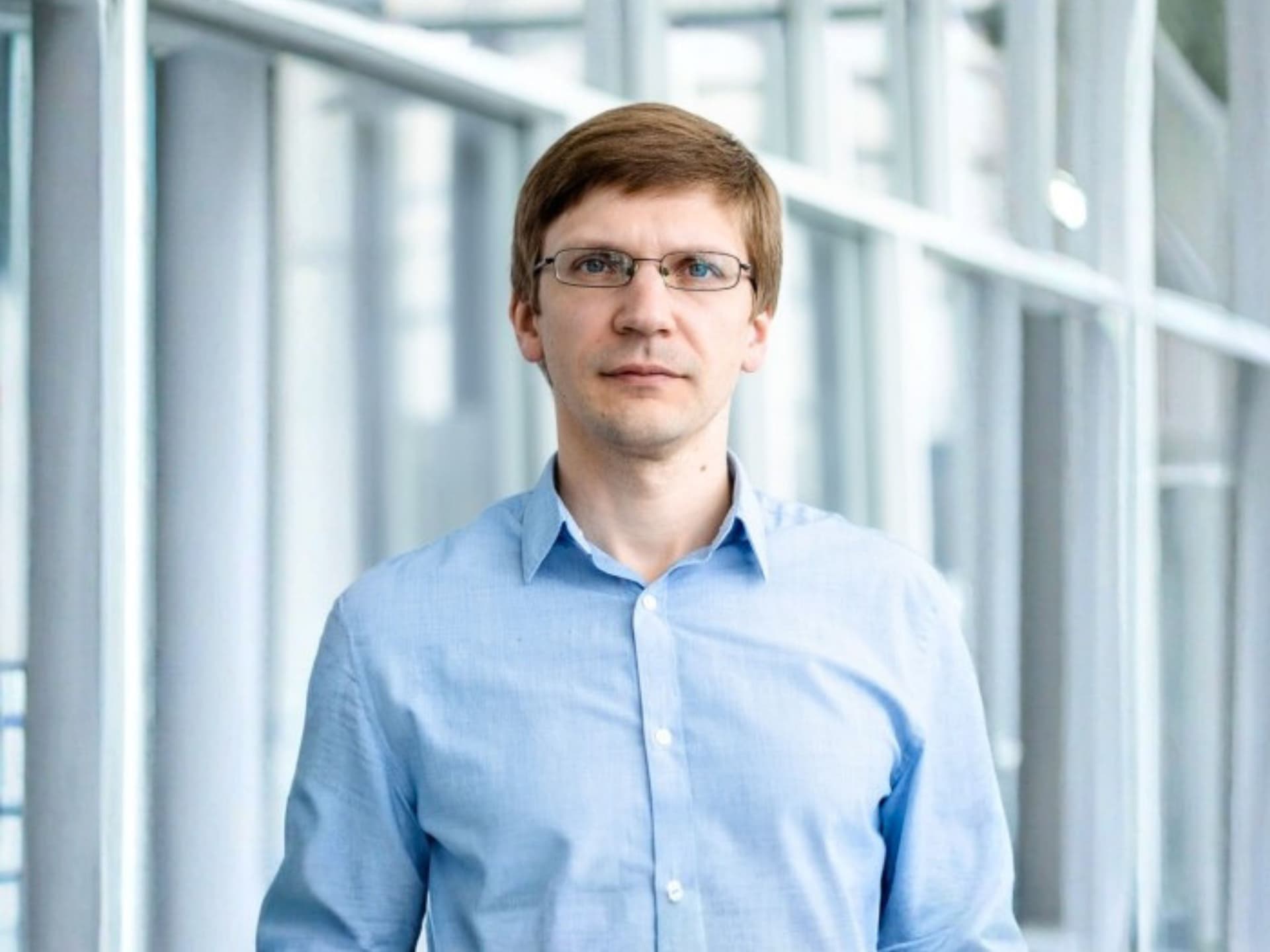
Lithuania has been an associate member of CERN since 2018 – the first of the Baltic states to achieve this status. Associate membership has opened up opportunities for Lithuania to participate in the organisation’s activities and to benefit from the opportunities it offers – albeit with certain restrictions. “Only full members can enjoy all the benefits offered by CERN. Lithuania is currently still striving to achieve such membership. Lithuanian businesses are also interested in this, as they are currently the ones most affected by the restrictions. Full membership would remove the limits on the volume of contracts from a single country, which applies to associate members,” explains Prof. Aleksiejūnas.
One hundred researchers from Lithuania
Over the past few years, VU’s collaboration with CERN has expanded significantly. “Today, around a hundred Lithuanian scientists and PhD students are involved in CERN’s activities. If we include students who work with CERN data, this figure would increase considerably,” says the Executive Director of the Lithuanian Consortium for Particle Physics.
One of the most striking examples of Lithuania’s growing involvement is VU’s becoming an official participant in the LHCb experiment in September 2024. Today, the majority of the LHCb Vilnius group consists of students, from undergraduates to PhD candidates. However, the activities carried out within the LHCb experiment are just one important part of a wider picture.
“There are dozens of colleagues at Vilnius University alone who contribute to CERN’s work through their activities. Colleagues from the Faculties of Physics, Mathematics and Informatics, Chemistry and Geosciences are the most actively involved. VU participates in the Compact Muon Solenoid (CMS) and LHCb experiments, as well as in several Detector Research and Development (DRD) programmes. It is also involved in the development of semiconductor and laser application technologies, the improvement of methods for the production and characterisation of scintillator materials, software development, and the expansion of open data. Expertise is brought together at various levels," emphasises Prof. Aleksiejūnas.
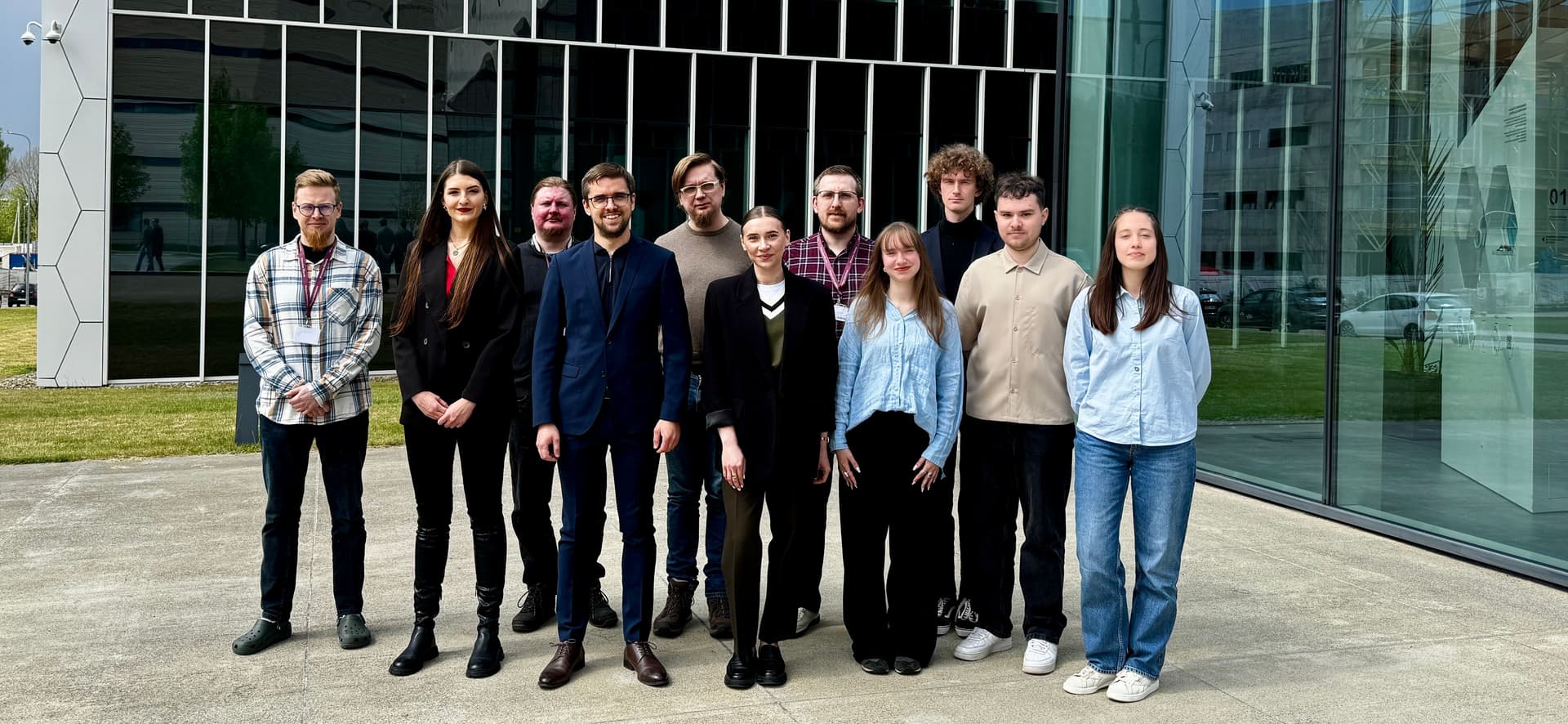
According to him, scientists, engineers and doctors from Kaunas University of Technology, the Lithuanian Energy Institute and the Lithuanian University of Health Sciences are also very actively involved in CERN’s activities. Such collaboration has long been an integral part of the work of Lithuanian scientists.
“It may sound unbelievable, but groups of scientists scattered across the globe are working with vast amounts of data and cutting-edge technology, and they can do so even from their own kitchens. Perhaps most meaningful is that we are working in Lithuania – at Vilnius University, for example – and representing our own research institutions at CERN. Whether it’s physics, engineering, material science, computer science or data science, we’re all united by common goals,” says Rūta Racz, a PhD student at the Faculty of Physics.

Shaping the future today
This summer, the largest number of VU students are undertaking summer placements at CERN, with 13 of them taking part in various activities. “Nurturing talent is an important part of CERN’s work. It is not limited to students or the youngest scientists. Activities for schoolchildren are organised several times a year, and international masterclasses attract hundreds of them. Teacher training trips to CERN are also organised every year,” explains Dr Mindaugas Šarpis, head of the VU LHCb Vilnius group.
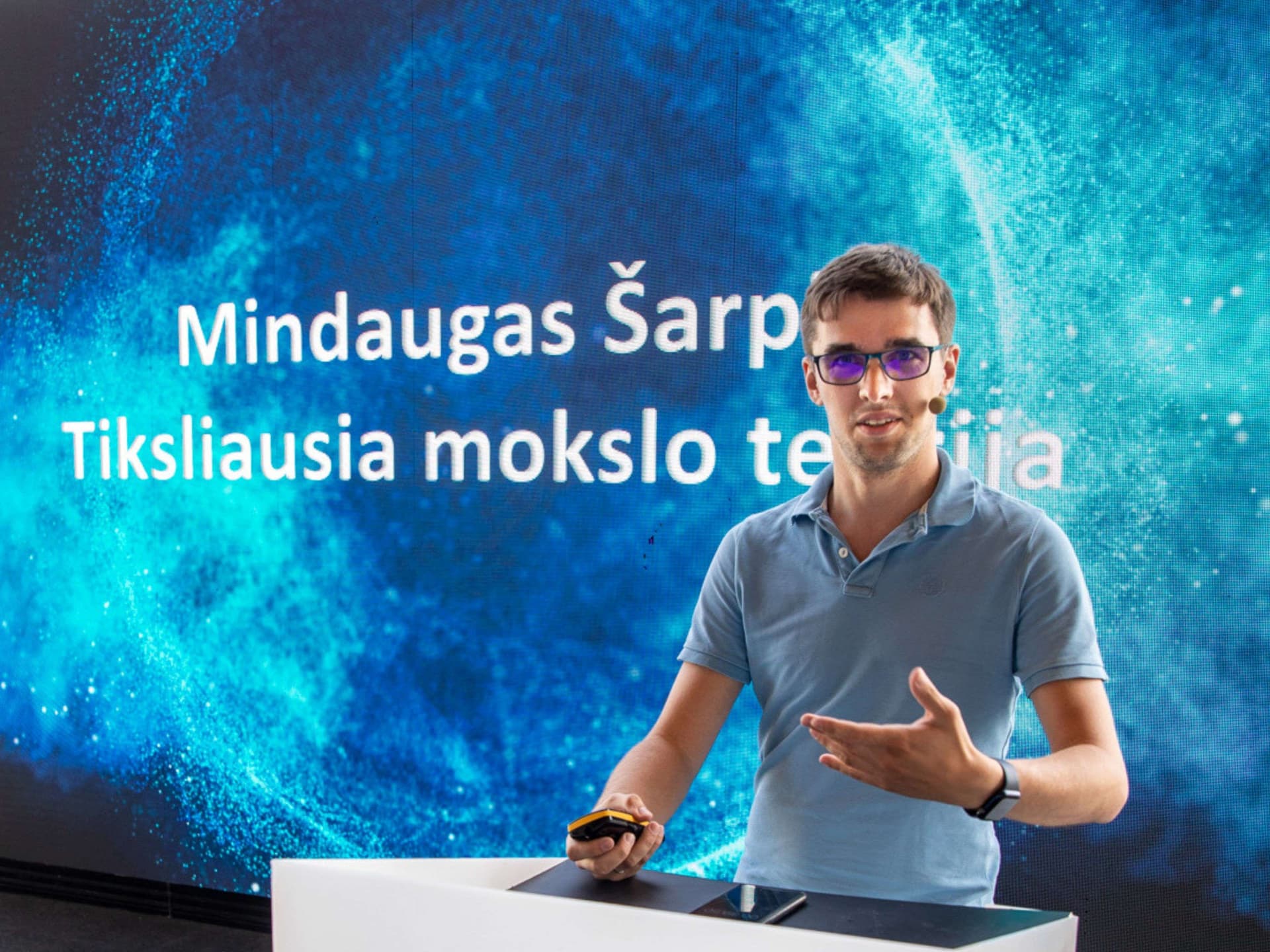
Lithuanian scientists engaged in research and academic activities are also actively involved in the aforementioned educational fields. This did not go unnoticed by CERN and enabled Lithuania to win the opportunity, in an internal LHCb competition, to host the annual main LHCb conference ("LHCb Week"), which will take place at VU from 14 to 18 September.
According to scientists at LHCb Vilnius, several hundred physicists from around the world will visit Lithuania for the first time. They will not only present the latest results from the LHCb experiment but also discuss the forthcoming € 150 million upgrade of the experiment’s detectors, in which Lithuania will also participate. “It is gratifying that Lithuanian institutions fully understand the importance of this event – a great many companies, the Ministry of Education, Science and Sport, and the Research Council of Lithuania have agreed to support it. The conference is held under the patronage of the President of the Republic of Lithuania,” says Dr Šarpis.
The CERN laboratory symbolises collaboration based on the fastest and most advanced technologies, which makes it possible to observe processes so rare and so rapid that they are difficult to comprehend. Through the collaboration of hundreds of scientists and engineers, each upgrade brings new equipment and computational methods that make possible what was impossible just yesterday. “Together with CERN, we are shaping the future today. I would like to see Lithuania become even more involved in joint activities, working alongside CERN to develop new technologies, services and products,” concludes Prof. Čeponis.