- 26 August 2026
- Life Sciences Center
Lithuanian-Ukrainian Research Team Develops Biosensor for Rapid Kidney and Liver Testing
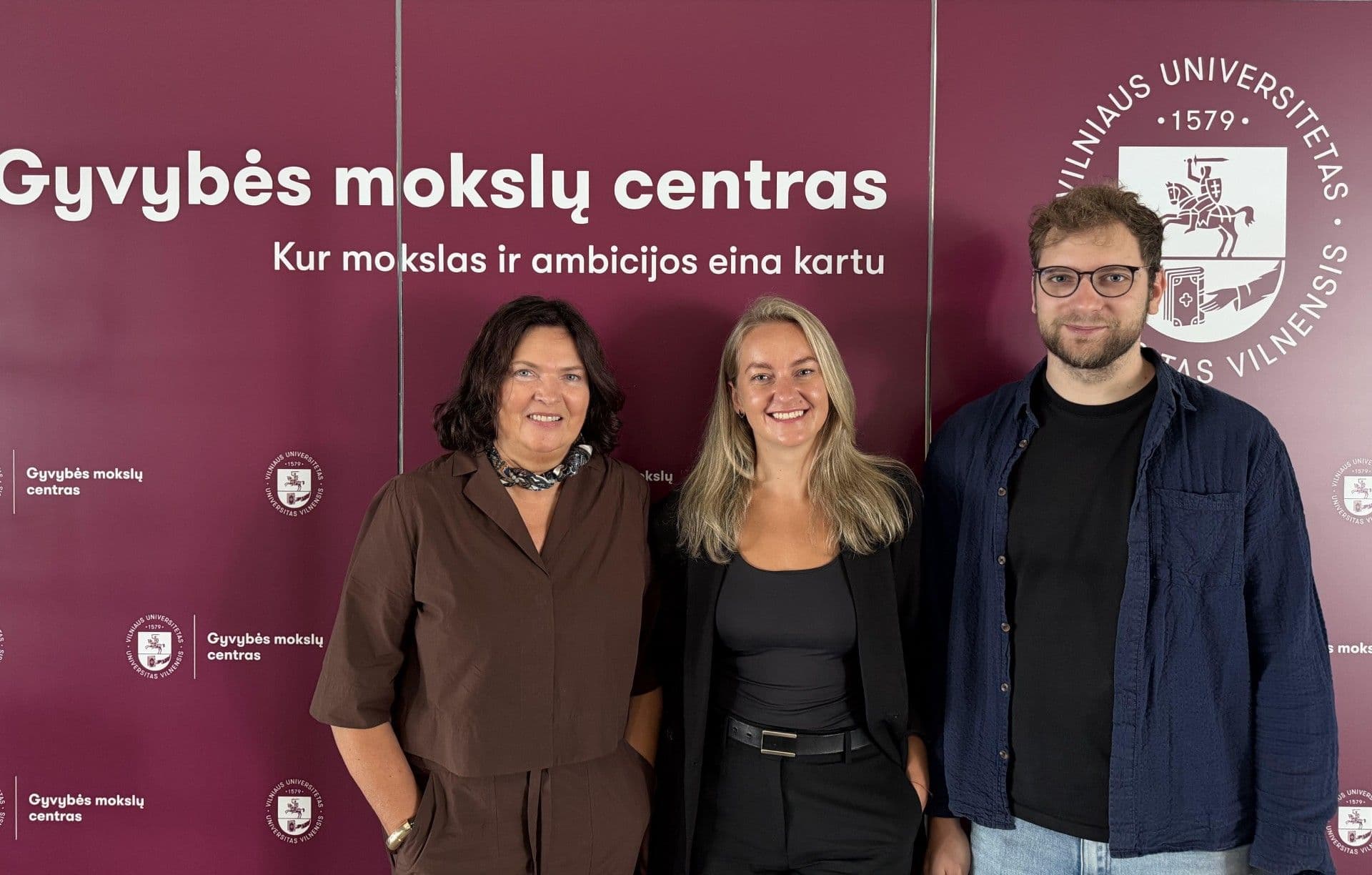
Vilnius University Life Sciences Center (VU LSC) researchers, together with colleagues from Ukraine, have developed an electrochemical biosensor that could help rapidly and accurately assess kidney and liver function. The research findings were published in the high-level scientific journal *Analytical Chemistry*, received special recognition from the journal’s editors and were featured on the journal’s cover.
New solutions for personalised medicine
The new biosensor developed by VU LSC researchers Marius Butkevičius, Ieva Šakinytė-Urbikienė and Julija Razumienė enables rapid and accurate measurement of choline concentration and cholinesterase activity in blood serum. The published study presents the first application of this measurement method in kidney disease models. The researchers sought to assess how changes in these indicators are associated with disease progression.
The results revealed a clear trend: as kidney damage progressed, cholinesterase activity in the blood decreased. Since changes in these enzymes are also associated with impaired liver function and inflammatory processes, the biosensor could in the future become a versatile tool for personalised medicine, helping to monitor patients’ condition and disease progression, assess treatment response and evaluate potential drug toxicity.
Long-standing expertise in biosensor development and international collaboration
The new biosensor adds to a range of electrochemical biosensors that the research team has been developing for many years. The researchers have developed sensors for detecting urea, glutamate, glucose and other compounds in various biological media, including urine, blood, dialysate and brain homogenates. Their long-standing expertise and collaboration with Santaros Klinikos and international research centres are helping to advance these technologies towards application in clinical practice.
This study stands out not only for its scientific results, but also for the circumstances under which it was conducted. Researchers Igor Seniukas, Liubov Galuzinskaja and Dmytro Lytkin from the National University of Pharmacy in Kharkiv contributed to the joint work and were responsible for implementing new animal disease models. Despite the ongoing war and repeated attacks on Kharkiv, the Ukrainian researchers continued their scientific work and collaboration with their Lithuanian colleagues.
“Their contribution was extremely important to this study, but what deserves even greater respect is their ability to continue conducting high-level scientific research under such circumstances,” says Marius Butkevičius.