- 16 October 2026
- Povilas Sabaliauskas
From Mumbai to Lithuania: VU Scientist on Stellar Research, Astronomy, and the Path to Science
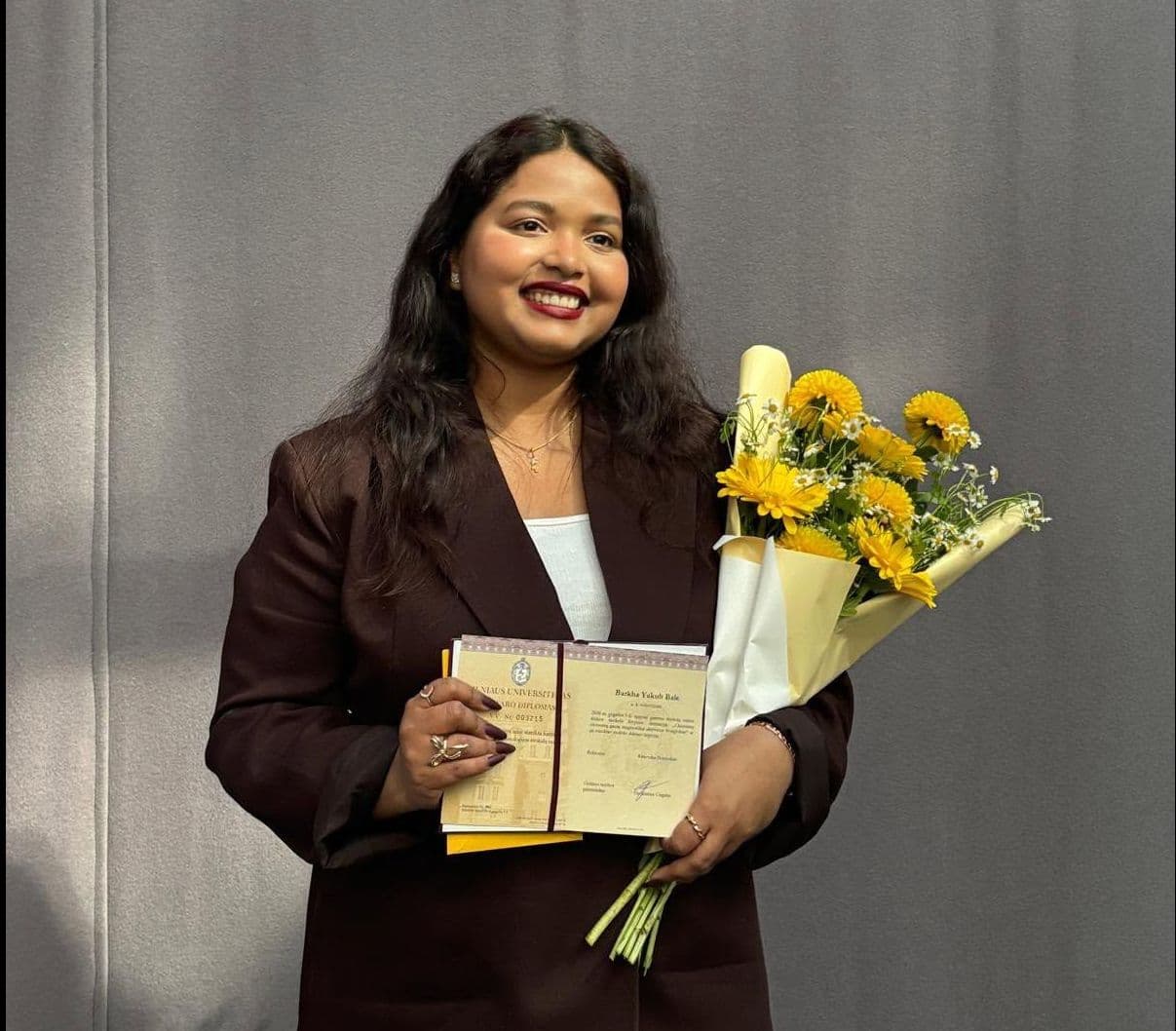
Originally from Mumbai, Dr Barkha Yakub Bale became interested in astronomy as a child. Her career brought her to Lithuania, where she explored the chemical composition of stars at Vilnius University (VU). In May 2026, she defended her Doctoral dissertation in the physical sciences, ‘Abundances of Chemical Elements in Magnetically Active Stars’.
Stars fascinated her from an early age
Dr Bale pestered her parents with astronomical questions from early childhood. Her father, a physics teacher, strongly supported her curiosity and gladly shared his knowledge. She realised fairly quickly that astrophysics was the field she wanted to pursue. However, her local college simply did not offer this discipline, so she had to make do with general physics.
‘Still, astronomy never left my mind. While I was studying, some of my friends and I even formed a small group of amateur astronomers. We would all go stargazing together and give lectures that attracted hundreds of people. In other words, throughout that time I was actively involved in the world of astronomy,’ she reminisced.
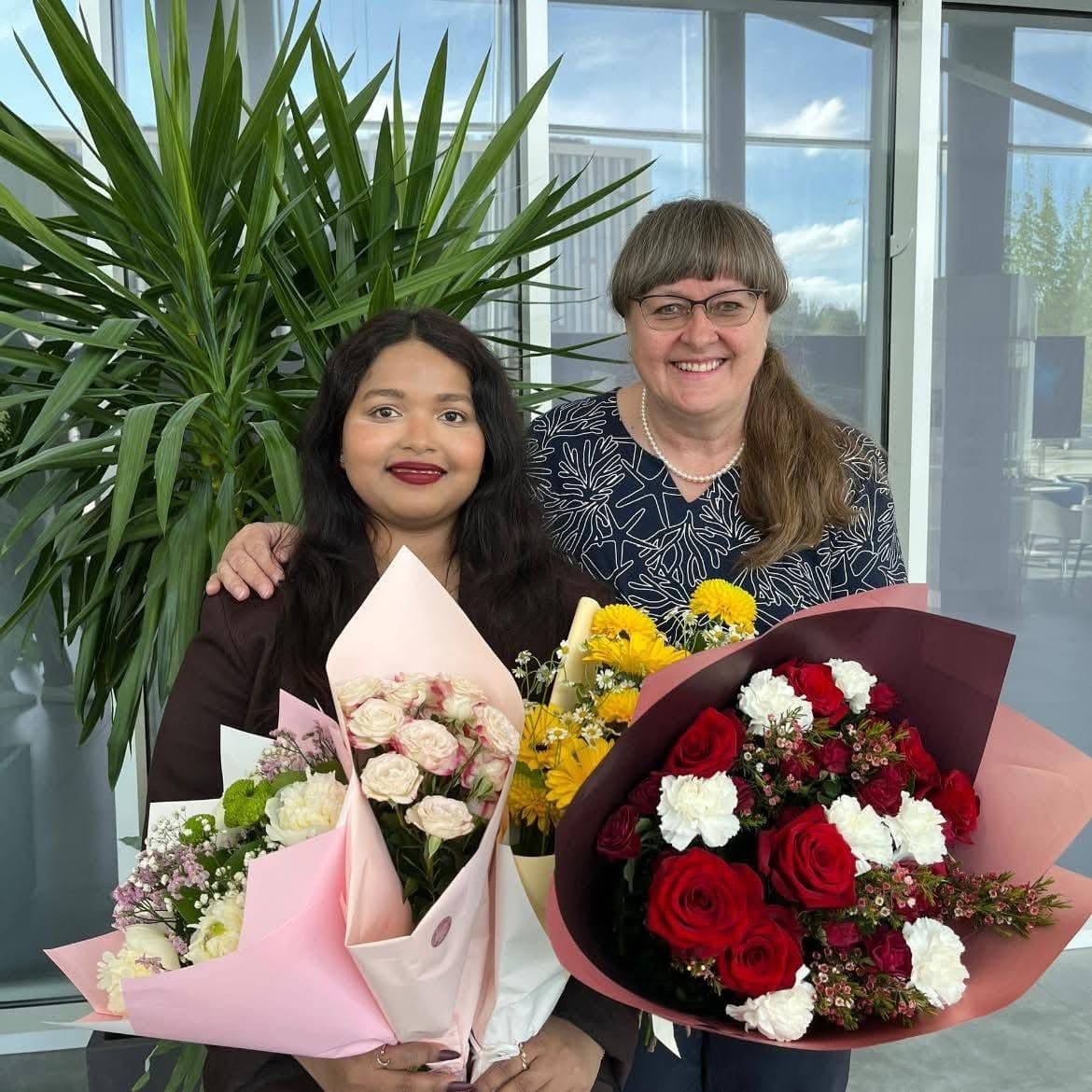
Everything fell into place during the COVID-19 pandemic. With the world at a standstill, Dr Bale joined an online summer school, where she met Prof. Gražina Tautvaišienė, a researcher at the VU Faculty of Physics, who first became her mentor and ultimately the academic supervisor of her Doctoral dissertation. After learning more about Dr Bale’s work and research interests, the Professor told her about Doctoral studies at VU. Just a month later, Dr Bale was already in Lithuania.
‘If that opportunity had not come up, I do not even know what I would be doing now. I would probably still be an active amateur astronomer. At that time, I had already applied for Doctoral positions in India and had even received an invitation to study nuclear physics. That is also a very interesting area of research. But still, astronomy attracts me most of all. I would be interested in it even if I were working in another field,’ said the researcher.
We are all made of stardust
Her supervisor, Prof. Tautvaišienė, is a very significant figure in Dr Bale’s life. The two researchers have been working together for five years, and Dr Bale stresses that her senior colleague is not only an excellent researcher but also a wonderful person from whom she constantly learns. They also share a fairly similar approach to science, so finding common ground is quite easy. Prof. Tautvaišienė even suggested the topic of her Doctoral dissertation.
‘When I arrived in Lithuania, I spent the first few months reading a whole stack of research papers to prepare for the transition to astrophysics. Of course, I knew the basics, but Doctoral studies require much more in-depth knowledge. It took quite a lot of work, but I tend to pick things up quite quickly, and my colleagues helped me a great deal,’ she recalled.
In her dissertation, the researcher uses data collected at the VU Molėtai Astronomical Observatory. Admittedly, not everything went as smoothly as she had hoped. At one point, the collection of new data stalled due to heavy demand for the telescopes at the Molėtai Observatory and poor weather. Later, once the data had been collected, the analysis had to be done in a hurry, but everything worked out. She aims to establish how the evolutionary processes of magnetically active stars differ from those of ordinary stars, and she has made several intriguing findings along the way.
‘We determined their fundamental parameters – temperature, metallicity, and age – and then I studied their elemental abundances. I find it fascinating that some of the most abundant elements in stars are carbon, nitrogen, and oxygen. Just like in us. In a sense, we really are made of stardust. I would call the most important discovery the observation of deviations in elemental abundances in magnetically active stars that cannot be fully explained by standard models of stellar evolution. This shows that magnetic activity plays a significant role in changing the timing and efficiency of internal element mixing. In turn, this offers new insights into the evolution of our Galaxy,’ explained Dr Bale.
The Universe is immensely diverse
At school, people usually form a greatly simplified picture of what the Universe looks like. We often think that everything in it is fairly predictable. The reality, however, is quite different.
‘The Universe is extraordinarily diverse. Magnetic activity occurs on a great variety of scales, from atoms to centres of galaxies. For example, neutron stars display distinctive magnetic behaviour, while ordinary stars have magnetic fields of their own. Our Sun has a magnetic field that gives rise to phenomena such as sunspots, solar flares, and coronal mass ejections. During the latter events, charged particles are ejected from the star and interact with the Earth’s magnetic field and atmosphere, producing the northern lights. We are still only beginning to understand the Universe. Its immense scale is hard to comprehend,’ the researcher said.
She regards this fact with a kind of apprehensive fascination. When you realise how small we are on the cosmic scale, our everyday conflicts and troubles begin to seem utterly insignificant, even silly. After all, it would make far more sense to devote all those resources to understanding the Universe.
‘When you look at all the conflicts taking place in the world – people fighting over territory, money, and other things – and then compare that with the scale of the Universe, you begin to see everything from a rather different perspective. We are merely a tiny part of something far greater. The Earth truly is just a pale blue dot in the vastness of space. This realisation is humbling and, at the same time, fascinating. Space and the stars have captivated me since I was about four, and I think they will continue to fascinate me for the rest of my life,’ Dr Barkha Bale reflected.