- 4 August 2026
- Aurita Petrulytė
VU Faculty of Physics Alumnus Dharma from Indonesia: Publishing in Prestigious Journals During Master’s
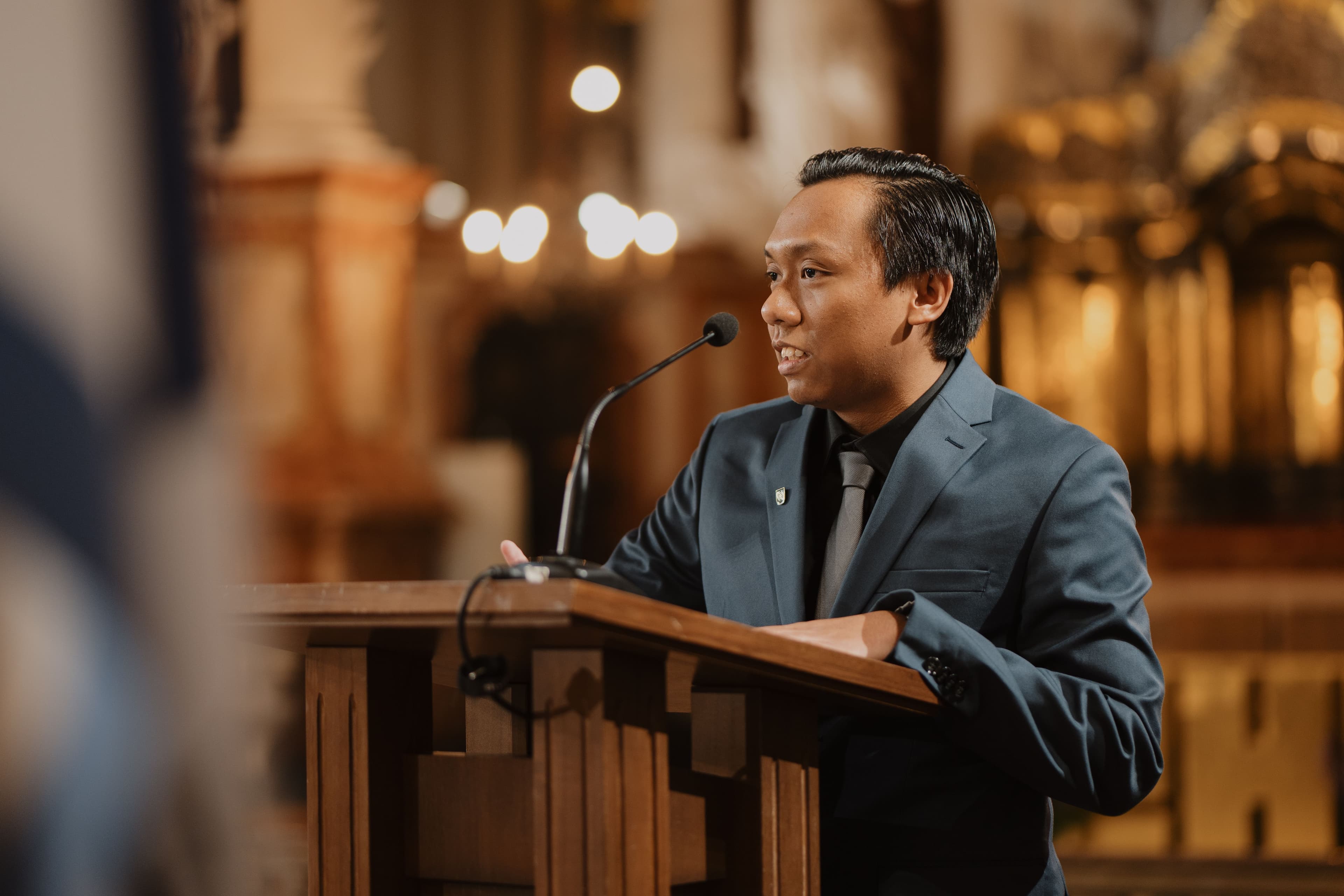
“It’s one of the best experiences I have had, to live and study in Vilnius. The city is very beautiful, and I used to just walk around the old town at least every weekend to refresh my mind”, says Dharma Prasetya Permana, Vilnius University (VU) Faculty of Physics alumnus from Indonesia. He just received a master’s degree in physical sciences in the Laser Physics and Optical Technologies study programme, in which he was actively involved in various national and international scientific activities.
Permana arrived at VU in Lithuania from Aix-Marseille University in France through the Europhotonics Erasmus Mundus Joint Master’s program. “Initially, I only knew Lithuania for its fame in laser physics. Turns out, it is truly a hidden gem, and as I discovered more, I ended up diving deeper into quantum physics instead,” says Permana.
Choosing photonics
Permana recalls that, as a child, he had a strong interest in mathematics but shifted his attention to physics during his senior high school years.
“I understood that physics is not only a bunch of formulas, but an attempt to model how the universe works and has a strong connection to mathematics as the language of the model. It made me interested in going much deeper and pursuing a bachelor’s degree in physics, mainly to pursue theoretical cosmology.
However, I began to doubt my interest in theoretical cosmology because the career prospects were not very lucrative. I explored different research areas, but eventually I chose to focus on photonics due to its rapid growth, strong potential, and the abundance of funding opportunities expected over the next decade. More importantly, numerous novel phenomena can now be tested using cutting-edge technologies, something that was almost impossible in previous decades,” says the alumnus.
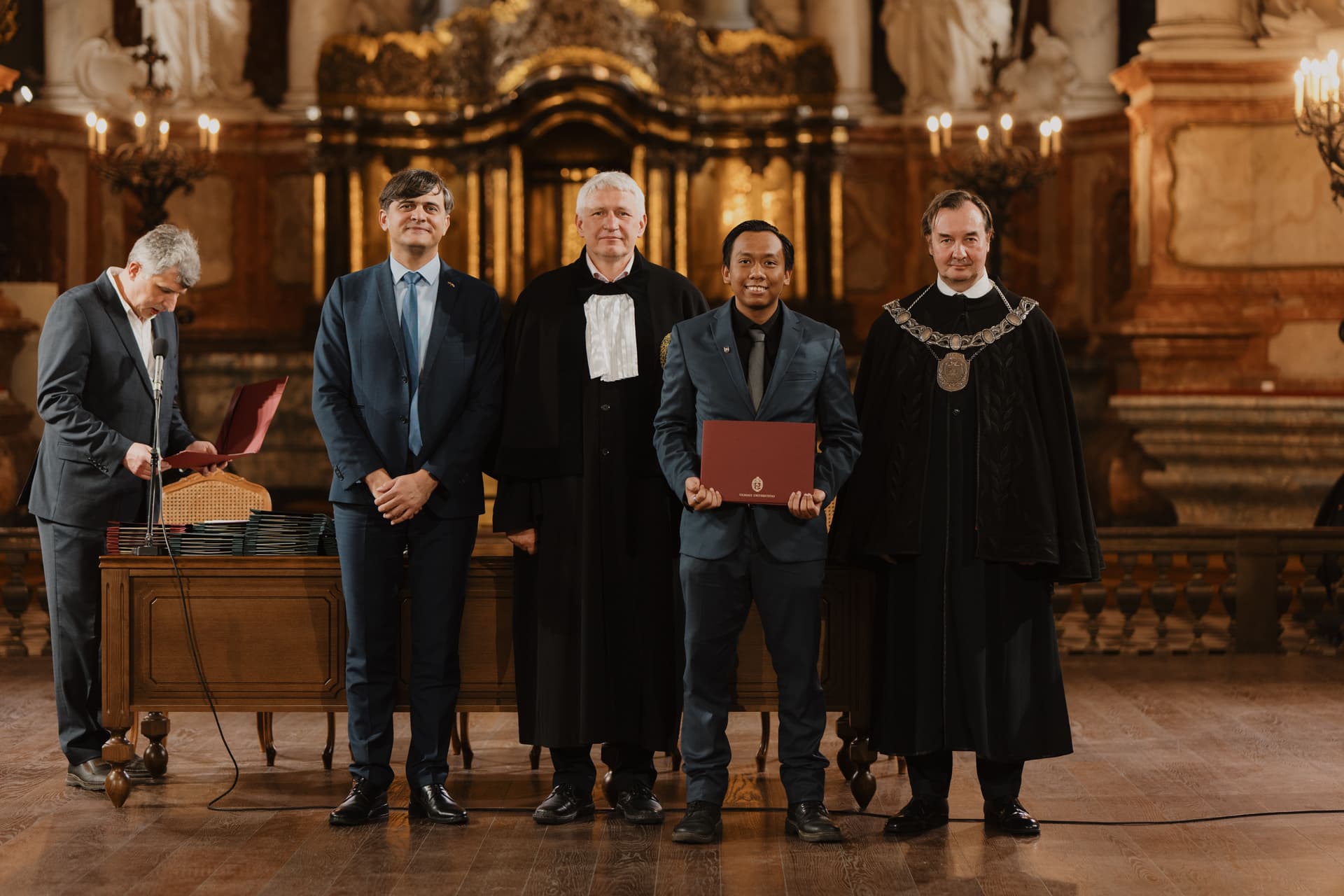
Dharma Prasetya Permana. Photo by Ugnius Bagdonavičius.
Emphasis on research
Permana also graduated from the Europhotonics Erasmus Mundus Joint Master’s Programme, which takes place across several leading European universities. This way, students gain valuable experience in multicultural academic and research environments, while also building a broad professional network. The alumnus chose to spend his 3rd semester at VU.
“The part that made VU stand out among all the other ones was the emphasis on research activities. We can start doing research work in the 3rd semester, and to be honest, I learn something faster by doing. Research allows me to apply different domains of knowledge I gained in the classes to solve an open problem that has not been explored before. This way, the learning process becomes much more fulfilling for me because instead of worrying about grades and exams, I can focus on finding the novelties that I hope will also contribute to the development of our field of expertise.
The courses in my programme were balanced between theory lectures and hands-on projects or lab work. I liked that some of the courses also offer the opportunity to present in a mini student seminar about a topic related to the course materials. The best part about the research work and thesis at VU is that we’re free to work with anyone available to supervise students, whether in industrial or fundamental science projects. Personally, I’m more interested in fundamental aspects of science and the topics were recommended by my supervisors based on the directions that I’m interested in,” explains the alumnus.
From quantum models to prestigious publications
During his studies, Permana worked in the Cold Atoms and Quantum Optics group, under Dr Hamid Reza Hamedi and Dr Mažena Mackoit-Sinkevičienė. There, he explored new ways to sculpt complex light beams and developed a theoretical model that allows atoms to be “pre-programmed” by light alone. Within one year since his arrival at VU, D.P. Permana already authored two scientific papers in prestigious journals “Physical Review A” and “Chaos, Solitons and Fractals”, collaborating with Lithuanian researchers. Moreover, he presented the research at three international and one national conferences, where Novian and Visoriai Information Technology Park awarded him an incentive scholarship.

Dr Mažena Mackoit-Sinkevičienė, Dharma Prasetya Permana, Dr Hamid Reza Hamedi. Photo from personal archive.
“I had always wanted to work in quantum optics, but I had never had the opportunity before coming to Vilnius University. When I discovered that a research group in the Faculty of Physics was working on quantum optics, particularly optical vortices and light–matter interactions, I became very interested in joining it.
These achievements were made possible by the tremendous support of my supervisors. In addition to their dedication and hard work, both my supervisors, Dr Hamedi and Dr Mackoit-Sinkevičienė, were always available whenever I needed guidance. They provided me with valuable learning resources, excellent supervision, and a stimulating research environment. They also introduced me to the broader research community through the Quantum Lithuania network, which further motivated me to contribute to the field. Working with them was truly a blessing, and I sincerely hope that other students will have the opportunity to experience the same level of support, guidance, and encouragement that I was fortunate to receive. Not only that, the presence of many conferences and scholarship competitions for young scientists based on our research also became a very important catalyst to build my motivation,” says Permana.
What’s next?
Permana will be pursuing a PhD at the Korea Advanced Institute of Science and Technology in South Korea, one of the most prestigious research institutes in Asia and the world. His research project will primarily focus on quantum-related topics in photonic integrated circuits.
“I have always been interested in actively contributing to the second quantum revolution, particularly to the development of quantum computers. For at least the next four to five years, I will be conducting exciting experiments as part of my doctoral research. Afterwards, I plan to explore broader areas of quantum computing during my postdoctoral studies before seeking a permanent academic position and establishing my own research group. Leading a team of researchers who share the same ambition has always been my dream.
I also hope to continue collaborating with Dr Hamedi and Dr Mackoit-Sinkevičienė, as our research fields remain closely related. I would love to return to Lithuania whenever possible for conferences and workshops,” concludes Permana.