- 23 September 2026
- Inga Varanavičienė
VU Šiauliai Academy student developed a free application for learning Lithuanian
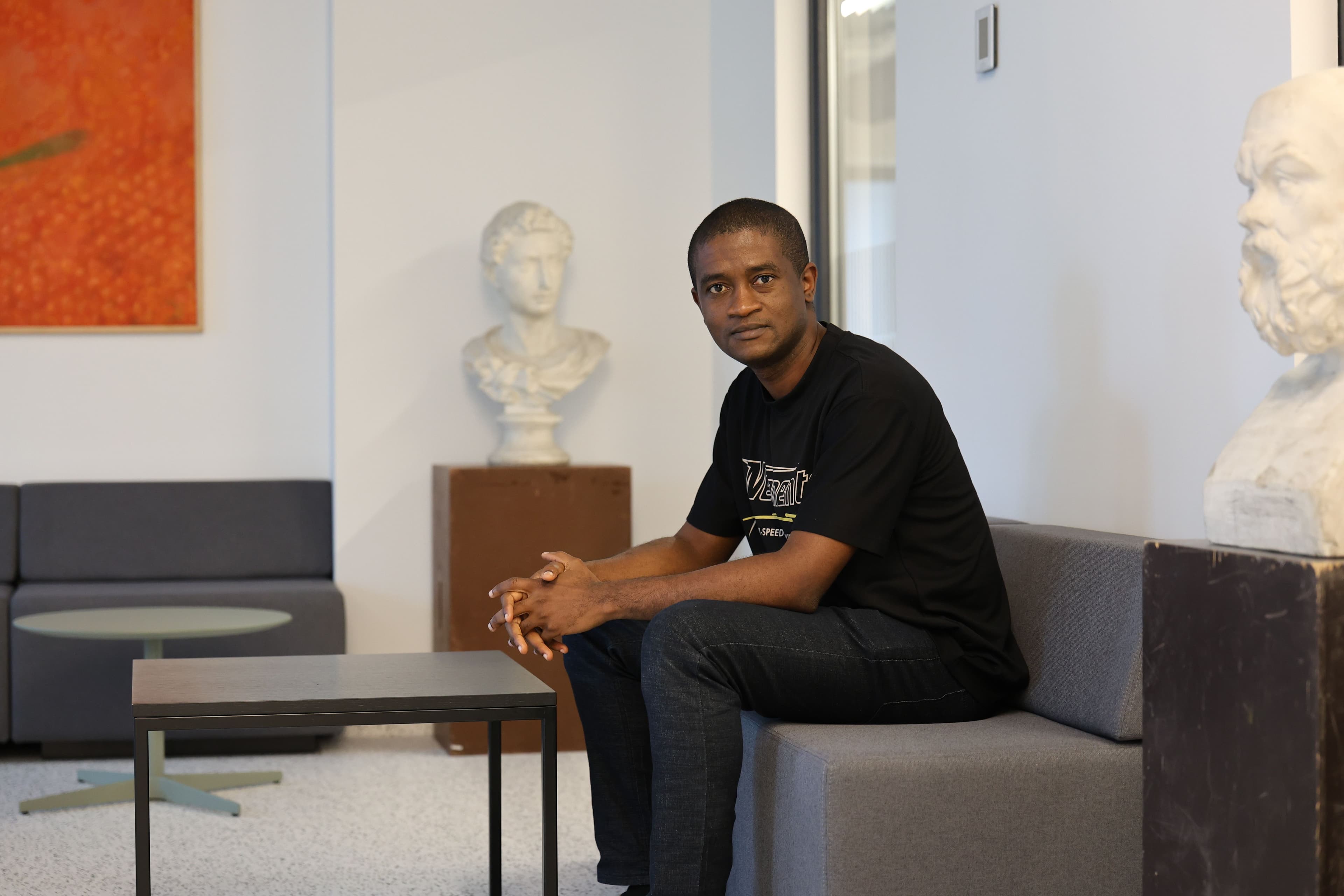
While learning Lithuanian at Vilnius University Šiauliai Academy, fourth-year Software Engineering student Anthony Morha noticed a lack of efficient, and convenient learning resources for English speakers who wanted to learn Lithuanian. This personal experience inspired a project that is now accessible to people around the world. Anthony developed a free Lithuanian language learning Progressive Web App (PWA) called “Learn Lithuanian”, which is available online at learnlithuanian.org.
“The first time I had the idea to develop a Lithuanian language learning application was in late 2023. I had been preparing this project for a long time because I had to plan the order of the topics and lessons. Everything had to be well organized so that the process would be smooth and learning would be convenient. It was a lot of work, but the entire development process was very interesting to me,” Anthony says.
Enhanced Platform: More Content in Less Time
The first functioning version of the application was developed at the end of 2024. However, it soon became clear that the technical part of the project was only half of the task. In order to develop a fully fledged language learning tool, it was necessary to prepare a large amount of high-quality educational content.
Anthony discussed this challenge with his Lithuanian language teacher, Associate Professor Jolanta Vaskelienė, PhD. Her insights encouraged the student to pay more attention to the educational content, its structure, and its order.
Each topic in the application consists of seven learning stages: the introduction of new words and phrases, tasks with pictures, answer-selection exercises, listening exercises, sentence translation, conversations that reflect real-life situations, and lesson review. Different aspects of language learning, such as vocabulary, grammar, listening, and practical language-use tasks, are combined into a single complete lesson.
A significant change in the development of the project occurred during Anthony’s internship, when Professor Gintautas Daunys, PhD, assigned him a task related to the use of artificial intelligence agents in software development processes. The student applied this knowledge to his project.
He developed an artificial intelligence agent that helps prepare educational content according to the Common European Framework of Reference for Languages: Learning, Teaching, Assessment (CEFR). The planned curriculum consists of 110 topics organized by proficiency levels from A1 to C2.
Artificial intelligence is used not only to prepare content but also to generate images and produce audio recordings for educational materials. The student also developed an automated technical process that verifies lesson structures and uploads prepared content to the web application.
Since part of the work has been automated, the time required to prepare one topic has decreased from 4 to 6 hours to approximately 15 to 25 minutes. Uploading a completed lesson now takes less than 4 minutes.
The Main Goal – Accessibility
“I had to develop several AI agents to work together to make the web app function the way it does today. I did not have to do everything manually. A dedicated AI agent curated the Lithuanian language curriculum to align with the CEFR standard, while others prepared the order of the lessons and topics. Additionally, I received several suggestions and corrections from Professor Jolanta,” Anthony says.
Foreigners living in Lithuania have already tried the application. The student says that he has been receiving positive feedback. Various users have stated that even after one lesson, they were able to memorize new Lithuanian words and information.
Anthony emphasizes that one of the most important principles of the project is accessibility. “Learn Lithuanian” is free of charge, and the application continues to be developed. At the moment, some of the 110 planned topics have already been prepared, and 60 lessons covering levels A1 to B1 are already available on the web app.
For Anthony himself, learning Lithuanian has become an important part of his life in Lithuania.
“I enjoy studying in Lithuania at Vilnius University Šiauliai Academy. Even though it was not easy at the beginning, I had to get used to a different culture because Lithuanians are quieter and more reserved. However, at the dormitory, I met people from different countries, and we became friends, including some Lithuanians. The people in the Academy community are different, but that is what makes it interesting,” says the student.
Anthony Morha is an experienced software engineer from Nigeria with more than 10 years of experience developing web applications, hybrid applications, and mobile applications for various purposes. He is also the founder of several tech startups, including Hotjobs in Nigeria, Reverbtime Magazine, Poland Web Designer, and Wispaz Technologies.
The Lithuanian language has captured Anthony’s interest not only as a subject of study but also as a way to get to know the country better.
“The Lithuanian language fascinates me. Your words are different and sound interesting. To me, one of the strangest-sounding words is ačiū. When I first arrived in Lithuania, the word just sounded strange to me,” says Anthony.
The free Lithuanian language learning application “Learn Lithuanian” is available at the link below: www.learnlithuanian.org