Checklist for International Academic Staff
This checklist provides the essential information and practical steps to help international staff prepare for their arrival, complete the necessary administrative procedures, and settle into life and work in Lithuania.
Before Arrival
Visas, Permits and Travel Insurance
Apply for a visa or residence permit if you need one. Accompanying family members should apply at the same time, even if they arrive in Vilnius later.
Citizens of the EU, EEA, and Switzerland (hereinafter EU citizens) have the right to travel without visas. EU citizens may enter the Republic of Lithuania and stay here for a period not exceeding three months starting from the first day of entry into the Republic of Lithuania. If one resides for a period longer than 3 months, (s)he should apply for a document confirming the right to reside in Lithuania. Then, having declared a place of residence in Lithuania, an EU citizen acquires the right to the social guarantees of the Republic of Lithuania if these rights are not related to citizenship (for example, voting). A document confirming the right of an EU citizen to temporarily or permanently reside in Lithuania is a certification of the form established by the Minister of the Interior to confirm the right to temporarily or permanently reside in the Republic of Lithuania (Certification of EU national).
List of other countries whose citizens do not require short-stay visas to enter or travel on transit through the Republic of Lithuania.
Non-EU citizens will need:
Schengen visa for short term visits (up to 3 months);
National visa (D) for long term visits (up to 12 months).
Residence permits in the Republic of Lithuania are issued to Non-EU citizens. A foreigner has the right to choose, change or leave a place of residence in the Republic of Lithuania and return to it for the period of validity of a residence permit. A foreigner must notify the authorities about changes in his or her place of residence and keep in mind that the Law on the Declaration of Residence states that if a person leaves the Republic of Lithuania for more than 6 months, he or she must declare the departure (in such case the residence permit may be revoked).
Get the work permit if you need one
If you intend to work in Lithuania on a work contract, you must obtain a permit to work in Lithuania before applying for a residence permit.
Vilnius university will handle the documents necessary to obtain a work permit (work permits for foreign residents are issued by the Employment Service Under the Ministry of Social Security and Labour of the Republic of Lithuania).
Usually, the application of an employer for the issuance of a work permit to a foreign resident is analysed and processed within 2 months. A work permit is issued for no longer than 2 years and indicates the particular company/institution that the foreign resident will work at.
Work and residence permits in Lithuania will automatically become void upon termination of the employment contract with the employer who obtained a permit for the resident to work in Lithuania.
Take care of relevant medical insurance (valid in EU/Lithuania)
Source and updated information: The Migration Department (for EU citizens / for Non-EU citizens).
Accommodation and Other Arrangements
Make sure that you have satisfactory accommodation arrangements
Vilnius University Guest House. Vilnius University has apartments in the Vilnius city centre and you may take a look.
Private accommodation for rent (provided by Vilnius City Municipality’s branch GoVilnius). If you are planning to stay in Vilnius longer, here you may find topics to know before renting apartments.
Also, here you may find more information – Step by Step Guide to Renting in Vilnius.
Plan on family matters: school and daycare
Planning or considering a move to Lithuania? Here you will find all the important information you’ll need.
After Arrival
Registration
Register your place of residence
Each person who becomes a permanent resident in Lithuania (that means who lives in Lithuania), when changing his/her place of residence must declare it. EU-citizens long term stay (if stay longer than 3 months) or Non-EU citizens long term stay (if you apply for Temporary Residence Permit)
Once you have secured accommodation, you are required to officially declare your new place of residence at the designated local governmental institution. This then makes you eligible to receive various services, such as childcare. If you are not the property owner, it is essential that you obtain written consent that you are able to use the rented address as your declared place of residence.
Health Care and Insurance
Make sure you are covered by the Compulsory Health Insurance (acronym in Lithuanian – PSD).
To contact a medical institution, you must be insured by compulsory health insurance, voluntary insurance, insurance at an insurance company of your choice, or you must pay for the services yourself.
Who is eligible for the PSD:
Foreigners permanently residing in the Republic of Lithuania:
EU citizens: Certificate confirming the right of permanent residence in the Republic of Lithuania (issued for 10 years);
Non-EU citizens: Permanent residence permit.Foreigners temporarily residing in LT if legally employed (+ their children)
Foreigners who have worked in LT for at least 6 months and have registered at the Employment Service.
If you are not covered by the PSD:Get private health insurance (BTA, Gjensidige, Seesam, ERGO, Lietuvos draudimas, IF or other);
Pay each time you have to visit a doctor.
Register with the healthcare centre
How to register as a patient at a primary healthcare institution:
Choose a health care institution (an outpatient clinic, primary healthcare centre or a family medical centre) and go to the healthcare facility of your choice
Provide your ID card or passport, fill out an application form and choose a practitioner
Do not forget that registration with a specific healthcare institution is only limited to persons who are covered with compulsory health insurance, regardless of whether the healthcare institution in question is public or private
Important: Your place of residence has to be declared in Vilnius / Lithuania.
There are 3 steps to follow if you get ill:
Visit your family doctor, who can declare you unfit for work and issue an illness certificate;
Inform your employer and provide them with your illness certificate
If you wish to receive statutory sick pay, you can apply for this at SODRA.
If you have any questions, don‘t hesitate to ask your employer.
A wide variety of private healthcare options are also available in Lithuania. You can register in person, online or by phone at one of the many private medical centres operating in Lithuania’s major cities. Information on various medical centres is available (use filters for search).
European Health Insurance Card (EHIC):
Anyone making national insurance contributions as a resident of one EU country has the right to access emergency care when travelling in other EU countries, with expenses reimbursed by their national healthcare institution. To use this service, you need an EU healthcare insurance card, which can be obtained from the National Healthcare Insurance Fund.
In case of emergency, call phone number 112.
Social Security and Finances
Get acquainted with social insurance system
Following the Law on Social Services of the Republic of Lithuania, a foreign citizen, holding a permanent or temporary residence permit is entitled to the same social services in the Republic of Lithuania as a Lithuanian citizen (social insurance fund in Lithuania – SODRA).
What social guarantees can one expect? If you are working under a working contract you are covered by all the social insurance types:
- Sickness insurance;
- Maternity insurance;
- Unemployment insurance;
- Occupational accident insurance;
- Pension insurance;
- Health insurance.
Here you may find the General Terms of Employment in Lithuania (working hours, holidays, safety & health at work, etc.)
Get acquainted with the tax system in Lithuanian
More information about the tax system in Lithuania you may find here.
Open the bank account
The first bank account is opened upon arrival at any bank in Vilnius:
Documents to be presented: personal Identity document (passport / identity card / residence permit);
Complete a questionnaire for natural persons;
Sign the agreement.
Service fee: usually it’s free of charge for legal residents of Lithuania. Non-residents must be paid extra.
Source & updated information:
The State Social Insurance Fund
Employment Service Under the Ministry of Social Security and Labour
In Vilnius
Once you've arrived, explore practical information and local resources to help you settle into everyday life in Vilnius and enjoy your stay.
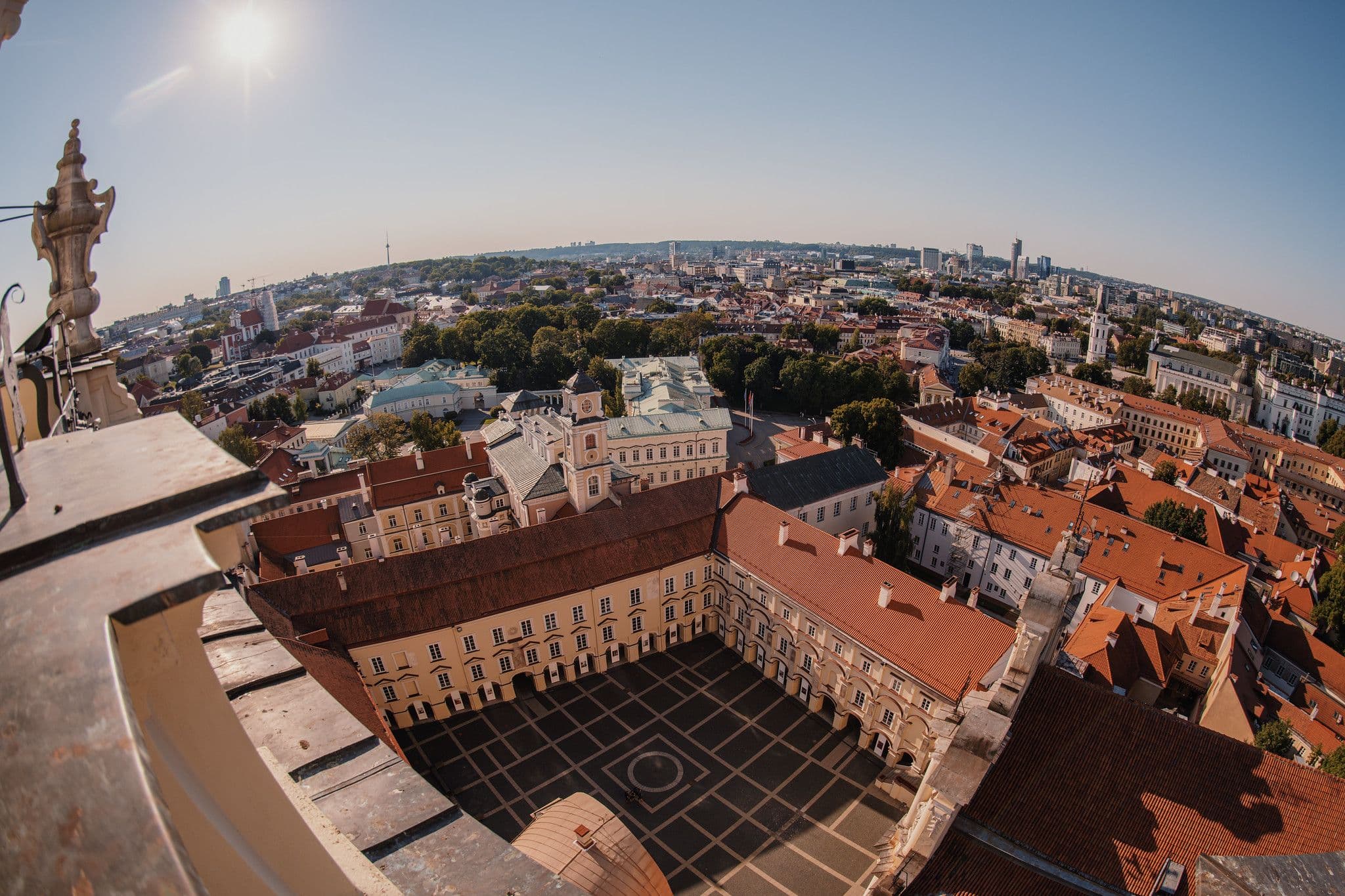
Vilnius is cosy and easy to navigate with all the buzz of a contemporary European capital. Both compact and bustling, Vilnius offers the work-life balance you deserve. A world-class business environment and infrastructure, lively arts and culture scene, charming UNESCO-listed Old Town and a city so green you may feel like you live in a forest – all less than a 3-hour flight from most places in Europe.
Get mobile
Prepaid SIM cards with plans for data, calls and SMS are available at Narvesen and Lietuvos Spauda news kiosks as well as some supermarkets (operators: Ežys / Pildyk). Signing a contract for monthly service is possible but requires a residence permit and a deposit. The main mobile service providers in Lithuania: Tele2, Telia, Bitė.
Cost of living
Planning your budget is an important part of preparing for your stay. Explore average living expenses in Vilnius, including accommodation, food, transportation, and other everyday costs.
Getting around in Vilnius
Getting around Vilnius is easy thanks to the city's extensive public transport network, as well as a wide range of taxis, ride-sharing, car-sharing, and electric scooter services. You'll also find practical information on parking, walking routes, and useful transport apps.
Bringing your car
Registering a personal vehicle;
Vehicle insurance. All vehicles in Lithuania must be insured through a national insurance company. Prices are relatively affordable and are calculated using formulas specific to each insurance company;
Connect with the Community
Join the Foreigners in Vilnius Facebook group or explore other communities where you can connect with fellow internationals, share experiences, and find useful local information.
Want to connect with the international community or get practical advice?
Visit MiCenter to access helpful resources, book consultations, and explore integration opportunities in Lithuania.
At Vilnius University
Check your legal agreements
Make sure that you have signed your work/stay agreement, and get your Vilnius University employee card.
Activate your IT user account at Vilnius University (Moodle, EDUROAM, and other e-services)
Vilnius University provides a list of e-services*:
Vilnius University Identity Management System* (to login please here);
Vilnius University Information System** (to login please here);
Vilnius University E-Mail Service** (to login please here);
Vilnius University Mailing Lists* (to login please here);
Microsoft Office 365 Web-Service (to login please here);
Wi-Fi Access at Vilnius University
Vilnius University Virtual Private Network (VPN) Service;
Vilnius University Webpages and Galleries**;
Computer Network Acceptable Use Policy in Vilnius University;
Assistance with IT at Vilnius University and Contacts.
*Not all offer services in English.
**Lithuanian language only. To be able to use e-services you should be registered at Vilnius University Identity Management System at first. If you find any difficulties logging in by yourself you may contact Mr Arvydas Koncevičius, International Staff (Incoming) Coordinator at the International Office of the University (e-mail: arvydas.koncevicius@cr.vu.lt).